

A garage roof usually has a harder job than people expect. It must deal with driving rain, wind uplift, summer heat, winter condensation and, in many cases, a cold vehicle or workshop below it. The best garage roof materials are therefore not simply the cheapest sheets available. They are the materials that suit the roof pitch, structure, intended use and level of insulation required.
For a simple detached garage used for parking and storage, a well-specified metal sheet roof can provide decades of dependable service. For a heated workshop, office or hobby space, an insulated panel system may be the better long-term decision. Getting this choice right before ordering avoids expensive alterations once the roof is on.
Start with the roof itself. A pitched roof can take most profiled sheet systems, while a low-pitch or flat roof needs a product designed to shed water at a shallow angle. Check the span between purlins or rafters, the roof area, exposure to wind and whether the garage is attached to the house. These details affect the sheet thickness, profile, fixing pattern and flashing arrangement.
The internal environment matters just as much. An unheated garage with no ceiling is prone to condensation, particularly beneath metal roofing. If tools, vehicles, timber or stored belongings need protecting, use an anti-condensation solution or create a properly ventilated, insulated roof build-up. A bare sheet roof may be economical at the outset, but regular dripping from condensation is not a good result.
You should also allow for the complete system, not just the roof covering. Correctly matched fixings, ridge pieces, barge flashings, eaves fillers, sealing tapes, gutters and purlins are what turn a stack of sheets into a weatherproof roof.
Box profile steel is one of the strongest all-round choices for a new garage roof. Its angular ribs give the sheet excellent stiffness, a clean modern appearance and good water run-off on a suitable pitch. It is widely used on garages, workshops, agricultural buildings and light industrial roofs for a reason: it is quick to install, light enough for many timber or steel structures, and available in a broad choice of colours and coatings.
For most domestic garage projects, a coated steel sheet offers a sensible balance between cost and service life. Polyester-coated options suit budget-conscious projects in normal conditions, while plastisol-coated sheets provide a thicker, tougher finish with stronger resistance to scratching and weathering. Galvanised steel can be a practical utility option, but it does not offer the same finished appearance or coating protection as pre-finished sheets.
Box profile sheets are not automatically the right answer for every roof. They need correct end laps, side laps, fixings and closure details, and their minimum pitch requirement must be respected. A roof that is too shallow can allow water to track back at laps during heavy rain. For attached garages or exposed sites, take particular care over flashings where the roof meets a wall.
Corrugated steel brings a more traditional profile to a garage, particularly where the building sits alongside agricultural, rural or older outbuildings. The rounded corrugations handle rain effectively, and the material offers the same core advantages as other steel sheet systems: low weight, fast fitting and strong weather resistance when correctly specified.
It can be a particularly good fit for smaller garages, lean-tos and refurbishment work where the existing building has a corrugated appearance. Installation still needs accuracy. Corrugated profiles require suitable side laps and correctly positioned fixings, and the roof framing must support the sheet at the recommended centres.
Choose corrugated steel for looks as well as function. If the garage is highly visible from the house or garden, the profile and colour can make a real difference to the finished project.
Fibre cement is a dependable option where condensation control, acoustic performance and a less industrial appearance are priorities. Unlike steel, fibre cement has a breathable character that can help reduce the risk of internal condensation forming on the underside of the roof. It also softens the sound of rain, which can be welcome in a workshop or garage close to living accommodation.
Modern fibre cement sheets are strong, non-combustible and well suited to agricultural-style garages, stables and storage buildings. They are heavier than steel, however, so the supporting structure must be designed accordingly. Handling and cutting also require more care. Always follow the manufacturer’s safe-working guidance and use the correct tools and personal protective equipment.
Fibre cement makes sense when the garage needs a quieter, more traditional roof and the structure can carry the additional weight. It is less suited to a project where speed of installation and the lightest possible roof are the main priorities.
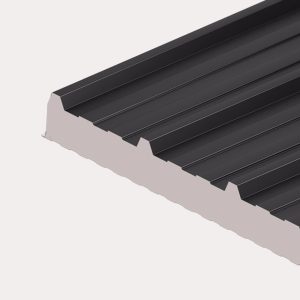
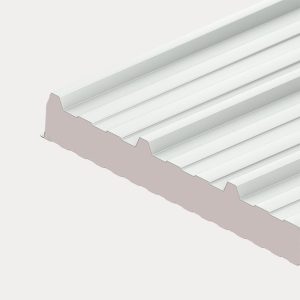
If the garage will be heated, used as a workshop year-round or converted into a more comfortable working space, insulated composite panels are often the standout choice. These precision-made panels combine an external weather sheet, an insulation core and an internal liner in one product. The result is a sleek, strong, weatherproof roof with far better thermal performance than a single-skin sheet.
The main benefit is not just warmth. A properly installed insulated panel roof also greatly reduces the condensation problems associated with uninsulated metal roofing. That helps protect equipment, bicycles, power tools and stored materials, while making the room more usable in cold weather.
Composite panels cost more initially and need careful installation to preserve their thermal and weather seals. Panel thickness should reflect how the garage will be used, not simply what looks cheapest per square metre. A basic parking garage has different needs from a heated joinery workshop. Pay close attention to ridge details, verge flashings, eaves closures and penetrations for rooflights or flues, as these are the areas where poor detailing can undermine performance.
Many older garages have a flat or very low-pitch roof rather than a sheeted pitched roof. In this situation, do not fit standard profiled steel sheets unless the roof pitch and product specification allow it. Water needs a positive route off the roof, and shallow pitches leave little margin for error.
For a timber or boarded flat roof deck, modern membrane systems such as EPDM rubber and GRP fibreglass are common choices. EPDM is valued for its flexible, durable single-piece coverage on straightforward roofs. GRP provides a hard, joint-free finish when installed over a suitable deck and can suit garages where a crisp, permanent appearance is wanted. High-performance felt systems remain an option for some budgets and refurbishment jobs, but quality varies greatly between basic felt and professionally specified multi-layer systems.
The condition of the deck is critical. A new covering will not correct ponding water, rotten boards or inadequate falls. Before choosing a membrane, check drainage, edge trims, upstands and how the roof joins adjoining walls.
A cold, detached garage used for vehicles and garden storage will usually benefit from coated box profile or corrugated steel, paired with the right anti-condensation measure and complete flashing package. This is a practical, economical route with a long service life.
A garage used as a workshop needs more thought. Noise, condensation and heat loss quickly become noticeable when people spend hours inside. Fibre cement can improve the internal feel of an unheated workshop, while insulated panels are the more effective answer where warmth and year-round use are expected.
For a garage in a coastal or highly exposed area, coating quality and fixing specification become even more important. Choose a finish appropriate to the environment, use suitable corrosion-resistant fixings and do not economise on flashings. Wind-driven rain finds weak points that a sheltered roof may never reveal.
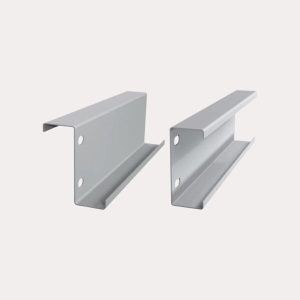
The roof material is only one part of the build. Use purlins or rafters at the spacing recommended for the selected sheet, taking account of snow and wind loading. Sheets should overhang into the gutter by the correct amount, without leaving an unsupported edge that can flex in strong winds.
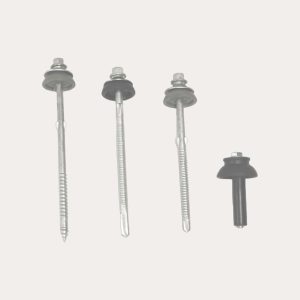
Use purpose-made self-drilling fixings with sealing washers, rather than general screws. Overtightening can damage the washer and coating; undertightening can leave a route for water. Cut sheets carefully, remove swarf immediately and touch up any damaged coating where appropriate. Metal filings left on a finished roof can rust and stain the surface.
Ventilation and insulation need to work together. If you are creating a cold roof, provide ventilation where required to manage moisture. If you are building an insulated warm roof, ensure the insulation, vapour control layer and internal finish are specified as a complete system. Guesswork around condensation is one of the most common causes of disappointing garage roofs.
Finally, check whether planning permission, building regulations or local restrictions apply, especially for an attached garage, a change of use, significant structural alterations or a building close to a boundary. The roof covering may be straightforward, but the project as a whole still needs to be safe and suitable.
The right garage roof is the one that suits the building rather than the one with the lowest sheet price. Measure carefully, decide how the space will be used in five years’ time, and order the matching sheets, fixings, flashings and closures together. If you need help checking a profile, coating or insulated panel specification, the Roof Sheets Online team can provide practical technical guidance before materials are ordered.
Roof Sheets Online Ltd
UNIT C4
MACROME ROAD
Wolverhampton
WV6 9HD
Company No 15150940
Vat No. 4880 70856



