

A ridge is where two roof slopes meet at their highest point, and it is one of the first places poor detailing will show. The right essential ridge detail components turn that vulnerable junction into a strong, weatherproof finish that copes with wind-driven rain, movement and changing temperatures. Whether you are roofing a garage, stable, workshop, agricultural building or light industrial unit, the ridge detail needs specifying as carefully as the sheets below it.
A ridge flashing on its own is not a complete solution. Sheet profile, roof pitch, insulation build-up, ventilation requirements and fixing method all affect what is needed underneath and around it. Getting these details right at the ordering stage avoids the common problems of leaks, rattling flashings, condensation and last-minute site delays.
The ridge has several jobs. It must cover the gap where the roof sheets meet, shed water clear of the roof build-up, resist wind uplift and allow for the normal expansion and contraction of metal sheeting. On many roofs, it must also provide controlled ventilation from the roof space.
For insulated panels, the ridge detail also helps maintain thermal performance. Any gaps in the insulation core, poorly sealed laps or wrongly positioned flashings can create cold spots and allow warm, moist air into the construction. That can lead to condensation, reduced efficiency and deterioration of internal finishes over time.
The correct arrangement depends on the system. A low-pitch box profile roof, for example, needs careful overlap and sealing discipline, while corrugated sheets usually require profile-specific closure pieces to stop open gaps beneath the ridge. Fibre cement and tile-effect roofs have their own compatible ridge systems too. The principle stays the same: choose components that match the sheet profile and roof design rather than trying to make a generic trim fit.
The ridge flashing is the visible finishing piece. It spans the apex and directs rainwater over the upper ends of the roof sheets. Standard ridge flashings suit many straightforward dual-pitch roofs, while adjustable ridge flashings are useful where the pitch varies or is not known precisely before installation.
Choose a flashing wide enough to give suitable cover over both roof slopes. Its finish should also match the sheets where appearance matters. Polyester, Plastisol and galvanised options are commonly selected according to the roof sheet finish, project environment and budget.
A ridge flashing needs to be formed for the job. Do not assume a flat-folded trim can simply be forced over the ridge on site. Over-bending can distort the coating, leave the legs sitting unevenly on the sheet crowns and make reliable sealing harder. Precision-folded flashings give a cleaner fit and a more dependable weathering detail.
Profile fillers close the shaped gaps created by corrugated or box profile sheets. Without them, insects, birds, debris and wind-driven rain can find their way beneath the ridge capping. They also improve the seal where the flashing sits against the top of the sheet.
There are two broad approaches. Foam fillers are cut to the profile of the sheet and are commonly used on standard non-ventilated roof details. Ventilated fillers allow airflow while still preventing larger debris and pests from entering. They are often chosen where a cold roof void needs ventilation.
The key is compatibility. A filler made for one profile will not seal another properly, even if it appears close at first glance. Check the profile height, pitch spacing and whether the filler is designed for the upper sheet end. Ordering it with the roof sheets is the safest way to avoid a poor site fit.
A ridge is exposed to water that can be pushed uphill or sideways by strong winds. Properly positioned sealing tape or butyl strip helps stop water tracking beneath the ridge flashing and entering at sheet laps.
Butyl tape is particularly useful because it remains flexible. Metal roof sheets expand and contract with temperature changes, especially on long, dark-coloured runs in direct sun. A flexible seal maintains contact better than a brittle product that may crack after repeated movement.
Sealant should support a sound mechanical detail, not compensate for one. Using excessive mastic over uneven sheets or poorly positioned flashings can make a roof look finished on the day, but it rarely solves the underlying issue. Use the specified tape or sealant at the correct contact points, on clean and dry surfaces.
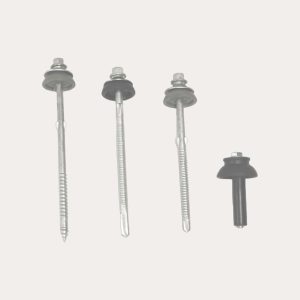
Ridge flashings are normally secured with stitching screws through the flashing and into the sheet crown or side lap, depending on the profile and detail. These fixings hold the flashing firmly in place and stop wind from lifting or vibrating it.
Use roofing screws with suitable washers and corrosion resistance for the roof environment. The fixing length must suit the materials being fastened. A screw that is too short may not grip securely, while one that is unnecessarily long can create avoidable obstructions below the sheet.
Fixing centres matter as much as screw type. A ridge on an exposed site may require closer fixing spacing than one on a sheltered domestic outbuilding. Always follow the sheet manufacturer’s recommendations and account for the building location, height and expected wind exposure. Overtightening is another frequent mistake: it can deform the flashing or compress the washer until it no longer seals correctly.
Not every roof needs a ventilated ridge, but where a roof void requires airflow, it should be designed into the ridge detail rather than improvised later. Ventilated ridge fillers or purpose-made ventilation strips allow air to escape at the highest point of the roof while helping keep rain, insects and airborne debris out.
This is especially relevant for uninsulated agricultural roofs, timber structures and cold roof constructions where moisture can build up beneath the sheets. Ventilation works as a system, so air must also be able to enter lower down at the eaves. A ventilated ridge with no intake, or open eaves with no controlled outlet, will not perform as intended.
Insulated panel roofs are different. Their sealed, thermally efficient construction often follows a specific manufacturer-approved ridge arrangement. In these cases, matching closures, joint seals and flashings are not optional extras. They are part of preserving the panel system’s thermal and weathering performance.
The best ridge assembly is not always the most expensive one. It is the one that suits the roof profile, pitch and use of the building.
On a box profile metal roof, the ridge flashing generally sits over the upper sheet crowns with profile-matched fillers and sealing tape beneath. The flashing must have enough cover to deal with the roof pitch and weather exposure. Shallow pitches demand particular care because water drains more slowly and can be more easily driven beneath poorly detailed laps.
Corrugated roofing needs corrugation-specific closures. Trying to fill deep corrugations with general-purpose foam, expanding foam or large amounts of sealant creates an untidy detail and makes future repairs more difficult. Properly shaped fillers provide a cleaner, more reliable result.
For fibre cement sheets, use components intended for fibre cement roof profiles and follow the required fixing and overlap guidance. Fibre cement has different handling and fixing considerations from steel sheeting, so a metal-roof ridge detail should not be copied without checking suitability.
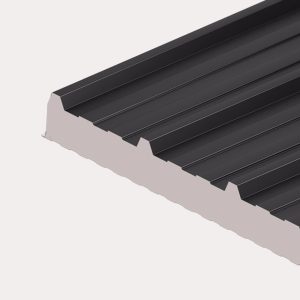
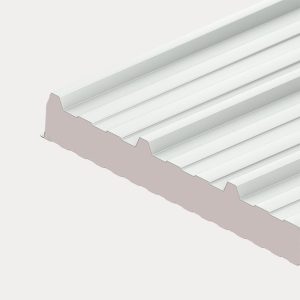
With insulated composite panels, ridge details may include panel closures, insulated fillers, vapour seals and specially folded flashings. These parts work together to prevent thermal bridging and moisture ingress. It is worth confirming the exact panel thickness, core type and roof pitch before ordering any ridge accessories.
Most ridge failures come from small omissions rather than one dramatic error. Ordering flashings before confirming the sheet profile is a regular cause of poor fit. So is overlooking the roof pitch, which affects the required ridge angle and cover.
Another issue is mixing components from different systems without checking dimensions. A ridge flashing may look acceptable from ground level while leaving gaps on the underside. Those gaps can admit water during a storm or become an easy entry point for birds in agricultural buildings.
Avoid fitting a ridge before the sheets are correctly aligned and securely fixed. If the sheet runs wander at the apex, the ridge flashing will follow that inconsistency. Take time to set out the sheets square, maintain consistent overhangs and check the ridge line before final fixing.
It is also wise to plan for end caps where the ridge terminates. Open ends can allow water and pests into the flashing cavity, while purpose-made ridge end caps give the roof a neater, more complete finish.
A complete order is easier to install and easier to check before the lorry arrives. Alongside the roofing sheets, confirm the ridge type, quantity and lengths, compatible fillers, sealant tape, stitching screws, end caps and any ventilation products. Allow for laps between flashing lengths and for any cutting at gable ends.
Long flashings reduce the number of overlaps, but handling and access must be considered. On a small site or awkward roof, shorter lengths can be more practical to lift safely and position accurately. Delivery access, unloading arrangements and safe storage on site are worth planning before materials arrive.
Roof Sheets Online can help match flashings, fillers and fixings to the roof sheets you have chosen, so you are not left trying to source a missing component when the job is ready to start. If the roof pitch, profile or insulation build-up is uncertain, ask before ordering. A quick technical check is far simpler than correcting a ridge detail after the roof is in place.
A well-finished ridge is proof that the roof has been thought through, not merely covered over. Specify the compatible parts, fit them with care and your roof will have the clean, weather-resistant finish the rest of the build deserves.
Roof Sheets Online Ltd
UNIT C4
MACROME ROAD
Wolverhampton
WV6 9HD
Company No 15150940
Vat No. 4880 70856



