A roof that drips directly beneath a fixing is usually telling you exactly where the problem is. To repair leaking roof screws properly, resist the temptation to cover the screw head with sealant and hope for the best. The reliable repair is to identify why that fixing has failed, renew it with the right component, and make sure the sheet is still properly supported beneath it.
On metal box profile, corrugated and insulated roof sheets, most fixing leaks come down to a tired washer, an overtightened screw, movement in the sheet, or a fixing that has lost its grip in the timber or steelwork. Deal with the cause and a small repair can restore a weatherproof roof for years.
Why roof screws start leaking
Roofing screws create a watertight seal through an EPDM washer beneath the head. When installed correctly, the washer compresses against the sheet and closes off the fixing hole without distorting the metal. It is a simple detail, but it has to be right.
Overtightening is one of the most common causes of leaks. The washer spreads outward, splits or becomes pinched, while the sheet can dimple around the hole. An undertightened fixing can leak too, because the washer never fully meets the sheet. Age, ultraviolet exposure and repeated expansion and contraction can eventually harden even a previously sound washer.
The problem may also be below the sheet. Timber purlins can rot or split, particularly around roof edges and eaves. Steel purlins can be too thin for the selected fixing, or the original screw may have been fitted off-line and missed the support altogether. A screw that turns freely will not maintain pressure on the washer, whatever sealant is applied around it.
Check whether the leak is definitely from a screw. Water can track along a sheet rib or purlin before dripping inside, so inspect the surrounding area, overlaps, flashings and rooflights as well. A stained fixing point is a useful clue, not always final proof.
Safety before repairing leaking roof screws
Do not work from a ladder alone or walk directly on unsupported roof sheets. Thin metal sheets, fibre cement sheets and rooflights are not safe working platforms. Use suitable access equipment, crawl boards where appropriate, and fall protection for the roof and site conditions.
Choose a dry, calm day. Wet sheets are slippery, and trying to seal a damp fixing hole makes it harder to achieve a dependable result. If the roof has widespread corrosion, sagging sheets, damaged purlins or multiple active leaks, a local screw repair may not be the right answer. The roof needs a wider inspection before anyone starts replacing fixings.
How to repair leaking roof screws step by step
Start by locating every suspect fixing, not just the point where water appears indoors. From outside, look for perished washers, rust streaks, loose screw heads, distorted sheet profiles and fixings driven at an angle. Mark each area so nothing is missed once you begin.
Remove the failed screw carefully using a drill driver with the correct socket. Keep steady pressure on the driver to avoid damaging the head or enlarging the hole further. If the fixing is seized or the head has rounded, it may need to be removed with specialist extraction tools rather than forced through the sheet.
Inspect the hole and the support below it. A clean, round hole over sound timber or steelwork is normally straightforward. Brush away swarf, corrosion and loose debris, then check that the purlin is directly behind the fixing position. Never refit a screw into a hole that has missed the purlin simply because it was there before.
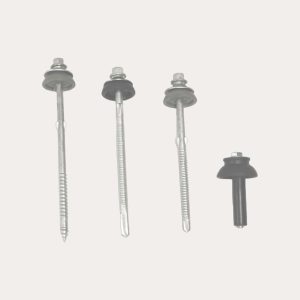
Fit a new roofing screw of the correct type, length and diameter for the sheet, insulation thickness and supporting structure. It must have a quality bonded EPDM washer. Use timber fixings for timber purlins and self-drilling steel fixings for steelwork, selecting the drill capacity to suit the steel thickness. The head style and colour should also suit the roof system where appearance matters.
Drive the new screw square to the sheet. Stop when the washer is evenly compressed and just spreads to the edge of the washer face. It should not bulge heavily, split or force a deep depression into the sheet. A variable-speed drill driver with a clutch gives far more control than driving at full speed.
Finally, inspect the repair from the side. The screw should sit straight, the washer should contact the sheet all the way around, and the sheet should remain in its natural profile. Once the area is dry and safe to test, a controlled hose test above the repair can confirm the result. Do not use a pressure washer, which can force water into laps and flashings that would not normally leak in rainfall.
When a replacement screw is not enough
If the hole has become enlarged, a standard replacement screw may not pull tight. On a timber-supported roof, a slightly larger compatible roofing screw can sometimes restore a secure fixing, provided the timber behind it is sound and there is enough edge distance. Do not choose a larger screw blindly, as it can damage the sheet or create another weak point.
Where timber is rotten, split or absent, the support must be repaired before the sheet is refixed. Where a steel purlin has been missed or stripped, the solution depends on the purlin layout and sheet profile. Moving the fixing to the correct support line may be necessary, but any abandoned hole still needs a proper weatherproof repair using a compatible sealing system.
For a badly elongated hole, a cracked sheet around the fixing, or corrosion that has thinned the metal, replacement of the affected sheet is often the sensible long-term option. A patch of mastic may stop a drip briefly, but it does not restore the sheet’s strength or wind resistance.
Should you use sealant on roof screw leaks?
Butyl sealant tape and compatible roofing sealants have an important role around laps, flashings, closures and certain repair details. They are not a substitute for a properly seated roofing screw and washer.
Smearing silicone over a loose screw head tends to hide the fault rather than fix it. It can peel away as the roof moves, trap dirt and make later repairs more difficult. If sealant is needed around a repaired hole or an approved lap detail, make sure the surface is clean, dry and compatible with the sheet coating. Avoid products that may react with plastics, coatings or insulation facings.
Prevent repeat fixing leaks
The best prevention starts with the correct fixing schedule. Roof sheets need enough fixings at eaves, ridge and overlaps to resist wind uplift, with the right spacing across intermediate purlins. Too few fixings allow movement; too many poorly driven fixings create unnecessary penetrations.
Use trade-grade screws with bonded EPDM washers rather than general-purpose screws with separate washers. Store fixings dry, match them to the roof material and support, and use the correct driver socket so heads are not damaged during installation. On long sheet runs, allow for thermal movement through the specified fixing arrangement rather than clamping sheets so tightly that they buckle.
An annual visual check is worthwhile, particularly after severe wind. Look along the roof in low sunlight, when lifted washers and uneven screw heads are easier to spot. Clear leaves from gutters and behind flashings too, because standing water can expose weak details that would otherwise cope with normal run-off.
Know when to call for technical advice
One or two failed screws on an otherwise sound garage, stable or workshop roof are usually a manageable maintenance job. Repeated leaks across the roof, loose sheets, widespread washer failure or uncertainty over the purlin construction are different matters. Getting the fixing type, length and washer arrangement right protects the whole roof build, not just one hole.
Roof Sheets Online can help customers specify compatible sheets, fixings, flashings and sealing materials for refurbishment work. A clear photo of the sheet profile, fixing position and support structure will make technical guidance far more accurate.
A dry repair completed with the right screw is a small job that prevents stained insulation, damaged timbers and a much larger roofing bill later. Take the time to fix the support as well as the screw, and the next heavy shower should stay where it belongs – outside.