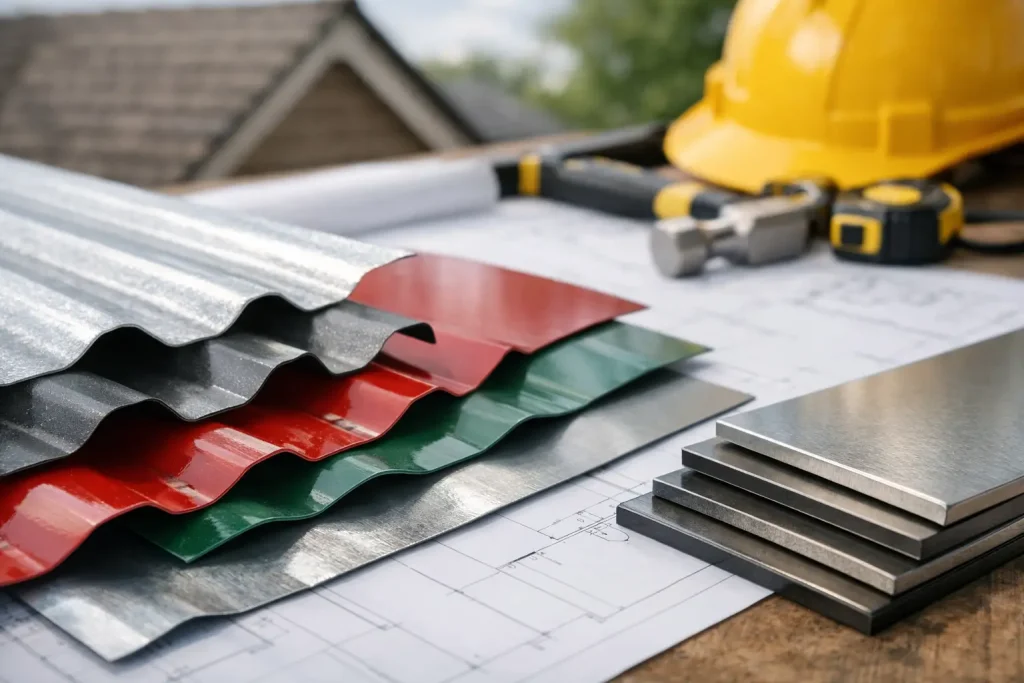
A 0.5mm roofing sheet can be absolutely right on one job and completely wrong on another. That is where many buyers get caught out. They focus on thickness alone, when the real answer depends on the building, the spacing of the supports, the sheet profile, and what the roof needs to deal with over time.
If you are asking what thickness roofing sheets do I need, the honest answer is that there is no one-size-fits-all figure. A small garden workshop, an agricultural lean-to and a commercial refurbishment will not usually want the same sheet specification. Getting it right means balancing strength, span, budget, finish and long-term performance.
For most single skin steel roofing jobs in the UK, the common starting point is 0.5mm thickness. That is often suitable for garages, sheds, workshops, canopies and many general-purpose outbuildings when the support structure and spans are properly designed.
Move up to 0.7mm and you are generally into a stronger, more rigid option that suits heavier-duty applications, wider purlin spacings, or jobs where the roof will see tougher conditions and more site traffic during installation. On some projects, especially where insulation is built into the panel, thickness is considered differently because the overall panel construction does much of the structural work.
So the better question is not just what thickness roofing sheets do I need, but what thickness suits my span, profile and use.
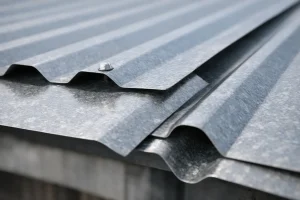
Buyers sometimes compare sheets by gauge alone and assume thicker always means better. In practice, sheet profile matters just as much. A box profile sheet is designed for strength and water-shedding efficiency, while corrugated sheets have their own spanning characteristics and visual appeal. Two sheets with the same thickness can perform differently if the profile depth and shape are different.
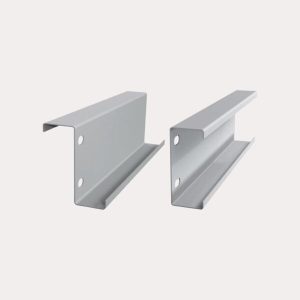
The support spacing underneath the sheet is another major factor. If your purlins are set at wider centres, the sheet may need greater rigidity. If the centres are tighter, a thinner sheet may be perfectly suitable. Roof pitch also plays a part, especially in how effectively water runs off and how the system handles the weather.
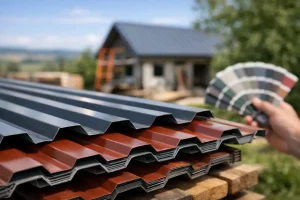
Then there is finish. A plastisol-coated steel roof sheet and a plain galvanised sheet might both be available in the same thickness, but they are not identical in service life, appearance or resistance to the elements. Choosing the right sheet is about the whole system, not just one number on a product page.
This is the standard choice for a large number of domestic and light commercial applications. If you are roofing a garage, shed, stable block, garden room, workshop or similar structure, 0.5mm box profile or corrugated sheets are often the practical option.
They offer a good balance of strength, weather resistance and cost. For many customers, this thickness gives the performance they need without overspending on a heavier gauge that the job does not require.
That said, 0.5mm still needs to be installed correctly. The purlin spacing, fixings, overlaps and flashings all matter. A good sheet can be let down by poor detailing.
If the roof has longer spans, sees more demanding use, or needs extra rigidity, 0.7mm is often worth considering. This thickness can be a better fit for industrial buildings, agricultural structures, refurbishments where support centres are less forgiving, or projects where installers want a sheet with a more solid feel underfoot during fitting.
It will usually cost more and weigh more, so it is not automatically the right move for every job. But where the structural demand is higher, the extra thickness can add useful confidence.
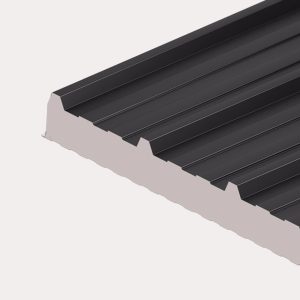
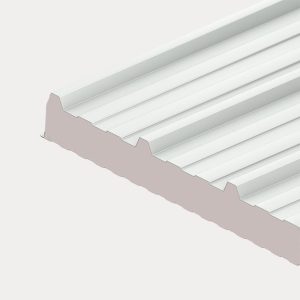
With insulated panels, the conversation changes slightly. The steel facings may be relatively thin, but the insulated core gives the panel its overall stiffness and thermal performance. These systems are selected by panel thickness such as 40mm, 60mm, 80mm and above, rather than only by the steel skin thickness.
If you are roofing a workshop, extension, commercial unit or any building where heat loss and condensation control matter, insulated panels may be the better route altogether. In that case, asking for the right roofing sheet thickness means thinking about insulation thickness, U-values and panel span capability, not just outer metal gauge.
For straightforward outbuildings, 0.5mm steel sheets are often the sensible choice. They are sleek, strong and weather-resistant, and they suit many timber or light steel-framed structures. If the roof is modest in size and the support centres are sensible, there is often no need to go heavier.
Agricultural projects can be more demanding. Exposure, condensation, internal moisture and longer roof runs all need consideration. A thicker sheet may be worthwhile, particularly where the structure is open-sided or the environment is harsher. Fibre cement can also be considered in some agricultural settings because of its acoustic and anti-condensation characteristics.
If the building is occupied regularly, used for work, or needs better thermal control, insulated panels can be the stronger long-term option. They cost more upfront, but they can reduce condensation issues and improve year-round usability. For a cold roof application, a heavier single skin sheet may still be suitable, but the decision should be based on performance, not just purchase price.
This is where mistakes are often made. A buyer chooses a sheet thickness based on what looks common, but does not check how far the sheet is spanning between purlins. If the support centres are too wide for the chosen sheet, the roof may feel less rigid, perform poorly under load, or become noisier and more prone to movement.
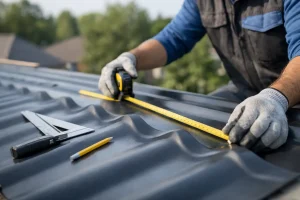
Manufacturers publish load tables and span guidance for a reason. Those figures take the guesswork out of the decision. If you know your building width, purlin centres, roof pitch and location, you can narrow down the correct sheet specification far more accurately.
On exposed sites, this becomes even more important. A roof on a sheltered suburban garage may cope happily with a lighter spec than a building on a windy rural site. The UK weather does not treat every postcode equally.
A strong sheet is not automatically the right sheet if the building suffers from condensation. This is especially relevant for garages, workshops, stables and agricultural buildings where warm, moist air can meet a cold roof surface.
In some cases, anti-condensation backing on a single skin sheet is enough. In others, insulated panels are the smarter answer. If the roof is being installed over a space where tools, machinery, feed, tack or stored items need protection from dripping moisture, it is worth dealing with that at specification stage rather than after the roof is up.
That is why the right thickness is often tied to the wider roof build-up. You are not only buying a sheet. You are choosing a finished roofing system.
It is tempting to choose the thinnest sheet available to keep the project cost down. Sometimes that works. Often, it becomes a false economy. If the sheet is under-specified, you may end up compensating with tighter support centres, additional structure, or future repairs that cost more than choosing correctly at the start.
On the other hand, over-specifying can waste money too. There is no benefit in paying for a heavier gauge where a standard 0.5mm sheet is already suitable for the roof design. The aim is not to buy the thickest sheet. It is to buy the right one.
Start with the type of building and whether it is a cold roof or an insulated roof. Then check the sheet profile you want, the purlin spacing, the roof pitch and how exposed the site is. After that, think about internal conditions. Will condensation be an issue? Does the building need thermal performance, or just weather protection?
Once those points are clear, sheet thickness becomes much easier to pin down. For many everyday projects, 0.5mm steel sheets are the dependable standard. Where loads, spans or site conditions are tougher, 0.7mm may be the better option. Where insulation and condensation control are central, insulated panels are often the right answer.
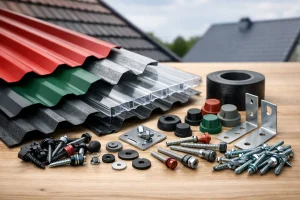
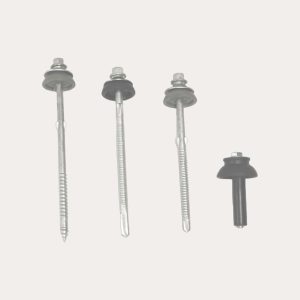
If you are unsure, getting proper technical guidance before ordering is always the safer route. That is especially true if you need the full system including flashings, fixings, rooflights and purlins, because every part of the roof needs to work together.
At Roof Sheets Online, we help customers across Great Britain match the right sheets and accessories to the job, so you are not left piecing it together after delivery. If you are weighing up thickness, profile or panel type, a quick conversation now can save a lot of hassle later.
The best roofing sheet is not the thickest one on the shelf. It is the one that fits your building properly, handles the weather confidently and gives you a roof you can rely on for years.
Roof Sheets Online Ltd
UNIT C4
MACROME ROAD
Wolverhampton
WV6 9HD
Company No 15150940
Vat No. 4880 70856