A roof usually starts leaking at the joins, not across the middle of the sheet. That is why flashing details matter. If the sheets are doing the broad weatherproofing, the flashings are doing the precision work – closing gaps, shedding water away from weak points, and protecting the edges and junctions that take the most punishment from wind and rain.
For trade installers, this is where a tidy job becomes a durable one. For competent DIY buyers, it is often the part that gets underestimated. You can order strong, weather-resistant sheets in the right profile and coating, but if the ridge, verge, abutment or apron detail is wrong, the roof will tell you quickly.
A practical guide to roof flashing details UK buyers should know
In UK conditions, flashing details need to cope with driving rain, variable roof pitches and a lot of masonry junctions on garages, workshops, stables and extensions. The right detail depends on the roof type, the sheet profile, the pitch and what the roof is meeting – another roof slope, a wall, an eaves line or an edge exposed to wind uplift.
The main job of any flashing is simple enough. It needs to direct water over the roofing material, not behind it. It also needs to accommodate movement, cover cut edges neatly and work with the profile fillers, sealants and fixings used on the roof. That last point is where many problems begin, because flashings should never be treated as a generic add-on.
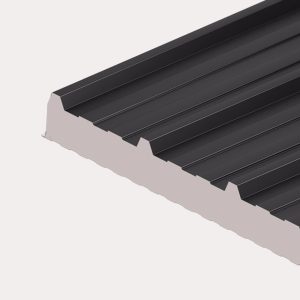
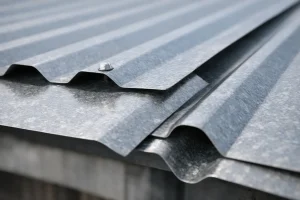
A box profile roof, for example, needs flashing details that suit the sheet shape and closure fillers. Corrugated sheets need a different fit at the profile. Insulated panels introduce extra depth and different junction detailing again. If you are ordering sheets, fixings and trims from separate places without checking compatibility, you can make a straightforward job much harder than it needs to be.
The roof flashing details that matter most
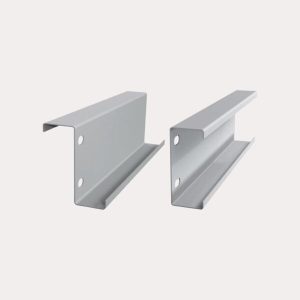
Most projects come down to a handful of core flashing types. Ridge flashings weather the top junction where two roof slopes meet. Barge boards or verge flashings protect the roof edge at the gable. Eaves flashings help control runoff into the gutter line. Apron flashings cover where a roof meets a wall from the lower side, while side or abutment flashings protect where the roof runs into a wall along the slope.
There are also corner details, valley flashings and bespoke trims for more awkward layouts. On agricultural and industrial-style roofs, corner and edge protection can be just as important as the main ridge and verge pieces because exposed edges take significant wind pressure.
The principle is consistent across all of them. Each flashing should overlap the sheeting correctly, maintain a clear drainage path and avoid creating a pocket where water can sit. Good detailing is not about making the trim look neat from the ground, although that matters too. It is about making sure rainwater has only one route to follow – away from the building.
Material choice and why it affects performance
In a proper guide to roof flashing details UK projects can rely on, material choice cannot be skipped. The flashing needs to match the roofing system in both durability and finish. Thin or poorly coated trims can spoil an otherwise solid roof build.
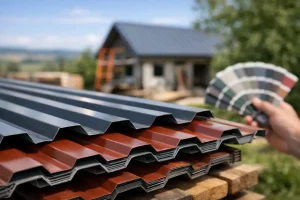
Common options include galvanised steel, plastisol-coated steel, polyester-coated steel and aluminium. Steel flashings are a popular choice for sheeted roofs because they give strength, good lifespan and a close visual match to the roof sheets. Plastisol-coated flashings are especially popular where long-term weather resistance matters and where buyers want a tougher, more hard-wearing finish.
Aluminium has its place as it is lightweight and corrosion-resistant, but it behaves differently and may not be the first choice for every sheeted outbuilding or industrial-style installation. The key is to think in system terms. If the roof sheets, fixings and flashings are designed to work together, you get a cleaner fit and fewer surprises on site.
Laps, sealants and fixings – where details go right or wrong
A flashing can be the right shape and still fail if the lap arrangement is poor. Horizontal laps between flashing lengths need enough overlap to prevent water tracking back under the joint, particularly on exposed sites. The amount can vary depending on pitch and exposure, but too little lap is one of the most common shortcuts behind future leaks.
Sealant also needs a measured approach. It helps in the right place, but it should support the mechanical weathering detail rather than replace it. If a flashing only works because it is heavily masticed, the detail probably needs rethinking. Sealants age. Water always looks for the weak point.
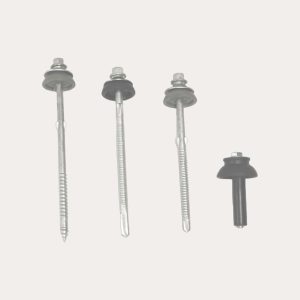
Fixings matter just as much. Over-tightened fasteners can deform the flashing and create stress points. Under-fixed trims can rattle, lift or let wind-driven rain in. Fixing centres, washer quality and fixing position all need to suit the trim and substrate. On profiled sheeting, foam fillers are often needed under ridges and other flashings to close the profile gaps while still preserving the designed weathering line.
Junctions with walls need extra care
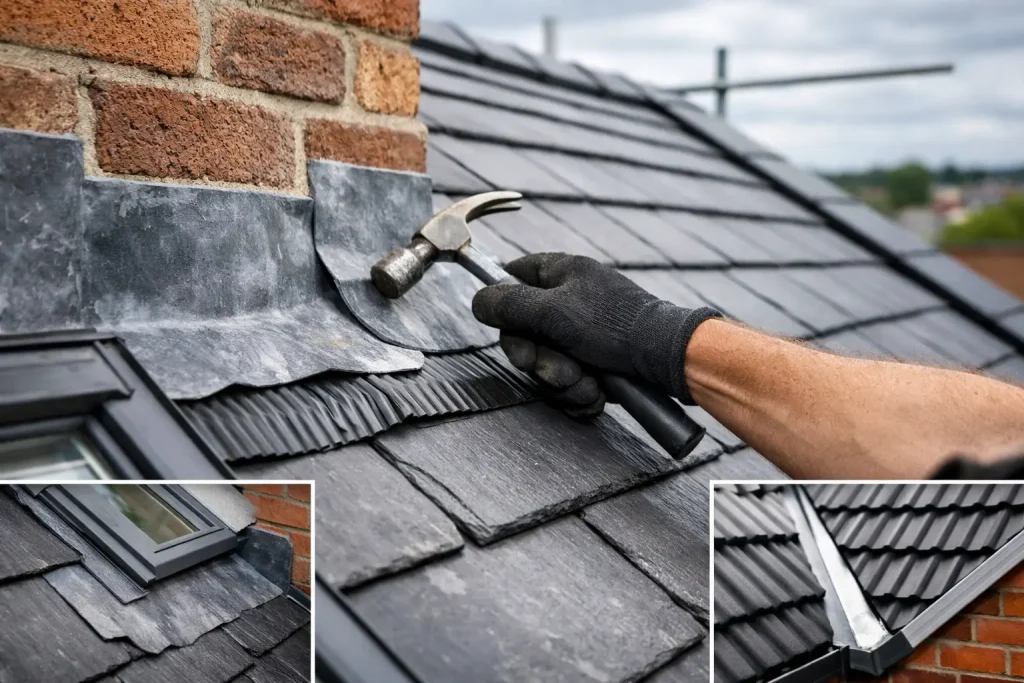
Wall abutments are some of the most failure-prone parts of any roof. That is especially true on lean-tos, garage roofs, extensions and refurbishments where new sheets meet old masonry. A side abutment or apron flashing should not just cover the gap. It must throw water out and over the roof covering while being properly dressed or sealed into the wall detail above.
If the wall is uneven, damaged or out of square, a standard trim may need adapting. This is one of those areas where it depends on the building. On a simple workshop roof against a flat block wall, a standard abutment detail may be fine. On an older stone or brick structure, you may need a more forgiving arrangement or a bespoke flashing to get a dependable seal.
That is why taking a few dimensions and photos before ordering can save time, cost and site frustration later.
Pitch, exposure and building use all change the detail
There is no single flashing setup that suits every roof. Lower pitches generally demand more care with overlaps and water control because runoff is slower and back-up risk is higher. On a steep pitch, water sheds faster, but wind uplift at edges and ridges can still be a concern.
Exposure matters too. A stable in an open rural location may take very different weather pressure compared with a garage in a sheltered suburban setting. Buildings that generate moisture internally, such as agricultural units or workshops, also need detailing that works alongside anti-condensation measures and good ventilation.
This is where buyers benefit from speaking to a specialist supplier rather than simply ordering by sheet size alone. The trim profile, closure type and finish all need to suit the actual job, not just the drawing.
Common mistakes that shorten roof life
The biggest issue is treating flashings as cosmetic. They are functional components and should be specified early, not added at the end when the sheet order is already placed. Another common mistake is mixing incompatible profiles, so the flashing does not sit correctly over the sheet ribs. That often leads to excessive sealant use, poor fixing lines and weak weathering.
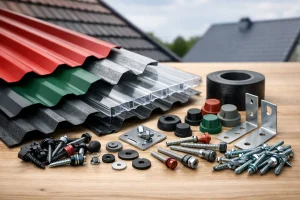
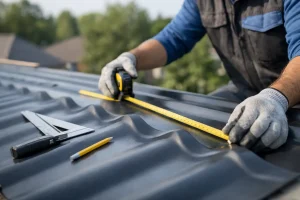
Incorrect measurements are another expensive problem. Verge and ridge flashings need to suit not just the roof dimensions but also the profile shape, overhang and angle. Buyers also sometimes forget the supporting items – fillers, stitching screws, butyl sealants or closure pieces – and then have to improvise on site.
A final issue is underestimating lead times or delivery coordination. If the roof is waiting for one missing trim, the whole job can stall. Ordering the sheets, flashings and fixings together is usually the simplest route because the components are considered as one roof system from the start.
Getting the detail right from the outset
If you are planning a new roof or refurbishment, start with the junctions first. Work out how the roof finishes at the ridge, edges, eaves and wall connections before placing the order. That makes sheet lengths, trim design and accessory quantities much easier to get right.
At Roof Sheets Online, that joined-up approach is exactly what many customers need – one order, one supplier, and the confidence that the sheets, flashings and supporting components are designed to work together. It keeps the process straightforward and helps avoid the site fixes that usually cost more in the end.
Good flashing details are not the glamorous part of a roof, but they are often the difference between a roof that merely looks finished and one that stays weatherproof for years. If you are unsure on profile compatibility, trim type or how a junction should be formed, get advice before ordering. It is much easier to build the detail in at the start than to chase a leak once the weather finds it.