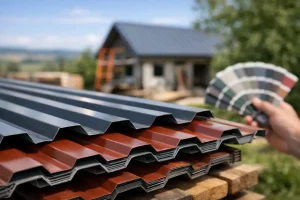
Box profile roofing usually goes wrong in the same few places – sheet laps, fixing positions, and rushed finishing details. Get those right and you end up with a sleek, strong, weather-resistant roof that lasts. Get them wrong and even a premium sheet can underperform.
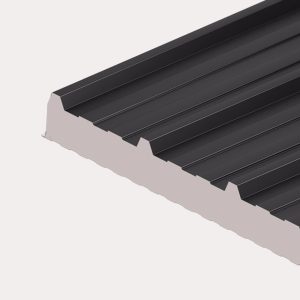
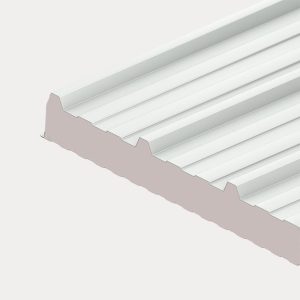
If you are looking up how to fit box profile sheets, the good news is that the system is straightforward once the structure, accessories and fixing pattern all match the job. Whether you are roofing a garage, workshop, stable, shed or light industrial unit, the aim is the same: keep the sheets square, keep the laps tight, and fix them correctly for the support beneath.
Before you fit box profile sheets
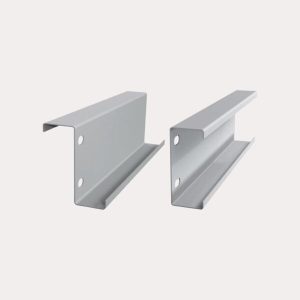
Start with the roof structure, not the sheets. Box profile sheets need to sit on sound, level supports with the correct spacing. If your purlins or battens are out of line, the sheets will not pull down neatly and your side laps can open up. That is where leaks, rattling in high wind and poor visual finish often begin.
You also need to check roof pitch before ordering and fitting. Box profile can work well on low pitches, but the exact minimum pitch depends on the sheet profile, sheet length, overlap detail and the wider roof design. A shallow pitch may need more care at the end laps and seal locations. On a steeper pitch, water run-off is less of a concern, but sheet handling and alignment still matter just as much.
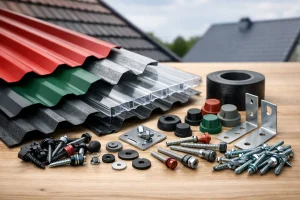
This is also the point to make sure you have the full system on site. That means sheets, fixings, foam fillers if needed, flashings, rooflights where specified, and any tapes or sealants required for laps. A one-supplier order usually saves time here because you are not trying to match parts from different merchants halfway through the install.
Tools and handling matter more than people think
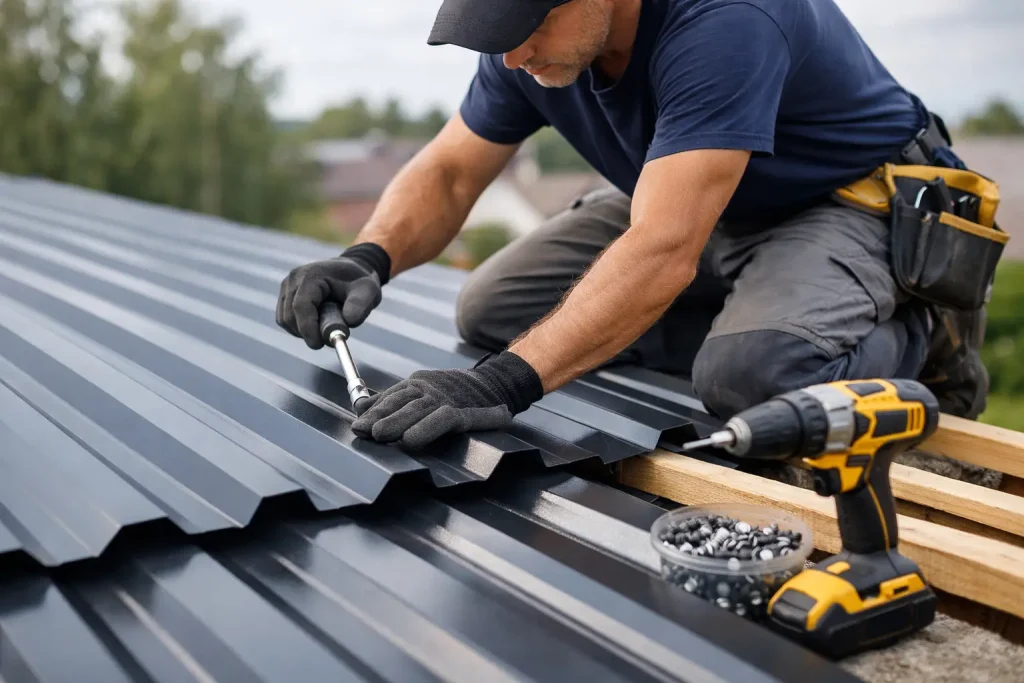
Fitting box profile sheets is not just about screwing panels down. Long sheets can be awkward to carry, easy to scratch and easy to distort if they are handled carelessly. Lift them properly, store them dry and off the ground, and keep them covered if they are waiting on site.
For cutting, use methods suitable for coated steel sheets. You want a clean cut without burning the coating. Any swarf left on the sheet after cutting or drilling should be brushed away straight away, because metal filings can rust on the surface and stain the finish.
Walk on the sheets carefully during installation. Step over or close to the supports where the sheet is strongest, not in unsupported areas where you can dent the profile.
How to fit box profile sheets on a roof
The first sheet sets the line for everything else, so take your time with it. Position it square to the eaves and the verge. If the first sheet is slightly out, every sheet after it follows that error and the roof can finish badly out of line by the far end.
Set the first sheet accurately
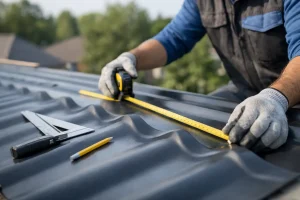
Offer the first sheet into place and check both the overhang at the eaves and the alignment to the roof edge. Measure rather than judging by eye. A small difference at the start becomes a much bigger problem several sheets later.
Temporarily fix the sheet lightly so you can make final adjustments. Once you are happy with the line, put in the main fixings according to the support type and fixing layout.
Side laps and end laps
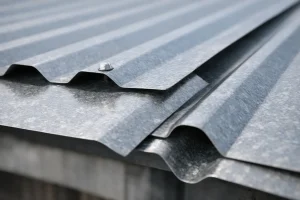
Most box profile sheets are laid with a side lap of one profile, but this can vary with specification. The lap should face away from the prevailing weather where possible. That helps reduce the chance of wind-driven rain pushing into the joint.
If the roof design needs end laps because the sheet does not run full length, make sure the lap length matches the roof pitch and the manufacturer guidance for that profile. Lower pitches generally need greater care and often longer laps. On some jobs, sealant tape is used in the lap to improve weather resistance.
Do not force sheets together if the structure is out. Fix the cause first. Pulling a sheet into place against a poor frame can twist the panel and leave stress in the sheet.
Fixings and where they go
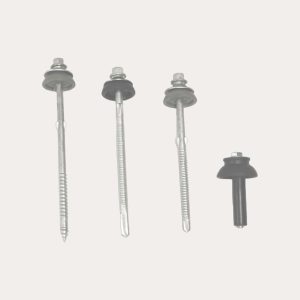
Using the right fixings is essential. The fixing type depends on whether you are fixing into timber or steel, and the washer arrangement needs to suit the sheet and application. This is not the place for generic screws from a local hardware shelf.
Fixings are usually installed through the sheet into the purlin or support below, with spacing based on the project type, exposure and support centres. Tighten them enough to compress the washer and create a weatherproof seal, but do not overtighten. Crush the washer and you shorten its life. Leave it too loose and water can track in.
Consistency matters. A neat, even fixing line looks better, but more importantly it helps spread load properly across the sheet.
Flashings, fillers and finishing details
A roof is only as weatherproof as its edges and junctions. Ridge flashings, barge flashings, eaves details and abutment flashings all need to suit the sheet profile and building layout. This is where many leaks show up, not across the middle of the sheet.
Profiled foam fillers are often used beneath flashings to close the gaps created by the sheet shape. They help prevent wind-blown rain, dirt, insects and birds getting into the roof build-up. On some buildings they are strongly recommended, especially where exposure is higher.
At the ridge, make sure the top of the sheets is aligned properly before fitting the ridge flashing. If the roof lines are uneven, the ridge detail will show it immediately. At the verges, keep the edge finish clean and secure so the roof is not vulnerable in strong weather.
How to fit box profile sheets with rooflights
If you are installing rooflights alongside steel box profile sheets, keep the layout planned from the start rather than dropping them in wherever space is left. Rooflights need compatible fixings and support, and they should line through neatly with the surrounding sheets.
Take care not to overtighten rooflight fixings, as translucent sheets can crack if stressed. The lap arrangement also needs attention, because mixing materials in the roof covering changes how the assembly behaves. It is a simple enough detail when the right components are ordered together, but awkward if it is improvised on site.
Common mistakes to avoid
The biggest fitting mistakes are usually avoidable. Starting out of square, using the wrong screws, skipping fillers, and guessing lap details are all common problems. So is ordering sheets before checking support centres and roof dimensions properly.
Another regular issue is trying to save time by mixing unmatched accessories. Box profile roofing works best as a complete system. Fixings, flashings and closures are not afterthoughts. They are part of what makes the roof precision-crafted and weatherproof.
There is also a trade-off between speed and finish. On a simple shed roof, you may get away with more basic detailing than on a workshop or commercial unit, but cutting corners usually shows up later. If the building stores equipment, livestock feed, tools or vehicles, getting the weatherproofing right first time is worth it.
When fitting changes from simple to specialist
Some jobs are straightforward enough for a competent installer. Others need more technical input. Very low-pitch roofs, longer sheet runs, insulated build-ups, refurbishment over existing structures, or sites with high exposure all need closer attention. The fitting method may still look similar, but the specification behind it is more demanding.
That is why product choice matters just as much as installation method. Sheet thickness, coating, anti-condensation backing, flashing details and support layout should all suit the building use. A stable, agricultural store and domestic garage do not always need the same build-up.
If you are ordering for a project and want the process to run smoothly, it helps to source the full package from a specialist supplier that can confirm the correct accessories as well as the sheets. Roof Sheets Online supports customers across Great Britain with box profile sheets, flashings, fixings, rooflights and the practical guidance needed after ordering.
A better fit starts before the first screw
The best box profile roofs are not the ones fitted fastest. They are the ones measured properly, specified properly and finished with the right details at every edge and overlap. If you take the time to set the first sheet right and use the correct components throughout, the rest of the roof has every chance of going on cleanly and performing for years. If you are unsure on the detail, ask before you fit – it is always easier than correcting a leak later.