
Get purlin spacing wrong and the rest of the roof can feel like a compromise from day one. Sheets may flex, fixings can work harder than they should, and what looked like a straightforward build starts picking up avoidable problems. This roof purlin spacing guide is here to help you make sensible decisions before materials are ordered and fitted.
Purlin spacing is not just a number pulled from habit. It depends on the sheet profile, sheet thickness, roof pitch, expected loading, and what the building is actually being used for. A small garden workshop and an exposed agricultural shelter may both use steel sheets, but they will not always want the same support centres.
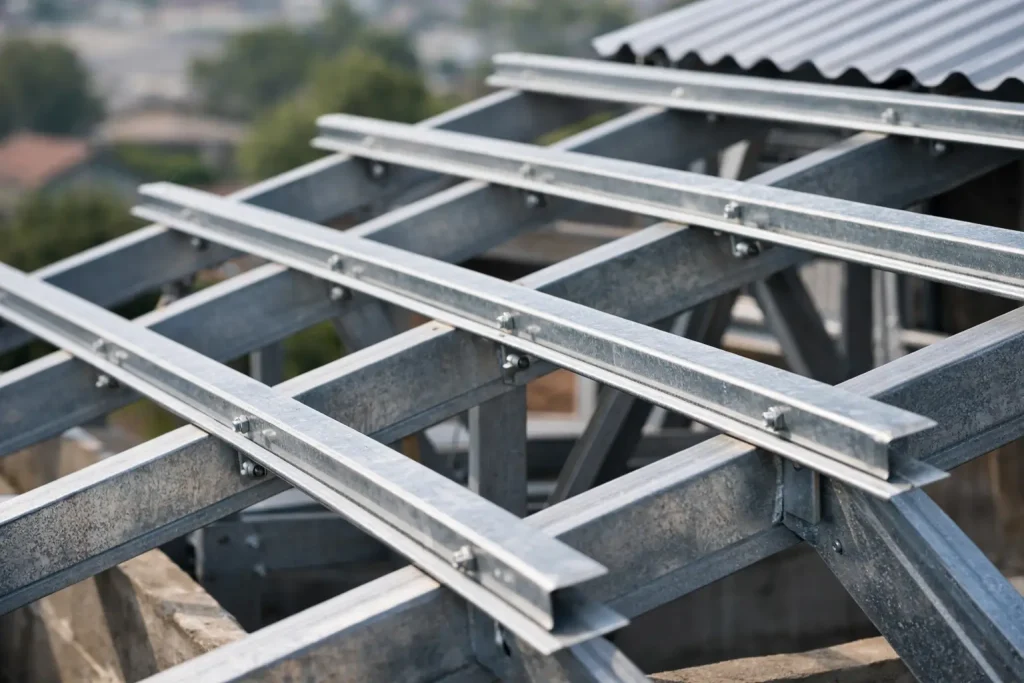
Purlins are the horizontal structural members that support the roofing sheets across the roof slope. In most light industrial, agricultural and domestic outbuilding projects, they sit between the main rafters or portal frame and give the sheets the support they need to perform properly.
When people talk about spacing, they usually mean the distance from the centre of one purlin to the centre of the next. You will often hear this called purlin centres. That spacing affects how well the roof sheets carry load, how stable the roof feels under wind and weather, and whether the finished roof performs the way the manufacturer intended.
Too wide, and the sheets may deflect under snow, wind uplift or foot traffic during maintenance. Too tight, and you may be adding unnecessary steel or timber and increasing cost without much benefit. The right answer sits between structural performance, product specification and budget.
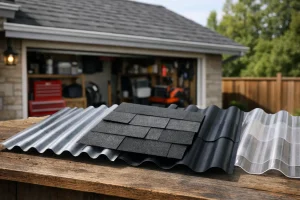
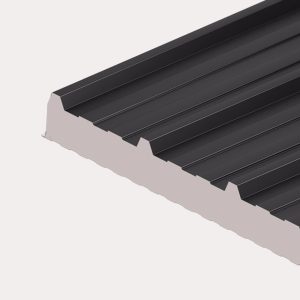
The biggest factor is the roof sheet itself. Different profiles are designed to span different distances. A deeper box profile sheet will generally span further than a lighter corrugated sheet of similar gauge, while insulated panels can perform very differently again because the panel acts as a structural element in its own right.
Sheet thickness matters too. A thicker steel sheet will usually cope better over wider centres than a thinner one, but profile shape still plays a major part. It is a mistake to assume that all metal roofing can be fixed to the same purlin spacing just because the material looks similar.
Roof pitch has a say as well. Steeper roofs can shed water more effectively, but that does not automatically mean they can span further in every case. Wind exposure, especially on open sites or elevated locations, can place extra demand on the roof. A coastal workshop in Cornwall and a sheltered garage in the Midlands are not facing the same conditions.
Then there is loading. Snow load, wind uplift and maintenance access all need considering. If the roof may need occasional foot traffic for inspection, cleaning or servicing rooflights, that should be part of the thought process. Agricultural and commercial roofs often need a more cautious approach than a simple garden shed.
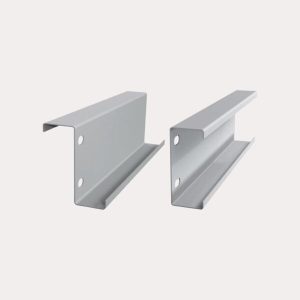
Finally, think about the substructure. Steel purlins, timber purlins and cold-formed sections all behave differently. The sheet manufacturer’s data and the structural design need to work together, not against each other.
For many smaller UK roofing projects, purlin centres often fall somewhere between 1.0m and 1.8m, but that is only a broad working range, not a rule. Some sheet systems are designed for less, some can go further, and insulated systems may have their own span tables entirely.
On lighter duty buildings such as sheds, stables, garages and workshops, box profile sheets are often chosen because they offer a strong balance of appearance, weather resistance and spanning ability. Corrugated sheets can also work well, especially where a more traditional look is wanted, but profile depth and thickness still need checking against the required centres.
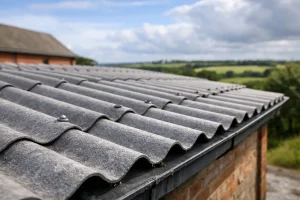
Fibre cement is another case where assumptions can cause issues. It offers excellent acoustic and anti-condensation benefits in the right setting, but support centres need to follow the product guidance carefully because its behaviour differs from steel sheeting.
This is why a proper roof purlin spacing guide should never promise one spacing that suits every roof. It depends on the sheet system and the job.
A stronger profile can reduce the number of purlins required, which may lower labour and steel costs in the supporting frame. That can make a better-performing sheet more economical overall, even if the sheet price itself is slightly higher.
This matters on larger roofs where every extra line of support adds time, fixings and handling. It also matters on refurbishments, where existing purlin positions may limit your options. If you are replacing old sheets and keeping the structure, you need a roofing sheet that works with the purlin centres already there, or a plan to alter the framework.
In practical terms, this is often where product choice and structural layout should be decided together. Choosing sheets first and worrying about purlins later can be expensive. The same is true in reverse.
One of the most common mistakes is copying spacing from another building without checking the specification. Two roofs may look almost identical from the ground, but have different sheet gauges, different pitches and very different exposure conditions.
Another is measuring from edge to edge rather than centre to centre. That can create confusion on site and leave fixings landing in the wrong place. It sounds basic, but these small errors are exactly what slow a job down.
There is also a tendency to plan around what is easiest to fabricate rather than what gives the sheet proper support. A spacing layout that works neatly on paper is not much use if it leaves the end laps, side laps or rooflights poorly supported.
The last big issue is treating all roof areas the same. Eaves, ridges, verges, rooflight openings and laps may need more careful detailing than the middle run of the roof. These areas often carry higher stress and need secure, well-planned fixing points.
Start with the sheet profile you intend to use. Look at the manufacturer’s recommended span tables or technical data for the exact product, thickness and application. This gives you a realistic starting point rather than guesswork.
Next, look at the building itself. Consider the roof pitch, location, height, exposure and use. A domestic garage may allow a more straightforward arrangement than a livestock building, open-sided shelter or industrial unit in a windy area.
Then check what loads are likely to apply. Snow and wind are the obvious ones, but maintenance access and service loads matter as well. If there is any doubt, structural input is the sensible route. Spending a little time on this stage is far cheaper than correcting a roof that has been under-supported.
After that, coordinate the whole roof build. Purlin centres need to work with sheet lengths, end laps, fixings, flashings and any rooflights. A roof is a system, not just a bundle of parts. When everything is specified together, installation is faster and cleaner.
If you are buying complete materials in one go, it helps to deal with a supplier that understands not just the sheets but the supporting components too. That avoids the usual problem of one merchant selling the sheet, another supplying the purlins, and nobody taking ownership of whether the specification works as a whole.
New builds give you the freedom to set purlin centres to suit the chosen roof sheet. Refurbishments are less forgiving. Existing steelwork or timberwork may already be fixed in place, and the replacement sheet needs to perform over what is there unless the frame is being altered.
That can narrow your choices quite quickly. In some cases, stepping up to a stronger profile or thicker gauge makes sense. In others, adding extra support is the better answer. Neither option is automatically right – it depends on cost, programme and how much disruption the building can tolerate.
For older agricultural and industrial roofs, it is also worth checking alignment and condition. Even if the nominal spacing is correct, damaged, twisted or poorly levelled purlins can make fitting difficult and affect the finish.
If the roof includes insulated panels, long spans, exposed locations, unusual loading, rooflights, or a mix of materials, it is worth asking for technical guidance before you commit. The same applies if you are not certain whether the existing structure is suitable for the new sheets.
At Roof Sheets Online, we help customers across Great Britain pull these details together so they can order with confidence, not fingers crossed. Getting sheets, purlins, fixings and flashings aligned from the start usually saves both time and money.
A well-supported roof looks better, fits better and lasts better. If you are planning a new roof or replacement project, treat purlin spacing as part of the specification, not an afterthought, and the whole job tends to run far more smoothly.
Roof Sheets Online Ltd
UNIT C4
MACROME ROAD
Wolverhampton
WV6 9HD
Company No 15150940
Vat No. 4880 70856