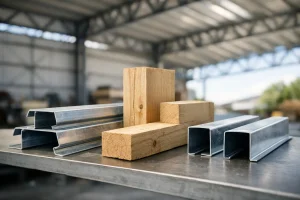
If you are pricing a new roof for a shed, stable, workshop or light industrial unit, the fibre cement vs metal roofing question usually comes down to one thing – what matters most on your job. Not every roof needs the same answer. A farm outbuilding with livestock, a domestic garage and a busy commercial unit will all put different demands on the sheet, the structure below it and the budget behind it.
Both materials are proven options. Both are widely used across the UK. But they behave differently once they are on the roof, and those differences affect everything from condensation control to noise levels, installation speed and long-term maintenance.
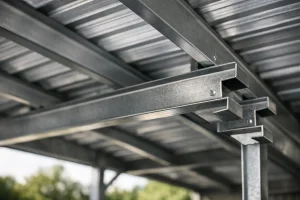
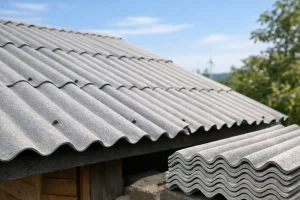
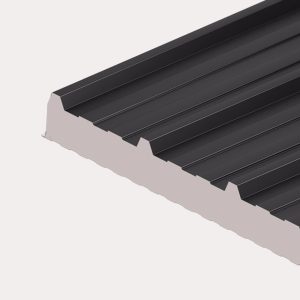
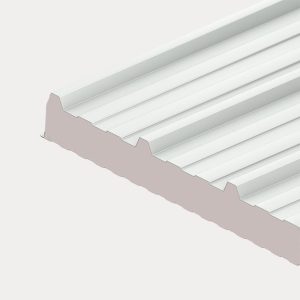
Fibre cement sheets are dense, durable roofing sheets made from cement reinforced with fibres. They are commonly used on agricultural buildings, stables, barns and other structures where a quieter internal environment and reduced condensation are useful. Metal roofing sheets are typically manufactured from galvanised steel, often with a painted or plastisol-coated finish, and are a popular choice for garages, workshops, commercial buildings and modern outbuildings because they are strong, lightweight and quick to fit.
In simple terms, fibre cement usually wins on acoustic performance and moisture absorption, while metal roofing tends to lead on weight, appearance choice, speed of installation and overall versatility. That does not make one better across the board. It means the right sheet depends on the building and how it will be used.
Price is often where buyers start, but it should not be where the decision ends.
Metal roofing is frequently the more cost-effective option when you look at supply, handling and fitting together. Steel sheets are lighter, easier to move around site and generally quicker to install over large areas. That can reduce labour time, especially on straightforward runs. If you are covering a garage, workshop or storage building and need a practical, weather-resistant finish without delay, metal is often the sharper commercial choice.
Fibre cement can look more expensive at first glance, especially once you factor in handling and the support structure required. The sheets are heavier and more brittle than steel, so installation needs a bit more care. However, that upfront cost can still make sense where the building use suits the material. In agricultural settings, for example, buyers often accept the extra spend because they want the quieter performance and the lower risk of internal dripping from condensation.
Value is not just about the invoice total. It is about whether the roof performs properly for the next 20 years.
Both systems can offer a long service life when correctly specified and installed. Metal roofing performs very well, particularly when you choose a quality coated sheet suited to the environment. Plastisol-coated steel is a strong option where durability and surface protection matter. Polyester can also suit many standard applications where budgets are tighter.
Fibre cement also has a solid track record and does not rust, which is one reason it remains popular in certain sectors. That said, sheet quality, fixings, roof pitch and exposure all play a part. Neither material should be treated as fit-and-forget if the details around it are poor. Flashings, fixings, rooflights and sealing details matter just as much as the main sheet.
This is one of the biggest deciding factors.
Fibre cement sheets naturally absorb a degree of moisture, which helps reduce the risk of condensation dripping into the building. That can be a major benefit in agricultural buildings, stables and uninsulated structures where ventilation varies and internal moisture levels are high. If you are housing animals, storing feed or simply trying to avoid a roof that sweats in colder weather, fibre cement has a genuine practical advantage.
Metal roofing does not absorb moisture in the same way. If warm, moist air inside the building hits a cold steel sheet, condensation can form. That does not mean metal is a poor choice. It means you need to deal with condensation properly through the roof build-up. Anti-condensation backing, insulated panels, correct ventilation and the right accessories can all make a major difference.
This is where specification matters more than material alone. A badly planned fibre cement roof will still underperform, and a properly designed metal roof can handle condensation very effectively.
If the building will be occupied regularly, noise is worth thinking about before you order.
Fibre cement is generally quieter in heavy rain than metal. For stables, livestock buildings and some workshops, that softer acoustic performance can be a real plus. It can make the space feel less harsh and more settled, especially during bad weather.
Metal roofing is noisier by nature, particularly on open, uninsulated structures. Some buyers do not mind that at all. A storage shed or detached garage may not need acoustic comfort. But if the building is being used as a workspace, hobby room or area where people spend long periods, the sound of rain on metal can become more noticeable than expected.
Again, build-up changes the picture. Insulation and internal liners can improve acoustic performance significantly on metal systems.
Metal roofing has a clear advantage on weight. It is lighter than fibre cement, which can make it easier to handle and can reduce demands on the supporting structure. For refurbishment projects, that can be important. If you are replacing an old roof and want to avoid adding unnecessary load, steel sheets are often the practical route.
Fibre cement is heavier, so the structure beneath needs to be suitable. That is not a problem when the building is designed for it, but it does need checking. On some projects, the extra weight is acceptable. On others, it narrows your options quickly.
In terms of strength, metal sheets also offer excellent spanning capability depending on profile, gauge and support centres. Box profile steel sheets, for example, are widely chosen because they provide a strong, modern roofing solution with efficient coverage.
If looks matter, metal roofing usually gives you more flexibility.
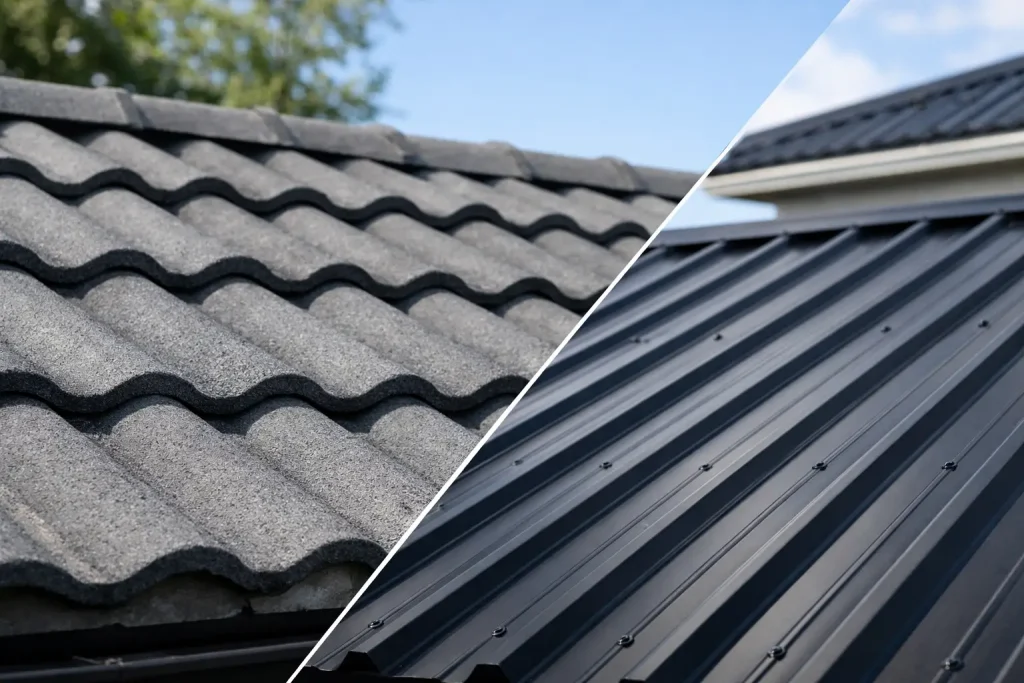
Steel sheets come in a wide range of colours, finishes and profiles. Whether you want a clean box profile for a workshop, a corrugated finish for a more traditional feel or a tile-effect look for a domestic outbuilding, metal gives you more design choice. That makes it easier to match the building to its surroundings or existing structures.
Fibre cement has a more muted, functional appearance. For agricultural and utility buildings, that is often perfectly acceptable and sometimes preferred. It looks honest and practical. But if you want a sleeker finish or a more tailored visual result, metal tends to offer more options.
Metal roofing is often faster to fit, particularly on simple roof layouts. Longer sheet lengths, lighter handling and straightforward fixing patterns all help keep the job moving. For trade buyers working to programme, that matters.
Fibre cement takes more care. Sheets need to be handled correctly to avoid damage, and drilling and fixing need to follow the manufacturer guidance closely. That does not make installation difficult for experienced installers, but it is less forgiving.
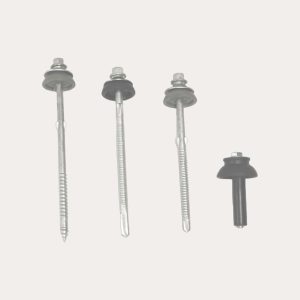
The real difference often shows up in the details around the roof. Whatever sheet you choose, you still need the correct flashings, fixings, fillers, rooflights and support components to complete the build properly. A roof is only as reliable as the full system around it.
If you are roofing a stable, livestock building or agricultural structure where condensation control and lower noise matter, fibre cement is often the better fit. It suits buildings where internal conditions are a bigger concern than finish choice or installation speed.
If you need a strong, weather-resistant roof for a garage, workshop, shed, commercial unit or refurbishment project, metal roofing is often the more flexible option. It is lighter, quicker to install and available in a wider choice of profiles and finishes. It also works very well when paired with the right anti-condensation or insulated solution.
For many buyers, the answer is not fibre cement or metal in the abstract. It is which product suits the structure, the use case and the level of performance you need. That is why getting the specification right at the start saves time, money and headaches later.
At Roof Sheets Online, we see this on a daily basis. Buyers rarely struggle because there are no options. They struggle because there are too many, and the wrong one can look fine on paper until the building starts suffering from noise, sweating or unnecessary installation delays.
If you are weighing up fibre cement against metal roofing, think beyond the sheet itself. Consider what is happening inside the building, what sits underneath the sheet, and whether you need a simple covering or a complete roof system with the right accessories to match. Get that part right, and the roof will do its job properly for years.
Roof Sheets Online Ltd
UNIT C4
MACROME ROAD
Wolverhampton
WV6 9HD
Company No 15150940
Vat No. 4880 70856