Missing one strip of foam filler or the wrong fixings can hold up an otherwise straightforward job. That is exactly why a roof sheet accessories bundle makes sense. Instead of ordering sheets first and then chasing trims, closures, fixings and flashings from different places, you get the parts that actually make the roof perform as it should – weatherproof, secure and ready to fit.
For trade buyers, that means fewer delays, fewer phone calls and less risk of turning up on site with an incomplete order. For homeowners and smaller project builders, it means one clear route to a complete roof rather than trying to work out every small component after the main sheets have already been chosen.
Roof sheets do the obvious job of covering the building, but accessories do much of the hard work around sealing, fixing, supporting and finishing. Without the right matching parts, even a good quality sheet can be let down by leaks at laps, poor edge protection, wind lift issues or untidy detailing.
That matters on all sorts of builds – garages, workshops, sheds, stables, agricultural buildings and light industrial units. A roof that looks right on day one still needs to cope with driving rain, temperature changes, condensation risk and years of exposure. The accessories are not optional extras in the real sense. They are part of the roof system.
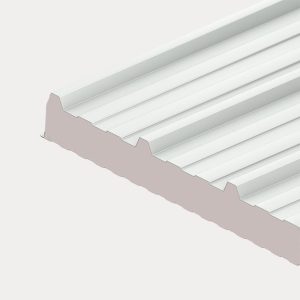
A bundle approach also helps with compatibility. Box profile, corrugated, fibre cement and insulated panels all have different fitting requirements. The correct fixings, foam fillers, ridge details and side flashings depend on the sheet profile, the substructure and the use of the building. Buying them together reduces the chance of mixing parts that do not properly suit one another.
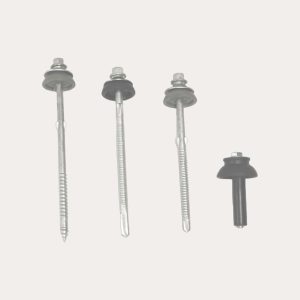
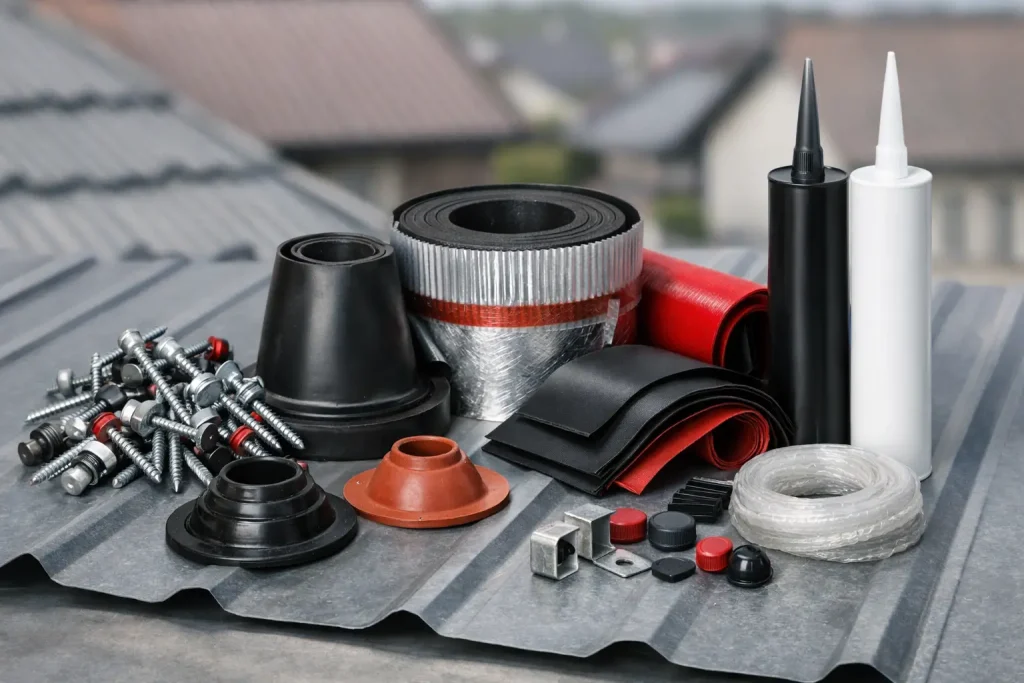
The exact contents depend on the roof type, but most projects need a core group of items. Fixings are first. These need to match both the sheet and the structure beneath, whether you are fixing into timber, steel or purlins. The right washered fixings help create a weather-tight seal and hold sheets firmly in place without damaging the profile.
Flashings are another essential. Ridge flashings, bargeboards, corner trims and apron flashings all help close vulnerable junctions where water can get in. These details also finish the roof visually, which matters on domestic and customer-facing buildings just as much as function.
Foam fillers and closure pieces are often overlooked until the last minute. They sit neatly under ridges and at sheet ends to block wind-driven rain, draughts, insects and debris. On profile sheets especially, they can make the difference between a roof that is merely covered and one that is properly sealed.
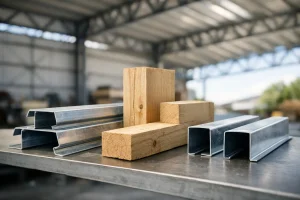
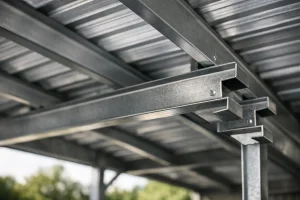
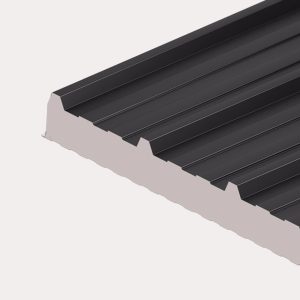
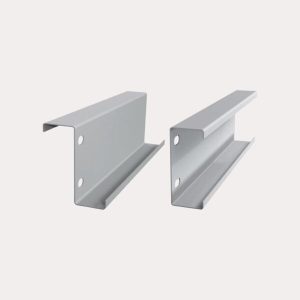
Depending on the design, a bundle may also include rooflights, sealants, stitching screws, butyl tapes and purlins. Insulated systems can require more specific components again, particularly where panel joints, end laps and thermal performance need close attention.
Some of the smallest items are the ones most likely to stop a job. Stitching screws are a good example. They are used to secure side laps and flashings, and if they are missing, installers often end up trying to make do with something unsuitable. That usually costs more time than the item itself ever would.
Sealants and tapes fall into the same category. Not every roof detail needs them, but where they are required, they need to be the right type and used in the right places. A roof exposed to wind-driven rain, or one with shallow pitch conditions, may need more careful sealing than a basic garden outbuilding.
Colour-matched trims are also worth thinking about early. They are easy to treat as a finishing touch, but if you want a neat, professional result, especially on garages, offices, workshops or retail-adjacent units, it is better to specify them from the start rather than trying to match them later.
You can source sheets from one merchant, fixings from another and flashings elsewhere. Sometimes buyers do that to shave a little off the headline cost. On paper, it can look sensible. On site, it often becomes awkward.
The first issue is specification. If one supplier assumes a different profile depth, coating, pitch or fixing pattern from another, the mismatch only becomes obvious when the materials arrive or fitting starts. The second issue is timing. Delayed accessories can stall the whole installation, even if the sheets are already on site.
A single-source bundle is usually the more reliable route because the system is being considered as one order rather than a patchwork. That does not mean every project needs an identical package. It means the accessories should be chosen to suit the exact sheet type and job requirements, then supplied together so the build can move forward without guesswork.
There is no universal bundle that suits every roof. A small timber shed with corrugated sheets needs something different from a steel-framed workshop with box profile cladding, and both differ again from an insulated panel roof on a commercial unit.
Start with the basics: sheet profile, sheet length, roof pitch, structure type and building use. If the building is unheated storage, your needs may be straightforward. If it is a stable, workshop or plant space where condensation control and internal comfort matter more, accessory choice becomes more important.
Exposure also matters. A roof in a sheltered setting may need less demanding perimeter detailing than one on an open site or coastal location. The same goes for aesthetics. Agricultural buildings may prioritise function first, while domestic outbuildings and refurbishments often need a cleaner finish with well-matched flashings and trims.
For less technical buyers, this is where guidance is valuable. A good supplier should help you check that the fixings suit the substrate, the flashings match the sheet profile and the accessory quantities are realistic for the roof layout. That saves over-ordering in some areas and expensive shortfalls in others.
New-build roofs are usually easier to bundle because the specification starts from scratch. You know the sheet type, structure and general detailing before ordering, so accessories can be selected around the full roof design.
Refurbishment work can be less tidy. Existing purlin spacing may not be standard. You may be replacing old fibre cement with metal profile sheets, or matching into an existing wall and ridge arrangement that was never especially precise to begin with. In those cases, accessory selection needs a bit more care.
That is another reason bundles are useful. They encourage buyers to think beyond the sheets themselves and consider the interfaces – ridge to roof, verge to wall, sheet to purlin, rooflight to surrounding panels. Refurbishment projects often fail at those junctions, not across the main sheet area.
Buyers naturally want a competitive price, but the cheapest route is not always the lowest overall cost. If a bundle stops wasted site time, return orders and fitting compromises, it can save far more than the difference between line-item prices.
The best value usually comes from specifying correctly at the start. That means buying good quality sheets and pairing them with accessories designed to do the job properly. Precision-crafted flashings, dependable fixings and weatherproof fillers are not glamorous items, but they protect the whole investment.
It is also worth being realistic about delivery. A complete order delivered when promised is often more valuable than splitting the purchase to save a small amount, only to spend days waiting for the last missing part. For trade customers especially, time on site has a cost attached to it.
Roof Sheets Online has built its approach around that one-stop-shop model for good reason. Buyers want sleek, strong, weather-resistant roofing products, but they also want the trims, tapes, purlins and fixings that finish the job properly, backed by clear delivery communication and technical help when needed.
Before placing any order, it helps to check three things carefully: the roof dimensions, the support structure and the finishing details. Most mistakes come from assumptions at one of those stages. A few quick checks on ridge length, verge detail, fixing substrate and opening positions for rooflights can prevent hassle later.
If you are ordering for a customer or managing a multi-part build, think about installation sequence as well. Having accessories arrive with the sheets keeps the project moving and gives installers everything they need from the outset. That is far better than finding out halfway through that the bargeboards, closures or stitching screws are still on someone else’s back order.
A good roof is never just a stack of sheets. It is a system, and the accessories are what turn individual products into a finished, weatherproof result. If you want the job to go on cleanly, look right and hold up properly through British weather, start with the complete package rather than the bare minimum.
Roof Sheets Online Ltd
UNIT C4
MACROME ROAD
Wolverhampton
WV6 9HD
Company No 15150940
Vat No. 4880 70856