Getting purlin spacing wrong is one of the quickest ways to turn a tidy metal roof job into a costly one. If you need to choose purlin spacing for metal roof sheets, the right answer depends on more than sheet length alone. Profile strength, roof pitch, snow and wind exposure, sheet gauge and the building use all affect what spacing will actually perform well once the roof is fixed down.
For a simple shed or garage, it is tempting to copy a spacing someone else used on a similar job. Sometimes that works. Sometimes it leaves you with sheet deflection, poor load performance, noisy panels in high winds or fixings under unnecessary stress. A metal roof is only as reliable as the support beneath it, so purlin centres need to be chosen with the full build-up in mind.
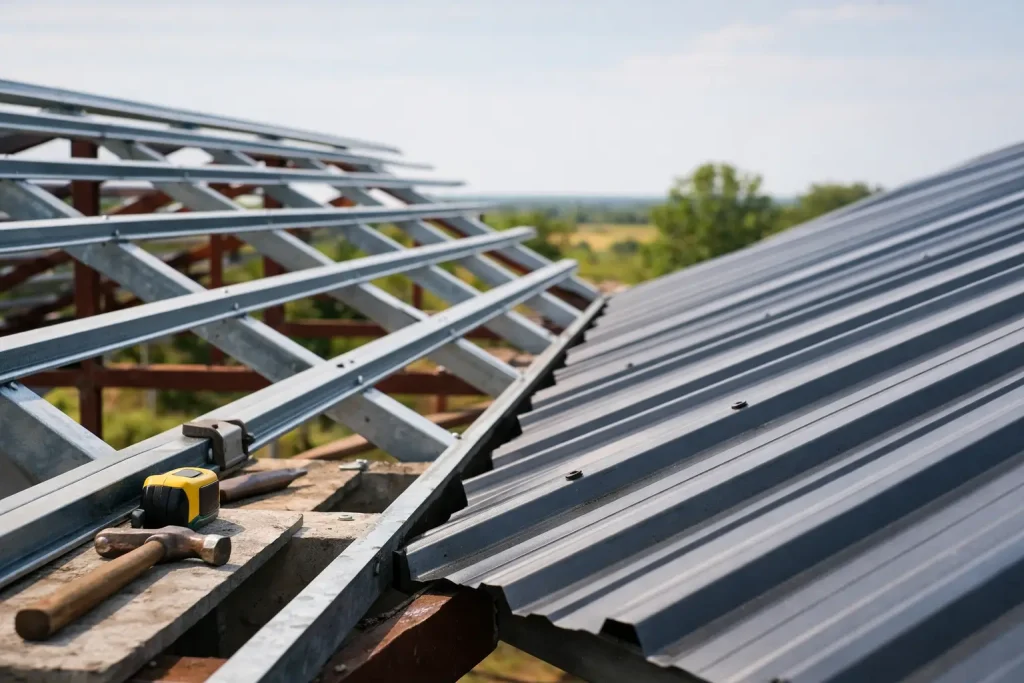
Purlins provide the structural support that metal roofing sheets span across. The wider the gap between purlins, the harder each sheet has to work. That affects strength under foot traffic, resistance to wind uplift and how well the roof copes with rain, snow and general movement over time.
Closer purlin spacing usually gives you a stiffer roof and more confidence during installation. The trade-off is obvious – more steel or timber, more fixings and a higher material cost. Wider spacing can reduce structure costs, but only if the sheet profile and thickness are rated to span that distance safely. Saving money on the frame only makes sense if the roof covering is suitable for it.
The starting point is always the sheet manufacturer’s load tables or span guidance. That is the safest route because span capability changes from one profile to another. A 32/1000 box profile sheet will not perform the same way as corrugated sheeting, fibre cement or an insulated panel, even if the roof looks broadly similar once installed.
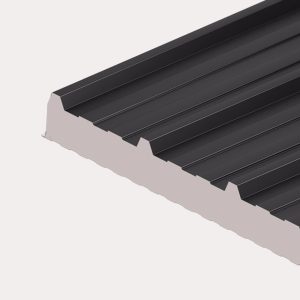
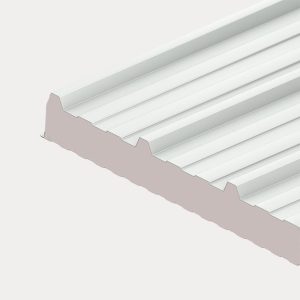
As a rule, stronger and deeper profiles can span further than lighter or shallower ones. Thicker gauges usually help too, but profile shape often matters just as much as sheet thickness. Insulated panels can achieve very different spans again because they act as a composite system rather than a single skin sheet.
You also need to decide whether you are looking at end spans, internal spans or overhangs. A sheet may cope with one internal spacing but need reduced support at the eaves or ridge. That detail gets missed surprisingly often, especially on small outbuilding projects.
A common mistake is building the purlin layout first and then shopping for sheets to suit it. In practice, that can limit your options or force a compromise on profile. It is usually better to choose the roofing system first, then set out the purlins to match the approved spans.
This matters even more where condensation control, anti-corrosion performance or appearance are part of the brief. If you know you need a specific finish, profile or insulated system, lock that in early. Then the purlin centres can be designed around the actual product rather than guesswork.
Not every roof carries the same demand. A lean-to in a sheltered spot is different from a workshop in an exposed rural location. Snow loading, wind uplift and maintenance traffic all influence how far sheets should span between supports.
In the UK, wind exposure can be a major factor, especially in coastal areas, on open farmland or at higher elevations. A spacing that looks acceptable on paper may be too ambitious once local wind conditions are considered. Likewise, roofs in snow-prone areas may need tighter support centres to keep deflection under control.
If the roof is likely to be walked on for maintenance, that should not be treated as an afterthought. Some sheets can take occasional foot traffic when stepped correctly over supports, but that does not mean they are happy spanning to the maximum distance in every situation.
For many single skin metal roofing sheets on smaller domestic and agricultural-style buildings, purlin spacing often falls somewhere around 1 metre to 1.5 metres. That said, this is only a broad working range, not a universal rule. Some lighter sheets or lower pitches may need tighter centres. Some stronger profiles and thicker materials may span further, subject to specification.
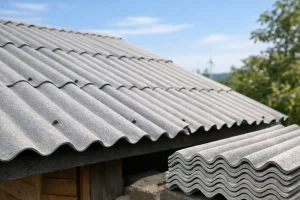
Corrugated sheets often require different support centres from box profile sheets because the geometry affects stiffness. Fibre cement has its own span recommendations again. Insulated panels can often work across much larger distances, but only within the tested parameters for that panel thickness, outer skin profile and loading condition.
That is why any article promising one perfect spacing for every metal roof is oversimplifying the job. The correct answer is nearly always product-specific.
Pitch influences drainage and loading behaviour, so it can affect purlin spacing decisions too. Lower-pitch roofs may hold water longer during heavy rainfall if detailing is poor, which puts more importance on sheet performance and support. On shallow roofs, deflection can also be more noticeable.
Steeper pitches can improve runoff, but they also change wind behaviour across the roof. In exposed areas, uplift at verges, eaves and ridges may become a bigger concern than straightforward downward loading. That is one reason edge details and end spans deserve extra attention.
Sheet overlap details and fixing patterns are part of the structural picture. If the side laps, end laps and fastener layout are not right, the roof may not perform as intended even if purlin spacing is technically within range.
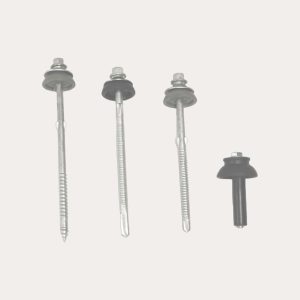
Fixings need to land where the support is designed to take them. Missed centres, weak timber, thin secondary steel or inconsistent purlin lines can all undermine the roof. Good spacing on a drawing still needs accurate setting out on site.
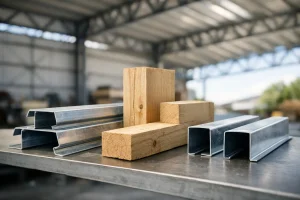
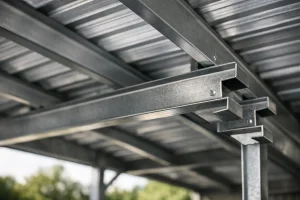
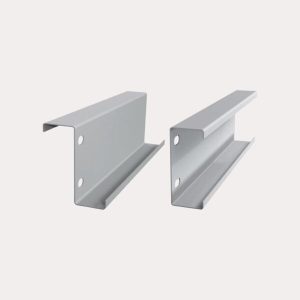
The purlin material does not usually change the sheet span tables directly, but it does affect fixing method, alignment and overall structural design. Timber can be straightforward on smaller garages, sheds and stables. Steel purlins are often preferred for larger spans, portal frames and commercial or agricultural buildings where consistency and structural efficiency matter more.
Timber quality is worth watching carefully. If the timber is twisted, undersized or unevenly set out, the sheet support will suffer. Steel tends to give a straighter line, but the right fixings and washers become even more important. Either way, purlins should suit both the roof covering and the building structure beneath.
There are jobs where reducing purlin centres is simply the sensible move. Small-profile sheets, exposed sites, lower roof pitches, lighter gauges and roofs that may be accessed for maintenance all point towards closer support. So do projects where customers want a more solid feel underfoot or want to minimise visible deflection.
Tighter spacing can also make installation easier. Sheets are less likely to flex awkwardly during fixing, and installers may find it simpler to maintain consistent alignment. It is not always the cheapest route upfront, but it can be the cleaner route long term.
Wider purlin centres can work well if the sheet system is designed for it. This is more likely with deeper box profile sheets, heavier gauges or insulated panel systems on suitable structures. On larger commercial and agricultural jobs, that can reduce the amount of secondary steel or timber needed and speed up installation.
The key point is that wider spacing should be justified by the product data, not assumed because the sheet looks strong enough. Visual judgement is not a substitute for span performance.
If you are planning a new roof or refurbishment, start with the building type, roof pitch and expected exposure. Then select the roofing sheet or panel system that matches the performance you need – weather resistance, anti-condensation control, insulation level, finish and appearance. Only after that should you finalise purlin centres.
For many buyers, the easiest route is to source the sheets, fixings, flashings and structural components together so the build is considered as one system. That avoids the all-too-common problem of buying sheets from one place, purlins from another and then finding the specification does not line up cleanly. At Roof Sheets Online, that joined-up approach is exactly what helps customers avoid delays and ordering mistakes.
If the roof is anything other than very straightforward, asking for technical guidance is time well spent. That includes exposed sites, long sheet runs, insulated roofs, refurbishment projects over existing structures and any job where building control or structural sign-off is involved.
A quick check before ordering is far cheaper than changing purlin lines once the frame is up. Even experienced installers will usually verify spans when using a new profile, thickness or system. That is not overcautious – it is how reliable roofs get built.
The strongest metal roof installations are rarely the ones built on assumptions. They are the ones where the sheet, support spacing, fixings and finishing details all work together. If you want the roof to look right, perform properly and last, choose the purlin spacing with the actual system in mind and get support before you commit to the frame.
Roof Sheets Online Ltd
UNIT C4
MACROME ROAD
Wolverhampton
WV6 9HD
Company No 15150940
Vat No. 4880 70856