Order a roof a few sheets short and the whole job slows down. Order the wrong width and your fixing lines, flashings and laps can all end up off. That is why understanding box profile sheet sizes and cover width matters before you place an order, whether you are roofing a workshop, garage, stable or light industrial unit.
Box profile sheets are popular because they are sleek, strong and weather-resistant, with the clean lines many customers want for modern agricultural, commercial and domestic projects. But sizing catches people out more often than profile choice. The key point is simple – the sheet width you receive is not always the same as the width it covers once installed.
When people talk about sheet size, they often mean the full manufactured size of the panel. When installers talk about cover width, they mean the usable width once the side overlap is taken into account. That distinction is what affects how many sheets you need.
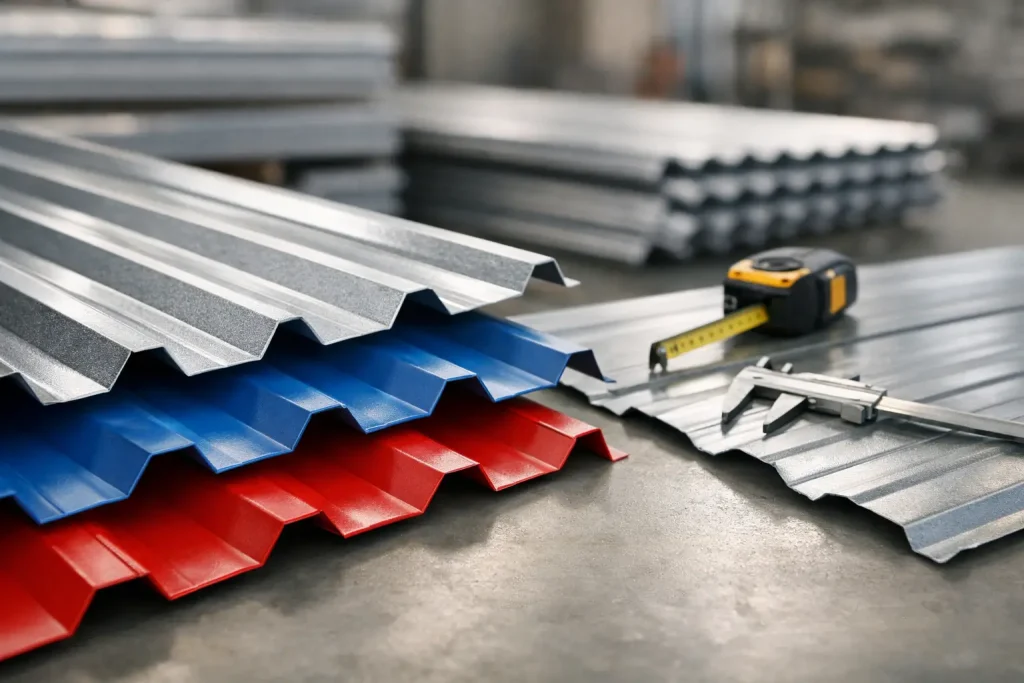
A box profile sheet is formed with raised ribs and pans. To keep the roof weatherproof, one sheet overlaps the next at the side. Because of that overlap, part of each sheet is hidden and does not count towards the finished roof coverage. So if you only look at overall sheet width and ignore cover width, your quantities can be wrong from the start.
Length works differently. In many cases, box profile sheets are cut to the required length, which helps reduce end laps on simple single-slope roofs. Width is more fixed by the profile design, while the cover width reflects how that profile is meant to lap correctly.
For ordering purposes, cover width is usually the number that matters most. It tells you how much roof or wall area each installed sheet will actually cover from side to side.
Take a common scenario. A sheet may have an overall width that looks generous on paper, but once you allow for the side lap, the effective cover width is lower. Multiply that difference across a full run of sheets and it can easily mean being one or two sheets short. On a trade job, that is wasted time. On a DIY build, it can mean delays, extra delivery cost and a roof left unfinished.
It also affects the appearance of the finished build. Box profile sheeting looks best when the sheet layout is planned properly from the start, with balanced cover across the roof and clean alignment at ridges, verges and openings. If widths are guessed rather than calculated, you can end up with an awkward narrow sheet at one edge or extra cutting that could have been avoided.
In the UK market, box profile roofing sheets are commonly available in standard profile widths and then supplied in a range of cut lengths. The exact dimensions vary by profile type and manufacturer, so it is always worth checking the technical specification for the sheet you are buying rather than assuming all box profile products are interchangeable.
Most buyers will come across sheet lengths cut to suit the project, from shorter runs for sheds and garages through to much longer lengths for agricultural buildings, workshops and industrial roofs. The longer the sheet, the more important handling, transport and installation become. A long sheet can reduce end laps and speed up fitting, but it also needs enough access on site and enough hands to position it safely.
Thickness and finish also sit alongside size. A 0.5mm sheet in plastisol, polyester or galvanised finish may be suitable for one project, while another build may call for a different specification because of exposure, appearance or lifespan expectations. Size is only one part of getting the right sheet.
Many box profile sheets are designed around a nominal cover width, often around the one metre mark, but that does not mean every product covers exactly the same. Some profiles differ slightly, and wall cladding applications can sometimes have different overlap considerations from roofing applications.
That is why experienced buyers check both the overall width and the cover width before ordering. If a product page or datasheet gives both, use the cover width for quantity calculations unless stated otherwise.
The side overlap is what turns full sheet width into cover width. On roof installations, that overlap helps protect against wind-driven rain and gives the system its weatherproof performance. Ignore it and the roof may not only be under-ordered, but also incorrectly fitted.
There is also the question of end laps. If the sheet length does not run from eaves to ridge in one piece, you may need an end lap where one sheet finishes and another starts above it. That overlap reduces the effective cover in the direction of the fall as well. For simple roofs, ordering full-length sheets often makes life easier and gives a tidier result. For larger or trickier sites, shorter lengths can be more practical to handle.
It depends on the building, access and installer preference. A single long run may save fitting time, but not if the site makes long sheets awkward to unload or carry.
The safest way is to calculate using the roof width divided by the sheet cover width, not the sheet’s full manufactured width. Then check the roof slope length and order the correct sheet length, allowing for any overhang at the eaves if required.
For example, if the roof width is 8 metres and the cover width of the selected sheet is 1 metre, you would need 8 sheets across. If the cover width is slightly less than 1 metre, you may need 9 sheets depending on the exact figure. That small difference is where mistakes often happen.
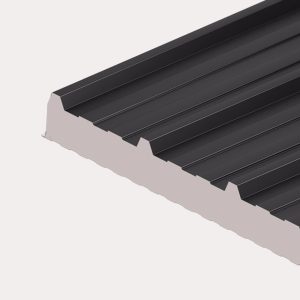
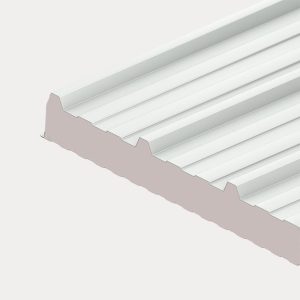
You also need to think about the full roof build. Ridge flashings, verge trims, fixings, fillers and rooflights all need to work with the sheet layout. If you are fitting insulated panels or combining sheeting with existing structures, dimensions become even more important because junctions and trims need to land correctly.
If you are replacing an old roof, do not rely entirely on measuring the existing sheets. Previous installations may have used a different profile, different overlaps or non-standard cuts. Measure the roof area itself and then work back from the specification of the new product.
This is especially important on older garages, barns and lean-tos where dimensions can be slightly out. A building that looks square from the ground may not be perfectly square when you start setting out sheets.
Box profile sheets are used on both roofs and walls, but the way you think about size can change slightly depending on the application. On roofs, weather performance and runoff are the priority, so overlap and direction of installation are critical. On walls, visual alignment and corner details often need more attention, especially on customer-facing buildings or domestic projects.
The profile itself may be the same, but the trims, fixings and sequencing can differ. That is another reason not to treat sheet width as an isolated measurement. The right sheet is the one that works with the whole system.
One of the most common mistakes is using overall width to calculate coverage. Another is forgetting to allow for end laps where full-length sheets are not being used. A third is ordering the sheets correctly but overlooking matching flashings and fixings for that exact profile.
Buyers also sometimes focus only on the cheapest sheet rate per metre without considering waste, ease of fitting and finish lifespan. A slightly different sheet length or coating may offer better value over the life of the roof, even if the upfront figure looks higher.
For trade buyers, speed matters just as much as price. Getting the right spec in one order means fewer site delays and fewer follow-up deliveries. For homeowners and smallholders, the benefit is simpler – less guesswork and a better finished job.
The best approach is to start with the building dimensions, choose the correct profile, then calculate using the stated cover width. After that, match the order with the right accessories so the roof can be completed properly rather than patched together from mixed parts.
That one-supplier approach usually saves headaches. If your sheets, flashings, fixings and rooflights are all specified together, there is less room for sizing clashes and fewer surprises when the materials arrive. For buyers who want practical support, that matters every bit as much as the product itself.
If you are unsure, ask before ordering. A quick specification check is far easier than correcting a sheeting plan once the job has started. Roof Sheets Online deals with these questions every day, and getting the quantities right at the front end is always the cheaper option.
When box profile sheet sizes and cover width are understood properly, the rest of the project tends to fall into place – cleaner layout, less waste, faster fitting and a roof that looks right and performs as it should. If you are measuring up now, take the extra few minutes to check the true cover of the sheet you want. It is one of the simplest ways to keep the whole build on track.
Roof Sheets Online Ltd
UNIT C4
MACROME ROAD
Wolverhampton
WV6 9HD
Company No 15150940
Vat No. 4880 70856