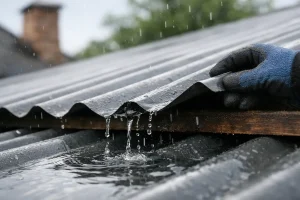
A steel sheet roof can look watertight the day it goes on and still give you trouble months later – usually when condensation starts dripping, wind pushes water where it should not go, or the building underneath needs more protection than the sheet alone can provide. So, do roof sheets need underlay? Sometimes yes, sometimes no. It depends on the sheet type, the building use, the roof build-up, and how much moisture control you need.
That is the honest answer, and it is the one that matters on site. Underlay is not a universal requirement for every sheeted roof, but on the right project it makes a real difference to performance and lifespan.
Do roof sheets need underlay on every project?
No. Many sheeted roofs are installed without a traditional underlay, particularly on simple agricultural buildings, open-sided shelters, and some cold roof structures where the sheet profile is designed as the main weathering layer. Box profile and corrugated roofing sheets are often fixed directly to purlins or timber battens with the correct fixings, laps, and flashings.
That said, “not always required” does not mean “never beneficial”. Underlay can help manage wind-driven rain, dust ingress, and minor moisture movement beneath the sheets. More importantly, it can form part of a wider roof system where thermal performance and condensation control matter.
If you are roofing a garage, stable, workshop, garden building, light industrial unit, or refurbishment project, the right answer usually comes down to what is happening inside the building as much as what is happening on top of it.
What underlay actually does beneath roof sheets
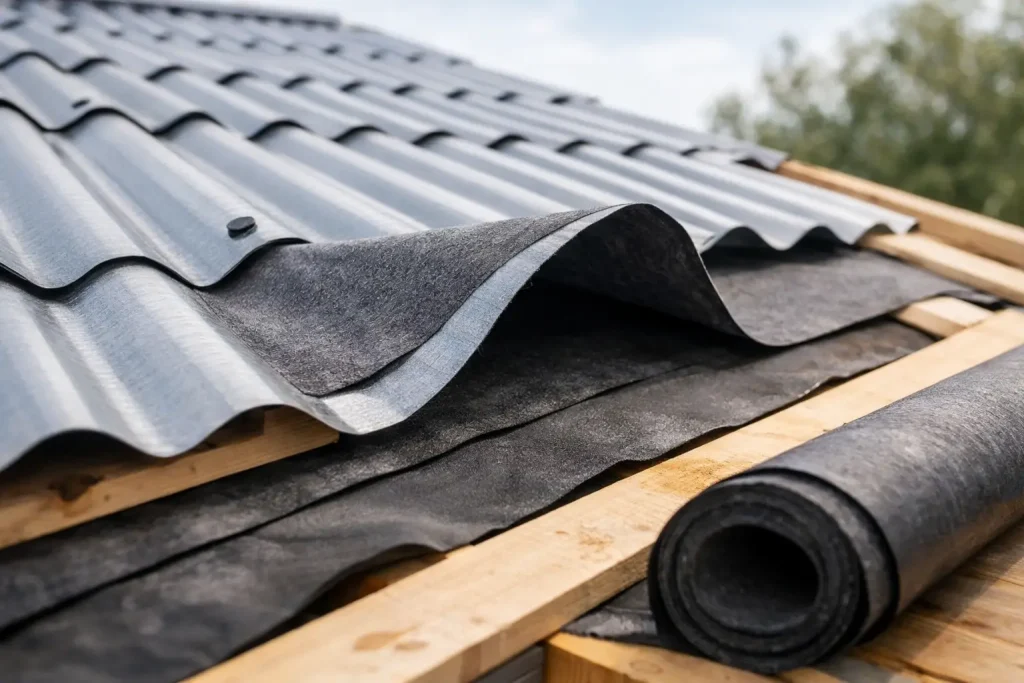
Underlay sits beneath the external roof covering and acts as a secondary protective layer. On sheeted roofs, it is not there to replace the roofing sheets. It supports them by dealing with the small risks that a metal or fibre cement roof alone cannot always eliminate.
Its main job is to provide a backup barrier against wind-driven rain or snow that may get past side laps, end laps, or flashings in severe weather. It can also reduce draughts and help limit dirt or fine water ingress into the roof void.
In some roof builds, breathable underlay also allows moisture vapour to escape while still resisting external water penetration. That matters where temperature differences inside and outside the building create condensation risk.
Still, underlay is only one part of the system. If your real problem is warm moist air rising into a cold roof space, underlay alone will not solve it. You may need ventilation, anti-condensation backing, insulation, a vapour control layer, or an insulated panel system instead.
When underlay is usually a good idea
Underlay tends to make the most sense where the inside of the building needs an extra level of protection. A workshop storing tools, a garage protecting vehicles, or a stable housing animals all have more at stake than a basic open hay store.
It is also worth considering when you are refurbishing an older roof and want better overall performance without fully changing the roof design. If the building suffers from occasional driven rain, dust, or internal dampness, adding underlay as part of the build-up can improve reliability.
Low roof pitches can also increase the need for care. The lower the pitch, the slower water drains and the more critical the laps, fixings, and detailing become. In these situations, secondary protection beneath the sheets can provide useful backup, though the exact requirement depends on the sheet profile and manufacturer guidance.
For occupied or better-finished buildings, underlay is often part of a more complete specification. If the space below is used regularly, contains electrics, stored goods, feed, tack, equipment, or anything sensitive to damp, it is sensible to think beyond the sheet itself.
When roof sheets may not need underlay
On basic, well-ventilated, uninsulated outbuildings, underlay may add little practical value if the roof is correctly specified and installed. A simple field shelter, open-sided store, or agricultural lean-to may perform perfectly well with sheets fixed directly onto the structure.
The same can apply where anti-condensation roofing sheets are used. These sheets have a moisture-absorbing fleece on the underside that is designed to trap condensation and release it gradually as conditions improve. In the right setting, that can remove the need for separate underlay focused on condensation control.
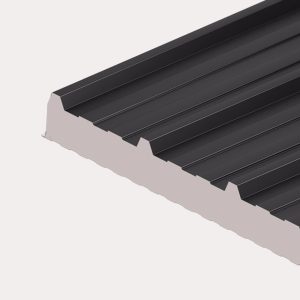
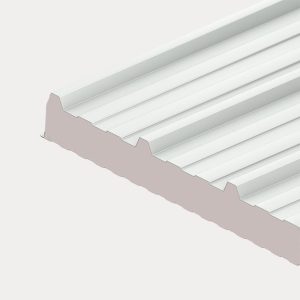
Insulated roof panels are another case. Composite insulated panels already combine outer sheet, insulation core, and inner liner in one precision-made product. In most cases, they do not use traditional underlay because the panel system itself is doing the work of weatherproofing and thermal control.
This is why blanket advice rarely helps. A single-skin box profile roof on a cold shed is a different job from an insulated panel roof on a working unit.
Underlay and condensation – the point many people miss
Most problems blamed on “leaks” under sheet roofs are actually condensation. Warm moist air rises from inside the building, hits the cold underside of the roof sheet, and turns to water droplets. That moisture can then drip onto everything below.
Underlay can play a supporting role here, but it is not magic. If the building has poor ventilation, high internal moisture, and no proper thermal strategy, condensation will still find a way to cause trouble.
For example, a stable, livestock building, or workshop with regular vehicle movement can produce a lot of moisture. A garage used for drying laundry or storing damp equipment can do the same. In these cases, the better question is not just “do roof sheets need underlay” but “what is the best way to control condensation in this building”.
Sometimes that means breathable underlay and improved ventilation. Sometimes anti-condensation sheets are the better fit. Sometimes the most effective route is to move straight to insulated roofing panels, especially if the building is enclosed and used year-round.
Choosing the right solution for the building type
For sheds, shelters, and basic stores, a standard sheet roof without underlay can be absolutely fine if the pitch, laps, fixings, and flashings are all correct. The simpler the structure and the more air movement it has, the less likely you are to need a more layered roof build-up.
For garages and workshops, the decision becomes more project-specific. If the space is enclosed and you want cleaner, drier performance inside, underlay may be worthwhile. If condensation is the bigger issue, anti-condensation backed sheets or insulated panels may be the stronger option.
For stables and agricultural buildings, moisture levels are often higher than customers first expect. Animal housing, feed storage, and regular wash-downs all change the demands on the roof. A cheap shortcut here can turn into ongoing drips and maintenance.
For commercial and industrial applications, specification matters most. Building use, span, thermal targets, and internal humidity all affect whether traditional underlay belongs in the design at all.
Installation matters as much as materials
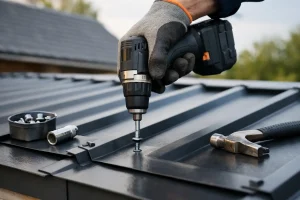
A good roof sheet with poor detailing will still underperform. If underlay is part of the design, it needs to be fitted correctly, with proper overlaps, support, and coordination around ridges, eaves, rooflights, penetrations, and flashings.
Just as important, underlay must not be treated as a fix for poor sheet installation. If side laps are wrong, fixings are misplaced, or flashings are badly formed, the roof will still be vulnerable. The full system has to work together.
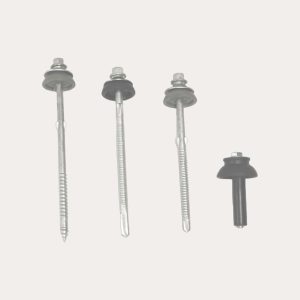
That is why experienced buyers often source sheets, fixings, flashings, fillers, trims, and supporting components at the same time. It keeps compatibility clear and avoids the usual site delays caused by missing parts or improvised details.
So, do roof sheets need underlay before you order?
If your project is a basic, open, uninsulated structure, possibly not. If the building is enclosed, moisture-prone, lower pitched, or used to protect valuable contents, underlay becomes far more worth considering. If condensation control is the main concern, you may be better served by anti-condensation sheets or insulated panels rather than relying on underlay alone.
The safest route is to specify the roof as a complete build-up, not just pick the outer sheet and hope for the best. Think about what the building is for, how much moisture it will generate, what level of finish you need, and how much protection you want over the long term.
At Roof Sheets Online, that is exactly how we help customers buy – not just the sheets, but the right accessories and supporting components to get the roof performing properly from day one. If you are unsure whether underlay belongs in your build, it is worth asking before the sheets arrive. Getting it right at ordering stage is far easier than dealing with drips, damp, and call-backs after installation.
A roof sheet can only do the job it was specified to do. Match the roof build-up to the building, and you will save yourself time, money, and no end of avoidable hassle later on.