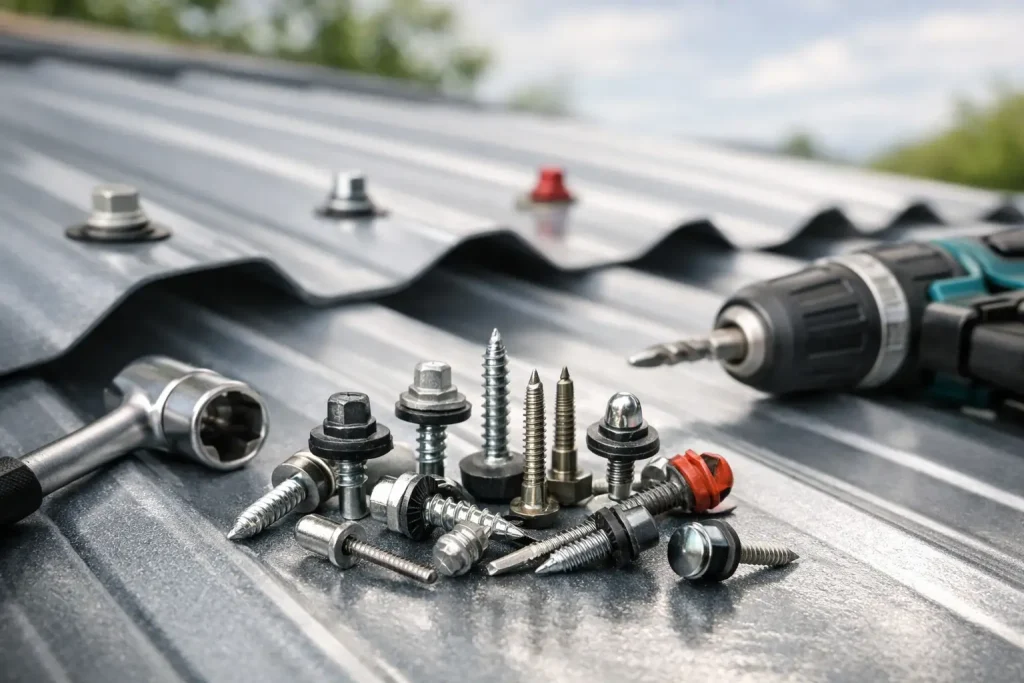
A metal roof is only as reliable as the fixings holding it down. Choose the wrong screw, place it badly, or mix incompatible materials, and even a good sheet can end up leaking, rattling or staining far sooner than it should. If you are looking for the best fixings for metal roofing sheets, the right answer depends on the sheet profile, the structure beneath, and the environment the roof has to deal with year after year.
For most projects, self-drilling roofing screws with bonded washers are the standard choice because they are quick to install, weatherproof and built for metal sheet applications. That said, not every metal roofing sheet uses the same fixing arrangement. Corrugated sheets, box profile sheets and insulated panels can all need slightly different screw lengths, stitchers and placement. Getting that detail right is what keeps a roof sleek, strong and weather-resistant rather than just looking finished on day one.
The best fixing is not simply the one that bites into the purlin. It needs to do four jobs at once. It must pull the sheet down securely, resist corrosion, seal out water at the fixing point and stay compatible with the roof sheet coating and the supporting structure.
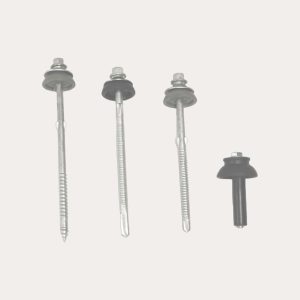
In practical terms, that usually means a high-quality carbon steel or stainless steel screw, finished for corrosion resistance, paired with an EPDM bonded washer. The washer matters just as much as the screw itself. A cheap washer can perish, crack or deform under pressure, which is often where problems start.
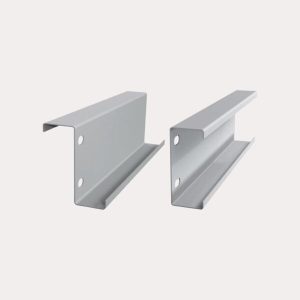
You also need to think about what you are fixing into. Timber purlins and steel purlins need different thread designs. A fixing that performs well into timber may not suit light steel, and vice versa. That is why experienced installers specify the fixing system alongside the sheet, rather than treating it as an afterthought.
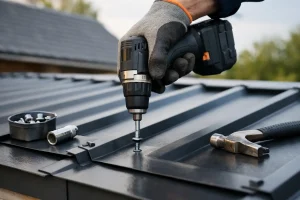
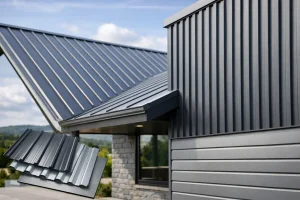
Box profile sheets are commonly fixed through the crown using self-drilling roofing screws with bonded washers. These screws are designed to drill through the sheet and into the purlin in one operation, which makes installation faster and more consistent.
For timber supports, use timber-to-metal style roofing screws designed with the correct thread for a firm hold in wood. For steel purlins, use self-drilling screws rated for the steel thickness involved. The exact length depends on the sheet profile and substrate, but the aim is simple – enough penetration for a secure fixing without using a screw that is unnecessarily long.
Box profile roofs also often need stitcher screws at side laps and around flashings. These smaller fixings pull overlapping sheets and trims tightly together, helping reduce wind lift and water ingress.
Corrugated sheets can use self-drilling screws in a similar way, but the profile shape changes where and how they are fixed. On many applications they are fixed through the crest with a bonded washer to keep the water seal above the drainage line.
Because corrugated sheets flex differently to box profile, correct spacing is important. Too few fixings and the sheet can move under wind load. Too many, or over-tightened screws, can distort the sheet and damage the washer seal. This is one of those cases where more fixings does not automatically mean a better roof.
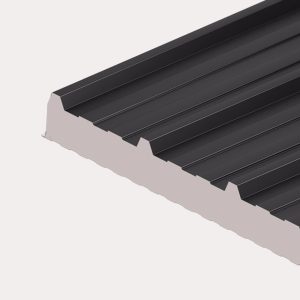
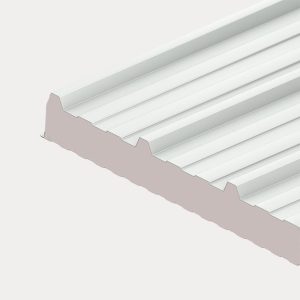
Insulated roof panels need a more specific approach. The fixing has to pass through the outer sheet and insulation core and anchor properly into the structural support below. These screws are longer and often come with larger washer arrangements or panel-specific accessories.
Insulated systems can also require stitching and sealing at side laps, ridge details and flashings. On premium insulated roofs, using the manufacturer-recommended fixing pattern is the safest route. It protects both performance and appearance, especially where thermal movement and weather exposure are bigger factors.
Self-drilling roofing screws are the go-to option for most modern metal roofing jobs. They save time on site and give a clean, efficient installation when matched correctly to the substrate. For trade buyers and competent DIY installers alike, this is usually the first fixing to consider.
Self-tapping screws are sometimes mentioned alongside self-drillers, but they are not identical. A self-tapping screw generally needs a pre-drilled hole, while a self-drilling screw has a drill point that cuts its own path. For roofing sheets, that difference matters because speed, consistency and weather sealing all affect the end result.
Stitcher screws are smaller fixings used to join sheet overlaps and flashings rather than secure the sheet to the main structure. They are a supporting fixing, not the main structural one, but they play a big part in the roof staying tidy and weatherproof.
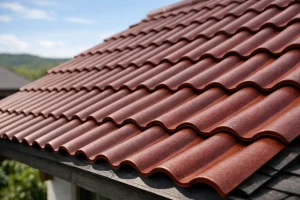
In some retrofit or specialist applications, hook bolts and other traditional fixings still appear, particularly on fibre cement or older corrugated setups. But for most steel roofing sheet installations, modern roofing screws with bonded washers are the practical choice.
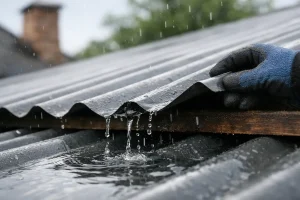
If there is one detail that gets underestimated, it is the washer. A bonded washer with EPDM rubber gives the fixing point its weather seal. When compressed correctly, it forms a tight barrier against rain without splitting or squeezing out from under the screw head.
Poor-quality washers can fail long before the sheets do. UV exposure, standing water and temperature changes will quickly show up weak materials. That is why premium fixings are worth it. The roof might cover a shed, stable, garage, workshop or commercial unit, but the principle stays the same – weak fixings can let down the whole system.
Over-tightening is just as bad as under-tightening. If the washer is crushed flat, it can lose its sealing ability. If it is left too loose, water can track beneath it. The right pressure creates a firm seal with the washer still holding its shape.
Not all sites are equal. Inland projects with decent shelter place less demand on fixings than exposed agricultural buildings or coastal properties. If the roof is near the sea, in a high-rainfall area or exposed to chemicals and airborne contaminants, corrosion resistance becomes even more important.
This is where coating quality and material choice come into play. Standard plated screws may be suitable for many general applications, but harsher environments may call for a more corrosion-resistant specification, including stainless steel in some cases. Compatibility also matters. Mixing unsuitable metals can encourage corrosion, especially where moisture is present over long periods.
If you are specifying for a demanding site, it is worth checking the sheet finish, the purlin material and the exposure level together rather than choosing fixings in isolation.
There is no universal number that suits every roof. Fixing frequency depends on sheet profile, sheet length, support spacing, building use and local wind exposure. Edge zones and corners often need closer fixing than the middle of the roof because wind uplift is stronger there.
As a general rule, follow the fixing pattern recommended for the sheet type and support structure. Guesswork can lead to expensive problems. Too few fixings can allow movement and noise in high winds. Too many can weaken the sheet by adding unnecessary penetrations and increasing the risk of distortion.
The same goes for side laps and flashings. A neat-looking roof still needs the correct stitcher spacing to perform properly in poor weather.
Most fixing issues are avoidable. Using the wrong screw length is a common one. If the screw is too short, it may not anchor securely. Too long, and installation becomes awkward and untidy.
Fixing into the wrong part of the profile is another problem. Placement should match the sheet design and installation guidance. Over-driving screws, misaligning fixings, or drilling oversized holes will all compromise the seal.
Then there is the temptation to save money on accessories. Cheap fixings can look similar in the box, but performance on the roof is what counts. A proper roofing system needs compatible sheets, flashings, fillers, sealants and fixings working together.
The easiest way to avoid mismatched components is to source the roof as a full system. That means choosing sheets, flashings, rooflights, purlins and fixings together, with support if you need to sense-check the specification. It saves time, cuts ordering errors and reduces the risk of arriving on site with half the parts missing.
For many customers, that is the real value of using a specialist supplier such as Roof Sheets Online. You are not just buying screws in a packet. You are making sure the whole roof build is backed by the right components, sensible advice and dependable delivery.
If you want the best fixings for metal roofing sheets, start with the sheet profile, match the screw to the substrate, insist on quality bonded washers and never treat fixings as a minor extra. The roof will only be as weatherproof as the details holding it together – and those details are worth getting right first time.
Roof Sheets Online Ltd
UNIT C4
MACROME ROAD
Wolverhampton
WV6 9HD
Company No 15150940
Vat No. 4880 70856