When you are pricing a new roof for a garage, workshop, farm building or commercial unit, the sheet profile is only half the decision. The finish matters just as much. In the debate around plastisol vs polyester roof sheets, the right choice usually comes down to how long you need the roof to last, how hard the site conditions are, and whether upfront cost or long-term value matters more.
Both finishes are widely used on steel roofing sheets across the UK, and both can do a good job when specified properly. But they are not the same product with different labels. The coating thickness, surface durability, scratch resistance and expected service life can vary quite a bit, which is why it is worth getting clear on the difference before you place an order.
Plastisol vs polyester roof sheets: what is the difference?
At the base level, both products start with a steel sheet that has been coated to protect it from corrosion and weather exposure. The main difference is the top coating system.
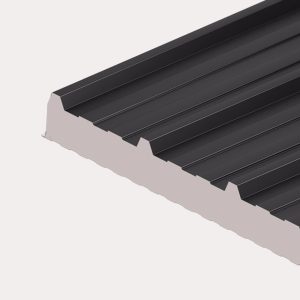
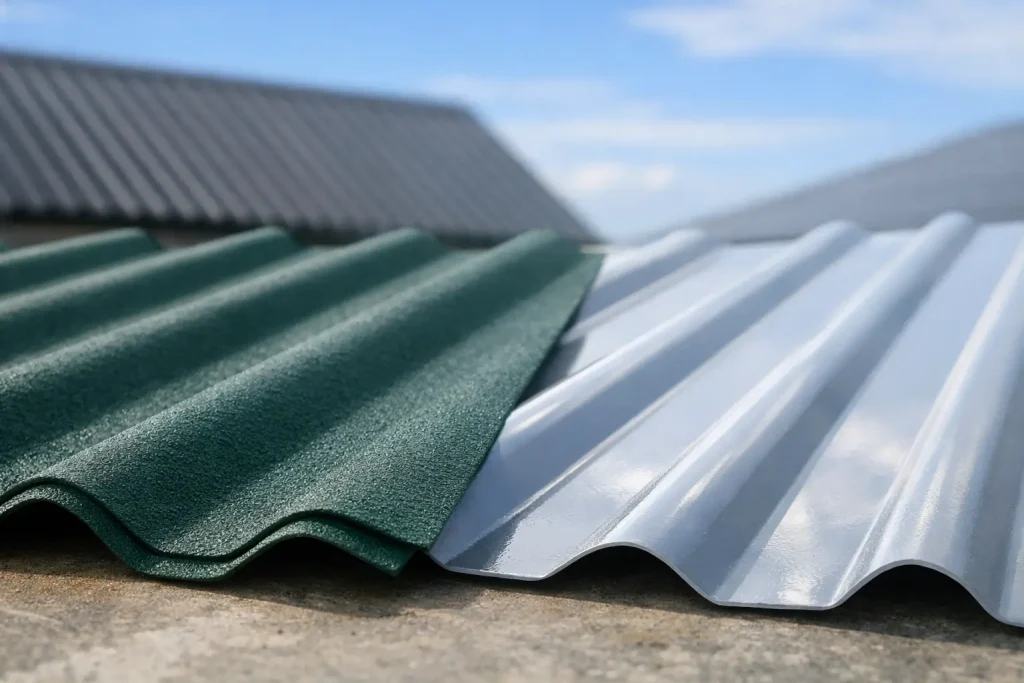
Plastisol roof sheets are coated with a thick PVC-based finish, typically around 200 microns. That thicker coating gives the sheet a more textured feel and a tougher outer surface. It is designed to cope well with harsher environments, regular weather exposure and the knocks that can happen during transport, handling and installation.
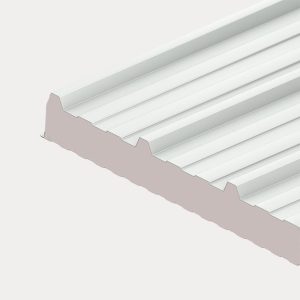
Polyester roof sheets use a much thinner paint coating, usually around 25 microns. The finish is smoother and often gives a cleaner, lighter look, but it does not offer the same level of physical protection as plastisol. Polyester is commonly chosen where budget is tighter, the building is less exposed, or the expected lifespan does not need to be as long.
That difference in coating thickness is what drives most of the real-world pros and cons.
Which finish lasts longer?
If long-term durability is your priority, plastisol usually comes out ahead. The heavier coating gives better protection against corrosion, UV exposure and general wear over time. On buildings that see plenty of rain, wind and temperature change, that extra barrier can make a noticeable difference.
This is one reason plastisol is often the preferred option for agricultural buildings, industrial roofs, coastal-adjacent sites and projects where you want a more durable finish with less risk of early cosmetic wear. It tends to hold up better where the roof needs to work hard for years without becoming a maintenance headache.
Polyester still has its place. On a smaller domestic outbuilding, a garden workshop, or a garage in a relatively sheltered area, it can perform perfectly well when installed correctly. But if you are comparing the two purely on lifespan and surface toughness, polyester is generally the lighter-duty option.
Cost versus value
This is where many buying decisions are made.
Polyester roof sheets are usually cheaper to buy, which makes them attractive for budget-led jobs. If you are covering a shed, temporary structure or lower-spec outbuilding, polyester can keep material costs down while still delivering a neat, weather-resistant finish.
Plastisol costs more upfront, but it often gives better value over the life of the roof. If the coating lasts longer, resists scratches better and keeps its appearance for more years, the higher initial spend can be easier to justify. For trade buyers and property owners planning for the long term, that matters.
The key question is not simply which sheet is cheaper. It is whether paying less now creates a roof that needs replacing, repairing or cosmetically tolerating sooner than you would like. On many permanent buildings, plastisol is the stronger investment.
Appearance and colour retention
For some buyers, especially on domestic or visible elevations, appearance matters nearly as much as performance.
Polyester roof sheets often have a smoother, glossier painted look when new. That can suit modern garages, garden rooms and lighter-use buildings where a clean visual finish is a priority. They are available in popular colours and can look smart on a well-finished project.
Plastisol has a more leathergrain or textured appearance, depending on the product. It looks more substantial and trade-grade, which many customers prefer for agricultural, industrial and utility buildings. It can also be better at hiding minor scuffs or marks that would stand out more on a smooth painted surface.
In terms of colour retention, quality matters with either finish, but plastisol generally has the edge in more demanding conditions. A roof that faces strong sun, driving rain and airborne grime year after year benefits from the heavier coating.
Plastisol vs polyester roof sheets in harsh environments
Site conditions should always influence your choice.
If the building is in an exposed rural location, on open farmland, near busy roads, or anywhere likely to see persistent bad weather, plastisol is usually the safer specification. The thicker finish gives you more confidence against premature wear, especially where the roof is expected to take a battering through the seasons.
If you are closer to the coast, caution matters even more. Salt-laden air is hard on steel products, and although coating choice is only one part of the equation, going for a more durable finish can help improve long-term performance. It is still worth checking the exact environment and the product warranty details before making a final choice.
Polyester is better suited to more benign settings where the roof is not under constant stress. It is not a poor product. It is just a more economical coating system, and it should be treated as such when matching it to the building.
Installation, handling and day-to-day practicality
No roof sheet finish is indestructible, and both need correct storage, handling and fixing. That said, plastisol is generally more forgiving on site because of its thicker coating. It tends to cope better with the small knocks and scrapes that can happen during fitting.
That can be useful on busy jobs where sheets are being moved across site, lifted onto purlins and fixed in changing weather. A tougher surface helps reduce the chances of visible damage before the roof is even complete.
Polyester needs a bit more care. It can still be installed perfectly well, but the thinner finish means careless handling is more likely to show. For competent installers this is manageable, though it is worth bearing in mind if the job is tight, awkward or likely to involve a lot of sheet movement.
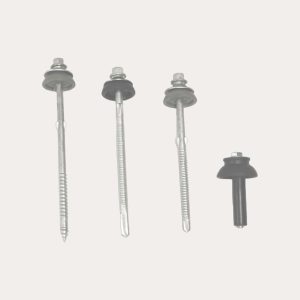
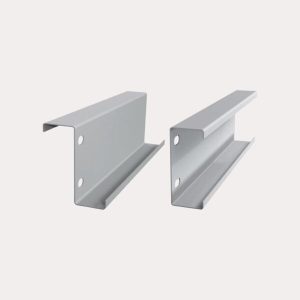
The finish is only part of the system, of course. Fixings, flashings, rooflights, foam fillers and the right sheet profile all play a part in how the completed roof performs. Getting everything from one supplier can save time and reduce mistakes, especially if you want reassurance that all components are compatible.
When polyester roof sheets make sense
Polyester is often the sensible choice when the project has a clear budget ceiling and the building use is fairly straightforward. A garden shed, simple garage, canopy or low-demand storage building may not need the heavier-duty performance of plastisol.
It can also work well where appearance is a priority and the roof is in a sheltered location. If the customer understands the trade-off – lower initial cost in exchange for a thinner coating and typically shorter lifespan – then polyester can be the right fit.
There is no value in overspecifying a roof if the building does not need it. The best product is the one that matches the job properly.
When plastisol roof sheets are worth the extra spend
Plastisol is usually the stronger option for permanent structures, larger spans and buildings where access for future replacement would be inconvenient or costly. It suits workshops, stables, farm buildings, industrial units, commercial cladding projects and domestic outbuildings where the owner wants a longer-lasting finish from the outset.
It is also worth considering when the roof is highly visible and you want it to keep a solid, well-finished appearance over time. A tougher coating can pay for itself simply by looking better for longer.
For many buyers, especially those balancing durability, weather resistance and value, plastisol lands in the sweet spot. It is not just about buying a sheet. It is about buying fewer future problems.
So which should you choose?
If you want the short answer in the plastisol vs polyester roof sheets debate, it is this: polyester is the budget-friendly option for lighter-duty projects, while plastisol is the more durable choice for longer-term performance.
If the building is temporary, sheltered or cost-sensitive, polyester may be all you need. If the roof needs to stand up to harsher weather, tougher site conditions and years of use, plastisol is often the better buy.
At Roof Sheets Online, we know that choosing the right coating is easier when you can match it with the correct profile, fixings, flashings and delivery support in one place. If you are weighing up finishes for an upcoming project, the best decision is the one that fits the building, the budget and the lifespan you expect from the roof. If in doubt, buy for the job you want in ten years, not just the quote you want today.