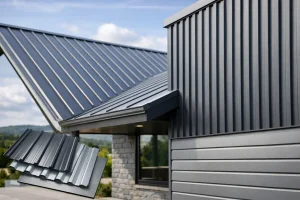
A roof sheet that looks right on the day it is fitted can still be the wrong specification for the building. Too light a sheet over a wide purlin spacing may flex, drum in the wind and leave fixings working harder than they should. This roof sheet gauge guide UK explains what gauge means in practice, when to choose a thicker steel sheet, and why the full roof build matters just as much as the sheet itself.
What does roof sheet gauge mean?
Gauge is a traditional way of describing the thickness of metal sheet. The lower the gauge number, the thicker the steel. However, gauge numbers are not always used consistently between manufacturers, and conversions can vary by material. For that reason, the millimetre thickness stated on a product specification is the figure to compare when buying roofing sheets.
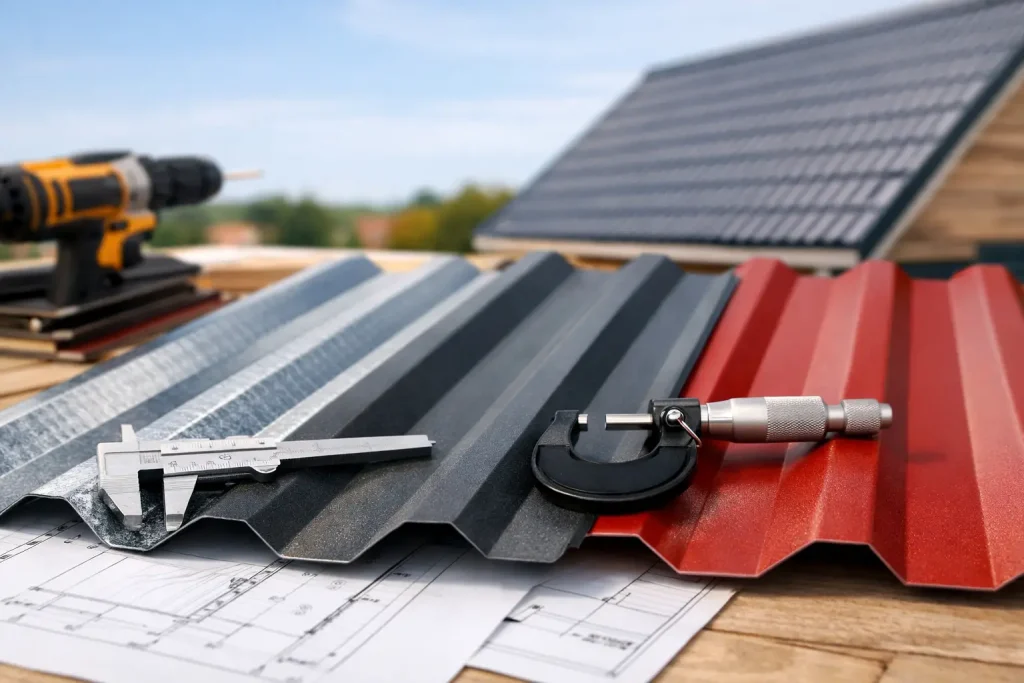
For steel box profile and corrugated sheets, you will commonly see thicknesses such as 0.4mm, 0.5mm and 0.7mm. These figures refer to the steel substrate, although suppliers may describe the finished sheet thickness differently once galvanising and paint coatings are included. Always check exactly what the stated measurement represents before comparing like for like.
A thicker sheet does not automatically mean a better roof for every job. It normally offers greater rigidity and a more substantial feel, but it also costs more and adds weight. The correct choice depends on the sheet profile, purlin centres, roof pitch, exposure and intended use of the building.
Roof sheet gauge guide UK: common steel thicknesses
For many domestic outbuildings, a 0.4mm steel sheet can be a practical, economical option when it is fitted to a well-designed frame with suitable support centres. It is often chosen for garden sheds, simple lean-tos and low-risk storage buildings. It still needs careful handling during installation, as lighter sheets are easier to dent or crease before they are fixed.
A 0.5mm steel sheet is a popular all-round choice for garages, workshops, stables, agricultural buildings and replacement roofs. It gives a worthwhile step up in stiffness without making the project unnecessarily heavy or expensive. Where a customer needs a dependable profile sheet for a typical roof build, 0.5mm is often the sensible starting point.
At 0.7mm, the sheet is noticeably more substantial. This specification is suited to more demanding commercial, agricultural and exposed applications, particularly where support spacing, wind loading or regular access during maintenance calls for additional strength. It can also be appropriate for wall cladding where impact resistance matters. The added material comes at a higher price, so it should be selected for a clear structural reason rather than as a blanket upgrade.
The profile also changes the equation. A deep box profile can span further and carry load differently from a shallow corrugated sheet, even when both are made from the same thickness of steel. Compare the profile data and recommended support centres, not just the gauge.
Start with the structure, not the sheet colour
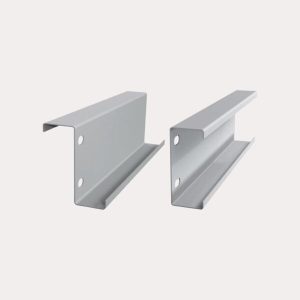
The purlins or rails below the sheet determine how effectively it can perform. If they are too far apart, even a heavier gauge sheet can deflect under snow, wind pressure or a person carrying out maintenance. If they are positioned correctly, a standard thickness sheet can give many years of sound service.
Before ordering, establish the distance between purlin centres, the roof slope and the overall sheet length. Long sheets need particularly careful planning because handling, thermal movement and end support all become more significant. A lightweight agricultural shelter in a sheltered location has very different requirements from a workshop on an exposed hillside or coastal site.
Wind is frequently underestimated. Wind uplift puts stress on both the sheet and every fixing point, especially at eaves, verges, corners and ridge lines. A thicker sheet can help with rigidity, but the fixing pattern, fastener type and the strength of the supporting structure are equally critical. Do not reduce the number of fixings simply because you have selected a heavier sheet.
Snow loading is another regional consideration. On lower-pitch roofs, snow can remain in place for longer and impose sustained load. For buildings in areas prone to heavier snowfall, it is worth checking the frame design and sheet specification before the roof goes on. Local building requirements and the project engineer’s advice should take priority where applicable.
Coating is not the same as gauge
A coloured steel roof sheet is usually galvanised steel with an additional protective coating. Common finishes include polyester and Plastisol, each suited to different budgets and environments. The coating helps protect the steel from weathering and gives the roof its finished appearance, but it does not replace the structural benefit of thicker steel.
For a straightforward shed or garage, a standard coated sheet may be entirely suitable. For agricultural buildings, areas with high moisture levels or sites close to the coast, spend time considering corrosion resistance as well as sheet thickness. Ammonia from livestock environments and salt-laden air can shorten the service life of an unsuitable finish.
The underside of the sheet deserves the same attention. If warm, moist air reaches cold steel, condensation can form and drip into the building. This is a common problem in workshops, stables and uninsulated stores. An anti-condensation fleece, suitable ventilation and correct detailing can make a far bigger difference to internal moisture than moving from 0.4mm to 0.5mm steel.
Choose the right material before comparing gauges
Gauge is mainly a steel-sheet discussion. It should not be used as the sole way to compare other roofing materials.
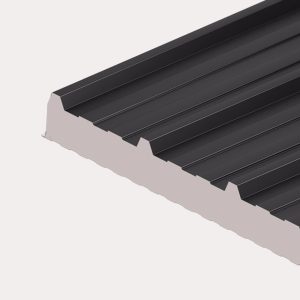
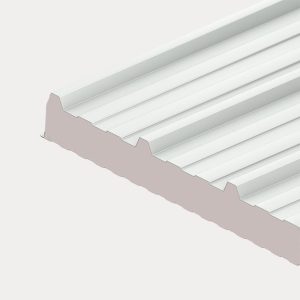
Fibre cement sheets are selected by their product thickness, profile and structural performance. They are a proven choice for agricultural and commercial roofs, with good acoustic qualities and no risk of corrosion. Polycarbonate rooflights are specified by their material type, thickness and load rating, and must be matched to the surrounding sheet profile. Insulated composite panels are specified by steel face thickness, insulation core and panel depth. A Kingspan QuadCore panel, for example, is chosen around thermal performance, fire requirements, span capability and the needs of the building envelope, not simply its outer steel gauge.
Where rooflights are included, they should be positioned and fixed in line with the manufacturer’s guidance. They may have different support requirements from steel sheets, so treating them as an interchangeable panel can lead to avoidable problems.
What else should be ordered with the sheets?
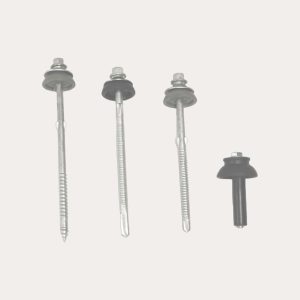
A weatherproof roof is a system, not a stack of individual products. The correct gauge sheet needs the right fixings for timber or steel purlins, plus side-lap stitching screws where required. Flashings at the ridge, barge and eaves close vulnerable edges, while foam fillers and sealing tapes help keep out driven rain, insects and debris.
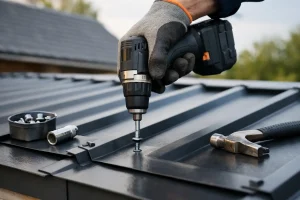
Make sure the fastener length suits the sheet profile and the material beneath it. Use washers designed for roofing applications, and do not overtighten them. Crushing the washer can damage the seal, while an under-driven fixing leaves a route for water to track in. Cuts should be made with suitable tools that minimise heat damage to protective coatings. Abrasive cutting discs can leave hot swarf and exposed edges more vulnerable to corrosion.
It is also good practice to order a small allowance for overlaps, end laps and any unavoidable cutting. Confirm the finished cover width rather than assuming the overall sheet width is the area the roof will cover. This avoids the common shortfall that delays a job when the frame is ready.
A practical way to specify your roof sheets
First, define the building and its environment: a dry garden store, a livestock shelter, a heated workshop and a coastal garage each place different demands on the roof. Next, confirm the supporting frame, purlin centres and roof pitch. Then select the profile and steel thickness together, using the product’s stated span guidance rather than relying on gauge alone.
Finally, match the finish, insulation or anti-condensation treatment to the conditions inside and outside the building. Add the fixings, flashings, fillers, sealants and rooflights at the same time, so every component works together when it arrives on site.
If you are deciding between two gauges, the cheaper sheet is not always the value option, but neither is the thickest one. The right specification is the one that suits the structure, exposure and expected lifespan of the roof. Roof Sheets Online can help you check the profile, thickness and supporting components before you place an order, giving you a roof build that is properly specified from the first fixing.