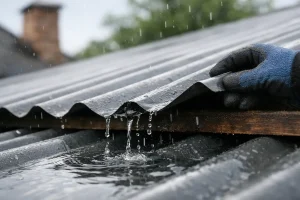
A roof on a stable, workshop or agricultural building has to deal with more than the occasional shower. It faces driving rain, repeated frost, summer heat, wind lift and everyday knocks from maintenance work. This fibre cement sheet durability review looks at what the material can realistically deliver, where it performs particularly well and what has to be right at installation for a long service life.
Fibre cement remains a popular choice for pitched roofs and wall cladding across the UK because it is weather-resistant, non-combustible and less prone to the condensation issues associated with unlined metal sheeting. It is not the lightest roofing option, and it does need correct handling, support and fixings. For the right project, however, it is a dependable, trade-proven material built for years of hard use.
What makes fibre cement sheets durable?
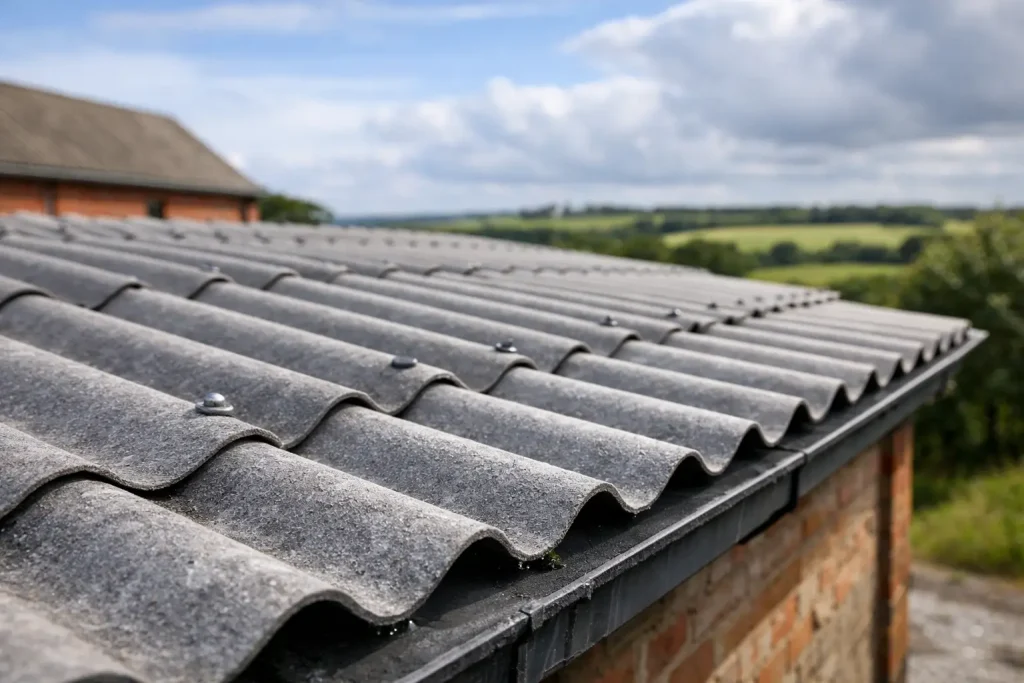
Modern fibre cement roof sheets are made from a blend of cement, reinforcing fibres, water and carefully graded additives. Once cured, the sheet has a dense, stable structure that stands up well to moisture, UV exposure and temperature changes. Current fibre cement products are asbestos-free, so they should not be confused with older cement roofing sheets that may contain asbestos and require specialist handling.
The material’s biggest strength is that it does not rely on a painted steel skin to keep the weather out. A quality fibre cement sheet will not rust, rot or become brittle simply because it has been exposed to rain. That matters on farm buildings, stables, garages and workshops, where roofs are often expected to work reliably with minimal attention.
Its natural, matt finish is also practical. It gives a restrained appearance that suits rural and agricultural settings, while avoiding the glare sometimes seen with metal roofing. The surface will weather over time, but weathering is not automatically a sign of failure. A gradual change in tone is normal; cracking, edge damage and fixings working loose are the issues that need attention.
Fibre cement sheet durability review: real-world performance
Rain, frost and changing temperatures
Fibre cement is well suited to the British climate. It will not corrode in wet conditions, and a correctly pitched roof sheds water efficiently through the corrugated profile. This makes it a sound option for exposed sites, coastal areas and buildings that receive little day-to-day maintenance.
Frost resistance depends on the sheet quality and, crucially, on good drainage. Standing water, blocked gutters and poor roof falls create problems for almost any roof covering. Keep the roof clear of moss build-up and debris, allow for the manufacturer’s required end laps and side laps, and use the correct roof pitch. These details stop water tracking back beneath the sheets and protect the timber or steel structure below.
The sheets also cope well with seasonal movement. Unlike metal, fibre cement does not expand and contract dramatically as temperatures rise and fall. That reduces the strain placed on laps and fixings, although every roof should still be fixed in line with the product guidance and wind loading for the site.
Corrosion and chemical resistance
For agricultural buildings, corrosion is often the deciding factor. Livestock environments can contain high moisture levels and airborne chemicals, while fertilisers and coastal salt can shorten the life of unprotected metal. Fibre cement has a clear advantage here because it does not rust.
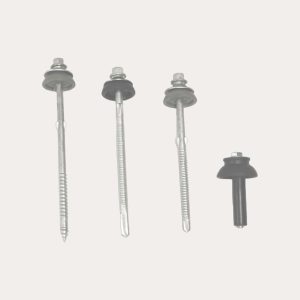
That does not mean the whole roof is maintenance-free. Fixings, flashings, gutters and any steelwork still need to be specified for the environment. Use suitable corrosion-resistant fixings with the correct washers, and choose compatible flashings rather than treating supporting components as an afterthought. A durable sheet paired with unsuitable screws is not a durable roof system.
Impact resistance and foot traffic
Fibre cement sheets are strong in service, but they are not designed to be walked on unsupported. This is one of the most common misunderstandings. A sheet can carry normal wind, rain and snow loads when correctly supported by purlins, yet be damaged by a person standing between supports or placing a ladder directly on it.
For maintenance, always use crawling boards, roof ladders or other suitable access equipment that spreads the load onto the structure. Avoid dropping tools onto the sheets, over-tightening fixings or forcing sheets into position. Cracks may not always cause an immediate leak, but they can shorten the life of the roof and allow water to reach the fixings and purlins.
UV, fire and biological growth
Sunlight does not cause fibre cement to rust or soften, which is a major benefit for south-facing roofs and open sites. The material is also non-combustible, making it a sensible choice where fire performance matters. This does not remove the need to assess the complete build-up, particularly insulation, linings and internal finishes, but it is a strong property of the roof sheet itself.
Moss and algae can develop on any roof in damp, shaded locations. Fibre cement is no exception. Growth is usually more of a maintenance and drainage issue than a structural one, but heavy moss can hold moisture and obstruct water flow. Remove it carefully without aggressive pressure washing, which can damage the surface and force water into laps.
How long can a fibre cement roof last?
A well-specified and correctly installed fibre cement roof can provide decades of service. The exact lifespan depends on the sheet range, building location, roof pitch, structural support, local weather exposure and maintenance. It is more useful to judge durability as a complete system than to rely on one headline figure.
A sheltered domestic garage with clear gutters will have an easier life than a windswept livestock building on high ground. Equally, a roof installed with adequate purlin centres, correct overlap, proper eaves support and suitable fixings is far more likely to stay watertight than one where sheets have been cut, forced or under-fixed to save time.
When comparing initial costs, factor in the likely maintenance demands. Fibre cement may cost more to handle than lightweight budget sheeting because it is heavier and requires careful fitting. In return, it offers excellent resistance to corrosion and a quieter roof covering in rain than bare metal. For many agricultural and outbuilding projects, that long-term balance makes commercial sense.
The installation details that protect service life
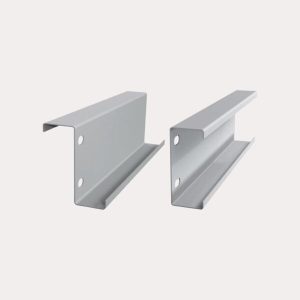
Most premature roof problems come back to fitting rather than the sheet material. Fibre cement needs a properly prepared supporting structure. Purlins must be level, correctly spaced and substantial enough for the roof load. Sheets need the correct bearing at eaves and laps, with cuts kept neat and sealed where the manufacturer requires it.
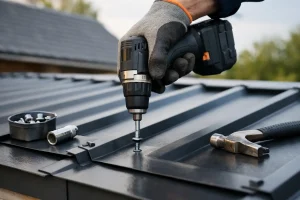
Fixing position matters as much as fixing type. Fasteners should be installed through the correct part of the corrugation, with pre-drilled holes where specified to prevent stress around the fixing point. Screws should be firm enough to seal the washer, but not driven so hard that they crush the sheet. This is a small detail with a large effect on cracking and water ingress.
Ventilation is another practical consideration. Fibre cement helps reduce the sharp temperature swings that can cause condensation under metal sheets, but no roof material can solve a poorly ventilated building on its own. Stables, workshops and insulated structures may need planned ventilation, vapour control and appropriate rooflight detailing. Get these decisions right before ordering rather than adapting the roof after the sheets arrive.
When fibre cement may not be the best choice
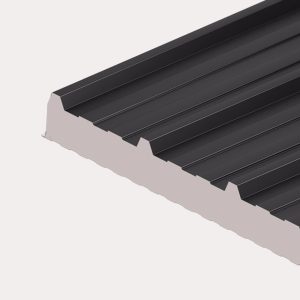
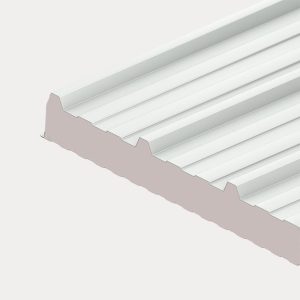
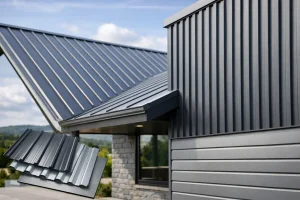
There are projects where another material will be more suitable. If low weight is the priority, steel or aluminium sheets are easier to lift and can place less demand on an existing structure. If you need high levels of thermal performance in one panel, an insulated composite system may be the better route. For a small garden shed with a lightweight frame, fibre cement can simply be more material than the job requires.
Fibre cement is at its best where weather resistance, corrosion resistance, sound reduction and long-term reliability matter more than the lowest possible purchase price or the fastest single-person installation. It is especially worth considering for agricultural roofs, equestrian buildings, workshops, garages and durable wall cladding.
Before placing an order, measure the roof carefully and plan the full system: sheets, purlins, fixings, flashings, fillers, gutters and rooflights where needed. Roof Sheets Online can help you match the right components to the job, so the roof you build has the support it needs to keep performing year after year.