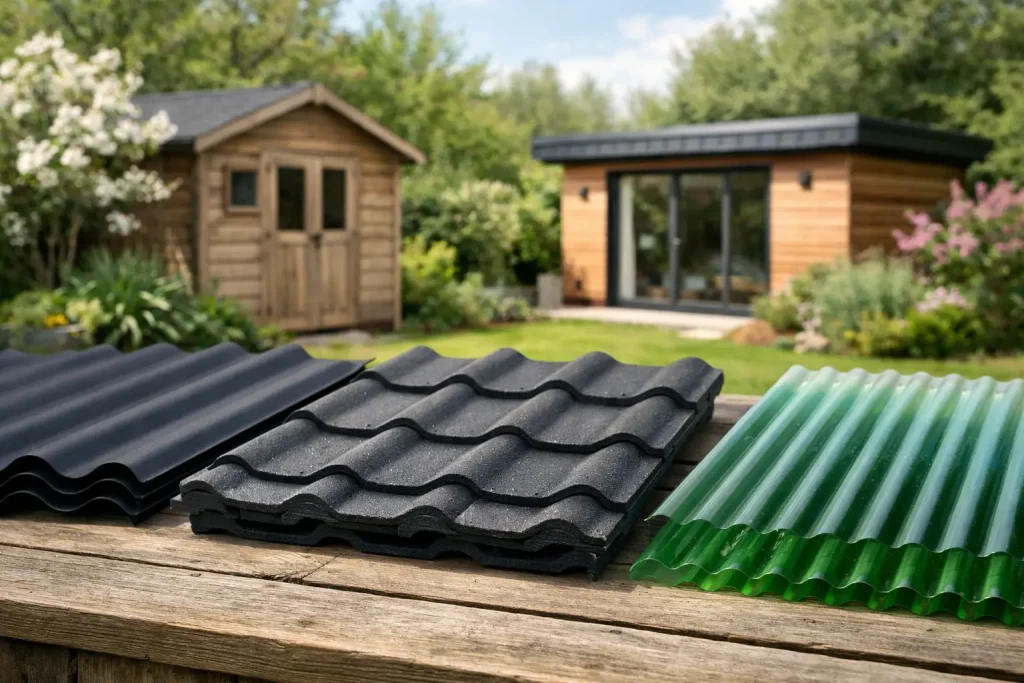
A garden building only stays useful if the roof does its job properly. Whether you are covering a shed, workshop, summerhouse, garage or stable-style outbuilding, choosing the best roofing sheets for garden buildings comes down to more than looks. You need a sheet that suits the structure, handles British weather, controls condensation where needed and gives you proper long-term value.
Too often, buyers start with price alone and end up replacing lightweight sheets or chasing leaks around badly matched fixings and flashings. A better approach is to match the roof sheet to the building’s use. A basic log store has very different demands from a garden office or a workshop where you want a drier, more stable internal environment.
The right choice usually comes down to five things – durability, weather resistance, condensation control, appearance and ease of installation. If one matters far more than the others, that tends to point you towards the right product quite quickly.
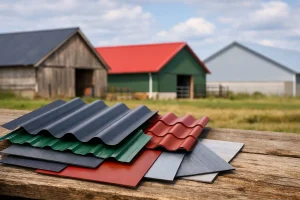
For example, if you are roofing a simple shed and want a cost-effective covering that goes on fast, a corrugated or box profile steel sheet is often the strongest option for the money. If the building is insulated and used year-round, an insulated panel will usually make more sense because it solves more problems in one system. If the look of the roof matters as much as performance, tile-effect sheets or certain coated profiles can give a smarter finish without the weight of traditional tiles.
There is no single best sheet for every job. There is only the best fit for how the building will be used.
For many garden buildings, box profile roofing sheets are the practical middle ground. They are sleek, strong, weather-resistant and suited to sheds, garages, workshops and larger outbuildings where you want a clean modern finish. The profile gives good strength across spans, so you get a roof that feels solid without stepping up to heavier or more complex systems.
Box profile sheets are especially popular when customers want something that installs quickly and lasts. In plastisol-coated steel, they offer very good resistance to corrosion and wear, which matters on exposed sites or buildings that need to stay serviceable for years with minimal fuss. Polyester options can work well too where budgets are tighter, though they are generally a lighter-duty finish.
The trade-off is appearance and condensation. Some buyers prefer a more traditional look than box profile offers, and on uninsulated buildings you may need an anti-condensation backing or better ventilation if moisture is likely to build up.
It is a good fit for garden workshops, garages, storage buildings and general-purpose sheds. If you want a dependable steel roof with good lifespan, sensible pricing and straightforward installation, it is often the first product worth considering.
Corrugated sheets remain a favourite for smaller garden structures because they are proven, practical and easy to work with. They suit sheds, log stores, animal shelters, bin stores and lightweight outbuildings where budget and speed matter.
A corrugated profile sheds water well and looks at home in rural or traditional settings. It is also forgiving on many simple roof designs, which helps competent DIY buyers as well as trade installers working to a tight schedule. If you want a no-nonsense roof covering that does the job without overcomplicating the build, corrugated is hard to ignore.
Material choice matters here. Steel corrugated sheets give you strength and longevity. Bitumen sheets can be quieter in rain and lighter to handle, but they are not always the best long-term answer if you want maximum lifespan and a more rigid roof finish. Fibre cement corrugated sheets also have their place, particularly where a softer, more traditional appearance is preferred.
Corrugated roofing is ideal where the structure is basic, the spans are modest and the main goal is reliable weather protection at a sensible cost. For a simple garden shed, it is often one of the best-value choices available.
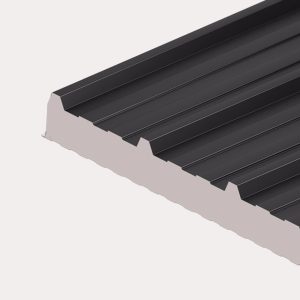
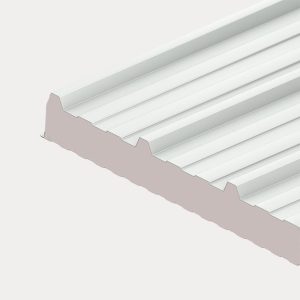
If your garden building is more than basic storage, insulated panels are worth serious attention. For garden offices, hobby rooms, workshops, gyms and high-spec outbuildings, they are often the best roofing sheets for garden buildings because they combine outer weatherproofing, insulation and internal finish in one product.
That matters for two reasons. First, insulated panels help keep the building more comfortable through winter and summer. Second, they dramatically reduce condensation risk compared with a single-skin sheet roof. Anyone using a garden room for work, storing tools that may rust, or creating a cleaner internal environment will notice the difference.
Insulated panels cost more upfront than single-skin steel sheets, so they are not the cheapest answer for a simple shed. But when you factor in thermal performance, reduced moisture issues and quicker build-up compared with assembling a separate insulated roof system, they often deliver better value over time.
They are best suited to occupied spaces or buildings storing valuable items. If you are already insulating the walls and want the roof to perform to the same standard, a proper insulated roofing system is the logical choice.
Fibre cement roofing sheets suit buyers who want a roof that looks more understated than steel and performs well on practical outbuildings. They are commonly used on stables, workshops, stores and agricultural-style garden buildings where noise reduction and a less industrial appearance matter.
One advantage of fibre cement is sound. Rainfall tends to be less sharp compared with metal sheets, which can make a difference on buildings where people spend time. They also resist rot and corrosion, and they sit comfortably on many timber-framed structures.
The trade-off is that fibre cement sheets are generally heavier and more brittle than steel, so handling and installation need a bit more care. They are a strong option, but not always the quickest or easiest for every DIY project.
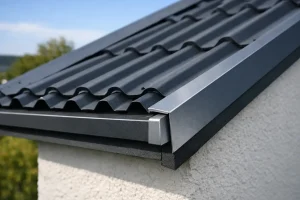
Some garden buildings need to complement the house rather than look purely functional. In those cases, tile-effect roofing sheets can be a smart answer. They give a more traditional pitched-roof appearance while remaining lighter and often easier to install than conventional roof tiles.
These sheets work well on summerhouses, detached garden rooms, garages and premium sheds where kerb appeal matters. They can help a new outbuilding sit more naturally in a domestic setting, especially where nearby roofs are tiled.
It is worth checking roof pitch requirements and support structure before choosing this route. Tile-effect sheets look the part, but they are not always the cheapest solution, and they make the most sense when appearance is a key part of the brief.
The sheet itself is only part of the job. Many roof problems start because the accessories were treated as an afterthought. Even the best sheet can underperform if it is paired with the wrong fixings, poor overlaps or missing trims.
Condensation is the issue many buyers underestimate. A cold single-skin roof over a timber shed or workshop can sweat underneath when warm moist air rises and meets the cooler sheet. If the building stores tools, feed, furniture or anything moisture-sensitive, this is not a small problem. Anti-condensation backing, insulation, ventilation and correct detailing all help, but the right solution depends on how the building is used.
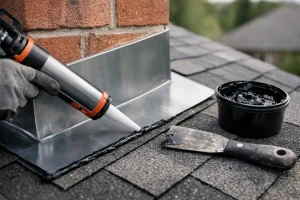
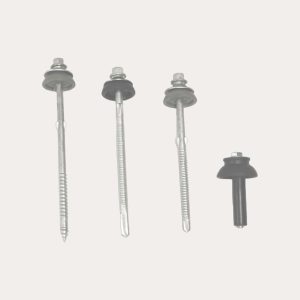
Flashings, ridge pieces, bargeboards and fixings matter just as much. They finish the roof properly, protect vulnerable edges and help prevent wind-driven rain getting where it should not. Buying the full system from one supplier also reduces the risk of mismatched parts and wasted time on site.
Start with the building’s purpose. For basic storage, a single-skin corrugated or box profile sheet is usually enough. For a workshop or garage, steel sheets with a durable coated finish are often the strongest balance of cost and lifespan. For an office or insulated garden room, move straight towards insulated panels.
Then look at the site. An exposed location calls for strong fixings, reliable flashings and a sheet with good weather resistance. If surrounding buildings matter visually, appearance may push you towards tile-effect or a more refined coated profile. If noise is a concern, fibre cement may deserve a closer look.
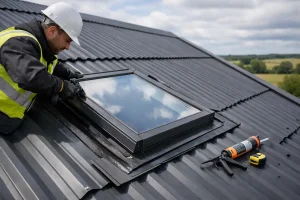
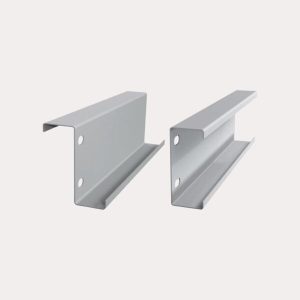
Finally, think beyond the sheet length and price per metre. A roof is a system. Getting the right profile, finish, rooflights if required, purlins, trims and fixings at the same time usually saves money and hassle compared with piecing it together later. That is exactly why many customers use a specialist supplier such as Roof Sheets Online – you can get the sheets, the supporting components and the technical guidance in one place.
For most garden buildings, steel box profile or corrugated sheets will be the practical winner. For higher-spec spaces, insulated panels usually justify the extra spend. The best choice is the one that keeps the building dry, serviceable and worth having for years, not just the one that looks cheapest on day one.
If you are weighing up options for a new build or refurbishment, take a minute to think about what the building needs to do through a wet February as well as on the day it goes up. That is usually where the right roofing sheet makes itself obvious.
Roof Sheets Online Ltd
UNIT C4
MACROME ROAD
Wolverhampton
WV6 9HD
Company No 15150940
Vat No. 4880 70856