A box profile roof can look finished as soon as the sheets are fixed down, but the open corrugations at the eaves and ridge tell a different story. If you are asking, “do I need closure strips for box profile”, the usual answer is yes – particularly on an exposed roof, an enclosed building or any project where you want a neat, weather-resistant finish that lasts.
Closure strips are inexpensive components, but they do a serious job. Fitted in the right places, they close the gaps created by the sheet profile without affecting the fit of your flashings. That helps keep out wind-driven rain, birds, insects and debris, while giving the roofline a far more professional appearance.
What are box profile closure strips?
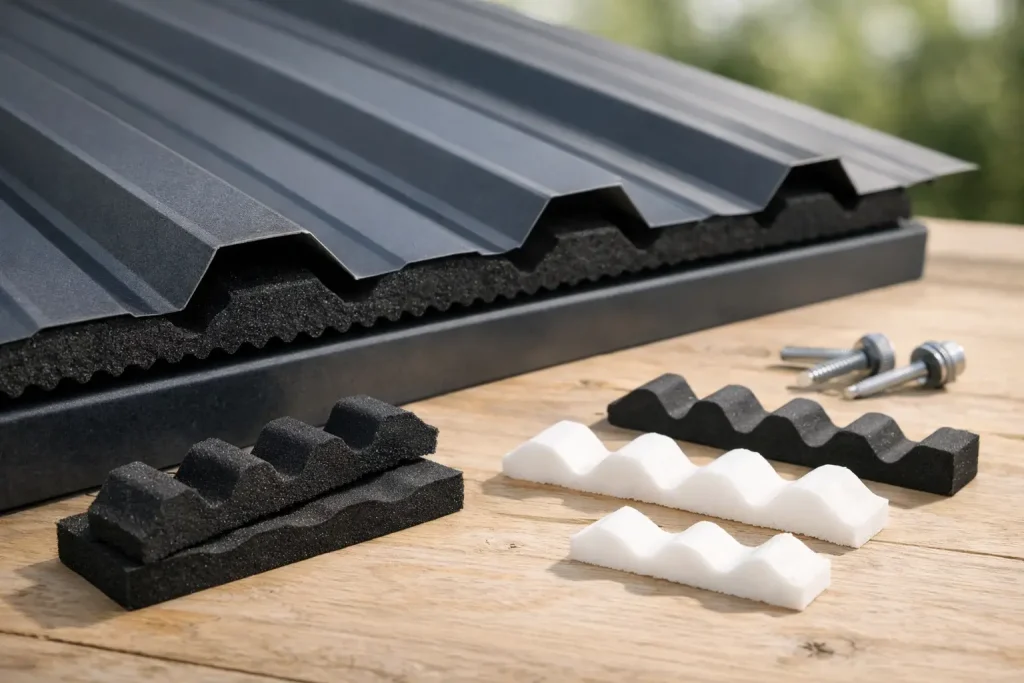
Box profile closure strips are shaped foam fillers designed to match the ribs and valleys of a specific metal sheet profile. When placed beneath a ridge flashing or at the eaves, the strip follows the form of the sheet and seals the otherwise open ends.
They are not a substitute for ridge flashings, eaves flashings or proper fixings. Think of them as the component that makes those finishing details work properly. A ridge flashing sheds water over the top of the roof; a matching closure strip prevents wind and water being pushed underneath it through the profile openings.
For the best result, make sure the closure strip is made for your exact sheet profile. Box profile sheets are available in different rib heights and pitches, so a generic foam strip may leave gaps or compress poorly. A precise fit is what delivers a clean, dependable seal.
Do I need closure strips for box profile roofing?
For most roof installations, fitting closure strips at the eaves and ridge is good practice. They are especially worthwhile on garages, workshops, stables, agricultural buildings, garden rooms and commercial outbuildings, where an open profile can become an easy route for rain and pests.
At the eaves, closure strips help stop insects, leaves and birds entering beneath the sheets. They can also reduce draughts and prevent rain being blown back into the roof space. This matters on lower-pitch roofs, open sites and elevations that take the prevailing weather.
At the ridge, strips are fitted below the ridge flashing to close the upper ends of the sheets. Without them, strong winds can drive rain, dust or loose debris through the gaps. On a building used for storage, livestock, equipment or a finished internal space, that is rarely a risk worth taking.
There are exceptions. An open-sided field shelter, for example, may not need every opening sealed in the same way as a fully enclosed workshop. Some roof designs also use purpose-made ventilated ridge systems, where airflow is required at the ridge. In these cases, standard solid closure strips could work against the intended ventilation detail.
The key point is simple: do not leave profile gaps open by default. Decide whether they need sealing, ventilation or a specialist detail before fitting the flashings.
Where closure strips should be fitted
Most box profile roofs require closures in two main locations. Eaves closures sit at the lower edge of the sheet, normally above the eaves flashing and beneath the sheet profile. Ridge closures sit at the top edge, below the ridge flashing.
The correct orientation matters. Some systems use different strips for the top and bottom of the profile because the sheet shape is reversed at each end. Check the strip against the sheet before removing any backing or applying adhesive. The peaks and valleys should sit naturally together rather than needing to be stretched, forced or heavily compressed.
Closure strips are also useful around certain junctions, including mono-pitch flashings, abutments and changes in roof direction. Whether they are needed there depends on the flashing design and the detail of the roof. A properly formed flashing, suitable sealant and butyl tape may be the better answer in some locations.
Weatherproofing is only part of the job
It is easy to treat closure strips as a minor finishing extra, but they support the performance of the whole roof build. Box profile steel sheets are sleek, strong and weather-resistant, yet the system is only as good as its joints, flashings and supporting components.
A missing closure strip may lead to an annoying rattle, a wasp nest, dust on stored items or a draught through the roof space. In harsher conditions, it can allow water to track into areas where it should not be. That does not mean a closure strip will cure every leak. Incorrect sheet laps, poorly positioned fixings, inadequate roof pitch or badly fitted flashings need addressing at source.
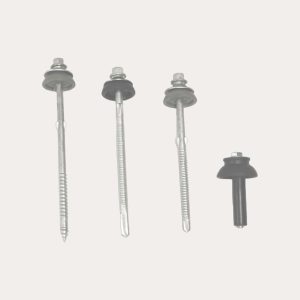
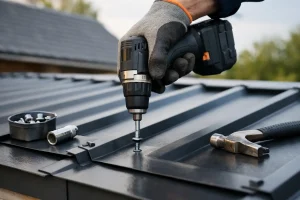
Use the right fixings with sealing washers, fix into suitable purlins or rafters, and follow the required fixing pattern for the sheet length, building location and wind exposure. A closure strip complements these details; it cannot compensate for poor installation.
Will closure strips cause condensation?
Not on their own. Condensation happens when warm, moisture-laden air meets a cold internal surface. It is common in uninsulated metal buildings such as garages, stables and workshops, particularly where there is limited airflow or wet vehicles and equipment are stored inside.
Sealing the profile openings can reduce uncontrolled draughts, but it should not be confused with providing a condensation solution. If the building needs ventilation, plan it properly through suitable eaves and ridge ventilation, louvres or other designed openings. If condensation control is a priority, consider anti-condensation fleece-backed sheets or an insulated roof system, depending on the use of the building.
This is where specification matters. A dry store for machinery, a stable, a garden office and a light industrial unit all have different requirements. The right approach balances weather protection, internal ventilation and thermal performance rather than simply sealing every gap.
How to fit box profile closure strips correctly
Fit closure strips once the eaves flashing is in position and before the sheet or ridge detail is fully secured, following the sequence suited to your roof system. Work with clean, dry sheet surfaces so any self-adhesive backing can bond properly.
Start by dry-fitting a short length. Align each shaped section with the profile of the sheet, then trim the strip neatly at the verge or flashing return. Avoid crushing the foam flat when installing it. It should fill the profile shape, not be squeezed until it loses its ability to seal.
At the ridge, position the strip consistently along both roof slopes before fitting the ridge flashing. Leave no obvious gaps at joins, ends or around overlaps. If a flashing requires butyl sealant tape, apply it where specified rather than relying on the foam strip alone.
On long runs, butt strips closely together. Do not stretch them to make up length, as this can pull the profile out of shape and create openings later. Take a moment to check the ridge from ground level before finalising the fixings – uneven closure placement can show up as a wavy-looking flashing line.
Common mistakes to avoid
The most common error is ordering closures without confirming the profile. A strip that is only roughly similar to the sheet may look acceptable from a distance but leave spaces at the rib edges. Always match the strip to the exact box profile being installed.
Another mistake is using closures to block required ventilation. If the roof design needs airflow, use a ventilated closure or ridge arrangement intended for that purpose. Do not create a sealed roof void and hope moisture will find its own way out.
Finally, do not overlook the other finishing components. Eaves flashings, ridge flashings, verge flashings, matching fixings and appropriate sealing tapes all work together. Buying the sheets alone can create avoidable delays when the fitting team is ready to finish the job.
Choosing the right closures for your project
Before ordering, check the sheet profile, roof layout and the locations where flashings will finish the roof. Measure the eaves and ridge runs, allowing for any separate roof sections. It is sensible to order a little extra for cuts and awkward details, particularly on roofs with hips, valleys, abutments or multiple ridges.
For straightforward help matching accessories to your sheets, Roof Sheets Online can help you build a complete order around the profile, roof type and intended use of the building. Getting the small components right before delivery is far easier than pausing an installation to source a missing strip.
Closure strips are a small investment in a tidy, weatherproof roof. Where there is any doubt, specify them at the eaves and ridge, then make sure ventilation is designed deliberately rather than left to gaps in the sheeting.