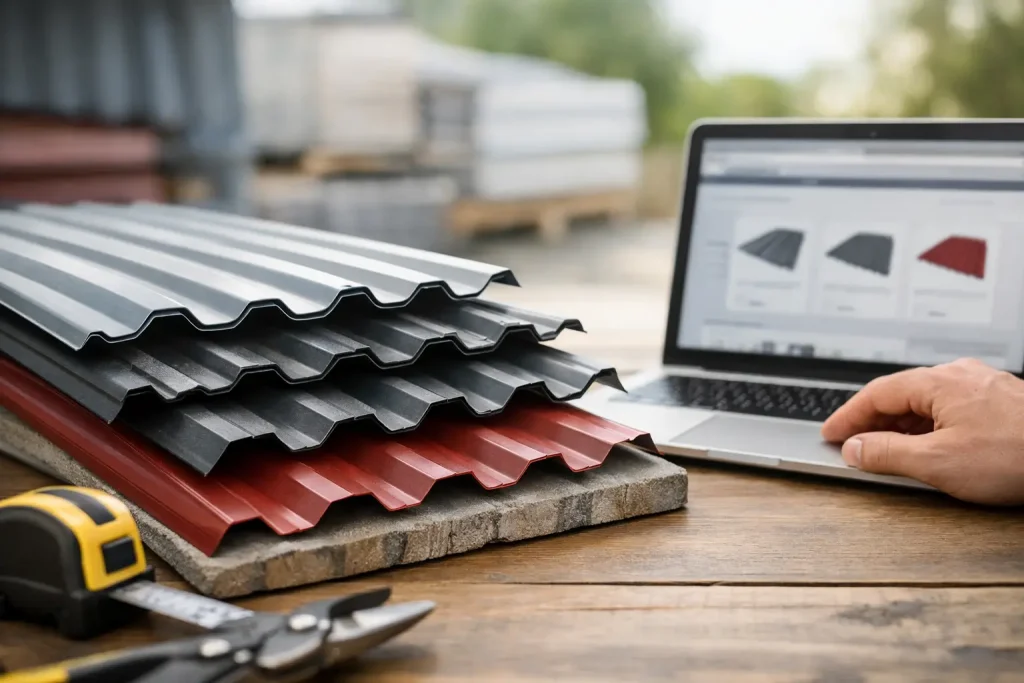
If you have ever stood on site with sheets that are close, but not quite right, you already know why more customers now order cut to length roofing sheets online. A few inches out can mean wasted material, awkward laps, extra labour and a finish that never looks as clean as it should. Getting sheets made to your required length from the start is not a luxury – it is the practical way to buy for sheds, garages, workshops, stables, agricultural buildings and light industrial projects.
Buying online also makes sense when the supplier understands roofing properly. You are not just choosing sheet lengths. You are matching profile, coating, colour, fixings, flashings, rooflights and trims so everything works together on site. That matters whether you are a tradesperson working to a schedule or a capable DIY customer trying to avoid ordering twice.
Why order cut to length roofing sheets online?
The obvious reason is accuracy. Standard stock sizes can work, but they often force compromises. You either trim sheets down yourself or increase overlaps to make them fit, and both options can add time, waste and cost. Ordering cut to length means the sheets arrive made for the roof you are building, which helps with speed of installation and gives a neater finish.
There is also a planning advantage. When you order online, you can review the specification in one place rather than piecing it together over several phone calls or merchant visits. That is useful if you need to compare polyester against plastisol, decide between corrugated and box profile, or work out whether insulated panels will save time and improve thermal performance on the same job.
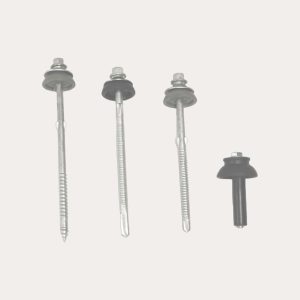
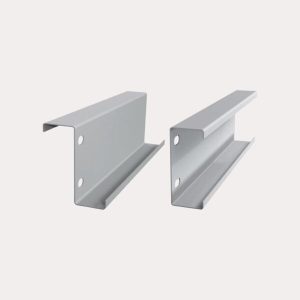
For many customers, the biggest benefit is being able to source the full system together. Sheets on their own are only part of the order. You will usually need fixings, flashings, foam fillers, tapes, rooflights and often purlins or structural supports. Buying everything from one specialist supplier reduces the risk of missed items and saves chasing multiple deliveries.
What to check before you order cut to length roofing sheets online
The length is only one part of the specification. Before placing the order, make sure you know the roof dimensions, the pitch, the support centres and the sheet type that suits the building.
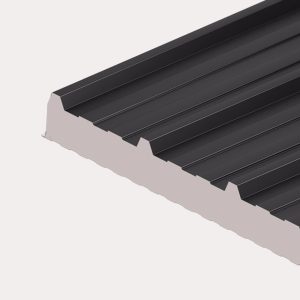
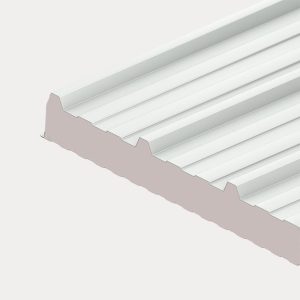
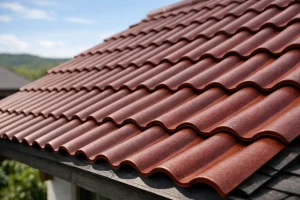
Profile choice comes first. Box profile sheets are a strong, popular option for many domestic, commercial and agricultural applications. Corrugated sheets give a more traditional appearance and suit everything from garden buildings to cladding projects. Fibre cement can be the better fit where sound reduction and anti-condensation performance matter, while insulated panels are often chosen for workshops, units and buildings where thermal efficiency is part of the brief.
Material finish matters as well. If price is the main driver on a simple outbuilding, galvanised or polyester-coated sheets may be enough. If the roof needs stronger long-term resistance and a more durable finish, plastisol is often the better choice. It depends on the environment, expected lifespan and the level of exposure. Coastal or harsher locations usually justify spending more on protection.
You should also think about sheet direction, overhang and laps before you enter any measurements. The cut length needs to reflect the actual roof layout, not just the building footprint. A common mistake is measuring the structure and forgetting allowances for eaves, ridge details or overlap requirements. If in doubt, ask before ordering rather than trying to make incorrect sheets work on site.
Getting the specification right first time
The easiest orders are the ones where the buyer already knows the profile, coating, colour and length. But plenty of projects are not that simple. A replacement roof might need to match an existing profile. A new workshop may need better condensation control than a basic shed. A stable block could benefit from a material choice that balances durability with internal comfort.
This is where proper technical support earns its place. A good specialist supplier will help you sense-check your measurements, talk through profile options and make sure the accessories match the sheets you are buying. That guidance can prevent small errors that become expensive once the order is manufactured and dispatched.
It is also worth checking whether your chosen sheet length is practical for handling and delivery. Longer sheets reduce end laps, which is good for weather resistance and appearance, but they do need sensible access and enough hands on site. Sometimes splitting a run into manageable lengths is the better option, even if one-piece sheets look more efficient on paper.
Accessories are not extras
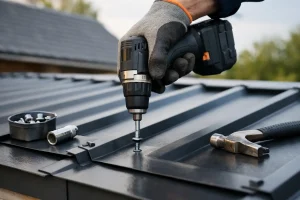
One of the biggest ordering mistakes is treating accessories as an afterthought. The roof may be all about the sheets, but the weatherproof result depends on the supporting parts doing their job. Flashings finish the edges and junctions. Fixings need to suit both the sheet type and the supporting structure. Foam fillers help close gaps at ridge and eaves. Rooflights need to match the profile if you want natural light without installation headaches.
This is why a one-stop shop approach is so useful. Instead of buying sheets from one supplier, fixings from another and flashings somewhere else, you can build the whole order together. It is quicker, it is easier to check compatibility, and it cuts down the chances of missing a detail that stops the installation halfway through.
For trade buyers, that means fewer delays and less time spent managing suppliers. For DIY customers, it means far less guesswork. Either way, a complete order is usually a better order.
Delivery matters as much as price
A low sheet price can look attractive until the delivery date drifts or the order arrives incomplete. Roofing projects rarely have much slack in the programme, particularly when the old roof is already off or the building needs to be watertight quickly. Reliable UK-wide delivery is part of the buying decision, not a bonus.
When ordering online, look for clear lead times, stock-backed ranges and proper communication around dispatch and delivery dates. That reassurance is especially important for cut to length products, because these are not the sort of items you can easily swap at short notice. You want confidence that the order will arrive when expected and in the specification agreed.
At Roof Sheets Online, that service side is a big part of the offer. Customers can order through https://www.roofsheetsonline.co.uk and still get the phone-backed support that makes a difference when measurements, accessories or delivery timing need checking.
Is online ordering right for trade and DIY buyers?
In most cases, yes. Trade customers tend to value speed, stock visibility and being able to put a full materials list together without wasting time. If you already know what you need, ordering online is straightforward and efficient. If the job has more moving parts, phone support helps tidy up the details before the order is finalised.
DIY buyers often assume online ordering is only for the trade, but that is not really the case. If you are building a garage, re-roofing a stable, replacing a lean-to roof or cladding a workshop, online buying can actually make the process easier. You can compare options at your own pace, check the accessories you need and ask for guidance where the specification is less clear.
The only real trade-off is that you need to measure carefully. Cut to length sheets are made to order, so accuracy matters. But with the right support and a sensible check of dimensions before purchase, online ordering is one of the simplest ways to get a roofing package sorted properly.
A better way to buy roofing sheets
The best reason to order cut to length roofing sheets online is not convenience on its own. It is control. You get the right size, the right profile and the right components lined up before the job starts, which gives you a cleaner installation and fewer problems once work is underway.
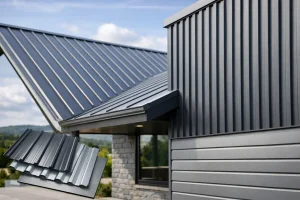
If the roof needs to be sleek, strong and weather-resistant, buying made-to-measure sheets from a specialist supplier is a sensible move. Take the time to check the specification, ask the technical questions early and build the full order in one go. It is the easiest way to keep the project moving and the finish looking right from day one.