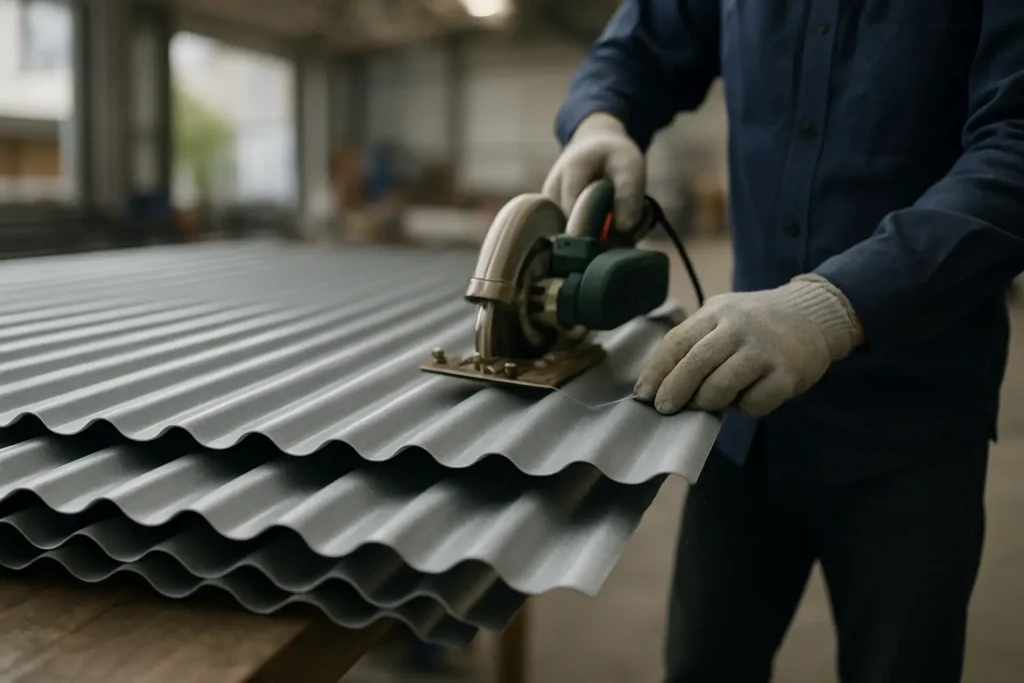
You only notice how unforgiving corrugated sheeting can be when a sheet lands 20 mm short, the overlap doesn’t marry up, and the last purlin line is left doing all the work. Most roofs don’t fail because the sheet is “bad” – they fail because the sizing and detailing were guessed.
That’s why corrugated roof sheets cut to size are so popular for sheds, stables, workshops, agricultural lean-tos and refurb jobs. Done properly, you get cleaner runs, fewer awkward joints, less waste to dispose of, and a roof that goes on quicker with less trimming on site. Done badly, you can bake mistakes into every sheet.
Cut to size sounds simple, but you need to be clear what is being cut and what stays standard.
In most cases, you’re specifying the sheet length (along the slope) and sometimes the sheet cover width by choosing how many corrugations wide you want. The profile itself does not change – corrugation pitch and depth stay as manufactured. You are basically choosing a made-to-order length that suits your roof geometry and your overlap plan.
The pay-off is straightforward: fewer joins along the slope means fewer potential leak paths. On outbuildings especially, a single sheet from eaves to ridge (or eaves to top flashing) is often the neatest, toughest option.
If your roof is a standard small building with a straight run, made-to-measure lengths can save time and make the job look sharper. You avoid piecing together two shorter lengths with an end lap, and you reduce the number of fixings needed in lap zones.
They’re also a strong choice when access is tight. Cutting sheets on site is possible, but it brings extra handling, more swarf, and more chance of edge damage. A sheet that arrives the right length lets you focus on setting out, keeping lines true, and getting fixings consistent.
That said, it depends on the site. If you’ve got a tricky roof with lots of penetrations, a high number of sheet interruptions, or you’re working around existing structure that isn’t square, having some “wiggle room” in standard lengths can be useful. Made-to-measure is brilliant when your measurements are reliable.
Most measuring errors come from measuring the frame, not the finished roof. Corrugated sheets don’t stop at the last timber or steel – you normally want a controlled overhang into the gutter and sensible protection at the verge.
Start with the roof pitch length from eaves line to ridge line. Then factor in the eaves overhang you want (often enough to throw water cleanly into the gutter without overshooting). At the top, think about what finishes the roof: a ridge, a wall abutment flashing, or a barge detail on a mono-pitch. Your sheet length needs to work with that termination.
Also check the building for square by measuring diagonals. If the frame is out, cut-to-size sheets will highlight it. On a slightly skewed frame, you may need to set out from a chosen datum line and accept a controlled trim at the verge – which is fine, as long as it’s planned.
Corrugated sheets rely on side laps to shed water and resist wind uplift. When you choose sheet cover, you are really choosing how many corrugations you want across the roof and where your lap will land.
Make sure your total roof width is calculated in “effective cover”, not just overall sheet width. Effective cover is what’s left after the lap is taken. If you build your take-off using overall widths, you’ll often end up short on the last run.
If the roof slope is longer than the practical sheet length you can handle, you may need an end lap. End laps introduce a horizontal joint, extra fixings, and more reliance on good tape and detail.
Cut-to-size reduces the need for end laps, but there are sensible limits. Very long sheets can be awkward on delivery and handling, and on a windy site they’re harder to control safely. For many jobs, two manageable lengths with a well-detailed end lap beats one huge length that gets damaged before it’s fixed.
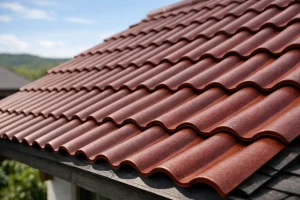
“Corrugated” describes the shape, not the material. For UK outbuildings and cladding, you’ll most often be choosing between steel corrugated sheets and fibre cement corrugated sheets, with different performance trade-offs.
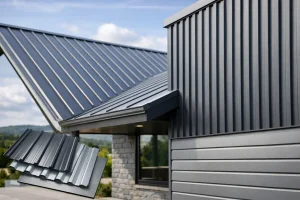
Steel is sleek, strong and quick to fit. It’s a go-to for workshops, garages, agricultural buildings and general-purpose roofing where you want good span capability and a smart finish. Finish matters here: polyester is a common budget-friendly option, while plastisol coatings are thicker and tend to take knocks and weathering better over the long term.
Fibre cement brings a different set of benefits. It’s stable, quieter in heavy rain than steel, and well suited to agricultural environments. It is heavier, and you handle and cut it differently, so it’s usually chosen when the use case suits it rather than as a like-for-like swap.
If you’re unsure, think in plain terms: what environment is it going into, how long do you want it to look good, and how much abuse will it take from ladders, animals, or machinery? Match the sheet to the job, not the other way round.
A roof that lasts is a system: sheets, fixings, flashings, fillers, tapes, rooflights, and the structure beneath.
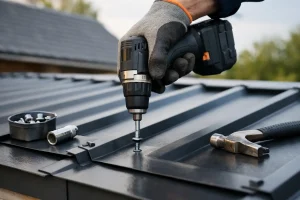
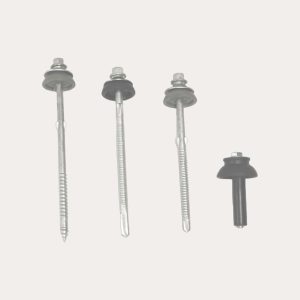
People often get excited about cut-to-size sheets and then try to “make do” with whatever fixings are on the van. That’s where callbacks start. Corrugated profiles need the correct fasteners and sealing washers, fixed in the right locations, with sensible spacing for the exposure and building height.
Flashings are another common miss. Verge, ridge, eaves closures, and any abutment or apron flashings should be decided at the same time as sheet length. Your sheet dimensions and your flashing coverage need to agree, otherwise you end up with vulnerable edges or a ridge that doesn’t seat correctly.
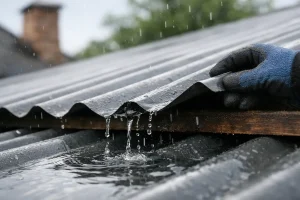
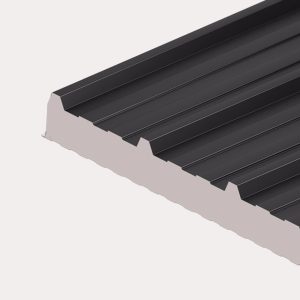
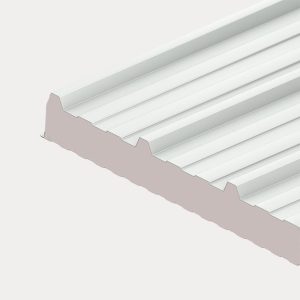
Condensation control is also part of the system. A single-skin metal roof over a humid space (stables, livestock housing, some workshops) can drip if you don’t plan for it. Options include anti-condensation backing, ventilation strategy, or stepping up to insulated panels if the building use demands it. It depends on what’s happening under the roof, not what the roof looks like from the outside.
Even when you buy corrugated roof sheets cut to size, you may still need minor trimming for penetrations or awkward returns. The key is doing it without wrecking the coating or creating rust points.
For steel sheets, avoid creating heat that burns the coating on the cut edge. Cold cutting methods are the safer route, and once cut, edges should be treated in line with good practice for the product finish. Also keep swarf under control – metal filings left on the sheet can stain and shorten the life of the coating.
Store sheets on bearers off the ground, with protection from standing water. If they arrive wrapped, don’t leave them sweating in plastic for longer than needed. A little care before installation prevents those “mystery marks” you only see once the sun hits the roof.
Made-to-measure only works if the specification is unambiguous. Provide slope length, required cover width, quantity, profile, material, finish/colour, and any special requirements such as rooflights or matching flashings.
Delivery matters too. Longer sheets may need suitable access for the vehicle, somewhere safe to offload, and a plan for moving sheets to the install point. If you’re working on a farm track or a tight residential street, it’s worth thinking through turning space and unloading before the day the lorry arrives.
This is also where a proper one-stop approach helps. Ordering sheets, matching fixings, flashings, fillers and tapes together reduces the risk of being one box short when you’re halfway across the roof.
If you want that joined-up supply with clear stock, UK-wide delivery and phone-backed technical support, Roof Sheets Online Ltd is set up for exactly that – sheets and the supporting components in one place, with delivery dates confirmed so you can plan labour properly.
There isn’t one perfect spec for every corrugated roof, and pretending there is usually costs time.
If your roof is exposed and you’re near the coast or on higher ground, you may need to think harder about fixing density and the finish you choose. If you’re fitting over an existing roof, you’ll need to confirm what the structure can take and whether you’re trapping moisture. If you’re trying to reduce noise, fibre cement or insulation may be the better route than steel. And if you’re matching to existing sheets, profile compatibility is non-negotiable – “close enough” isn’t a thing with laps.
These decisions aren’t complicated, but they do need to be made before you press order.
A good roof build feels almost boring when it’s done right: sheets land the right length, laps line through, flashings cover cleanly, and you’re not improvising in the rain. If you’re taking one action before buying, make it this – measure the finished roof lines, decide your overlaps, then order to that plan with the full accessory set alongside it. Your future self on install day will thank you.
Roof Sheets Online Ltd
UNIT C4
MACROME ROAD
Wolverhampton
WV6 9HD
Company No 15150940
Vat No. 4880 70856