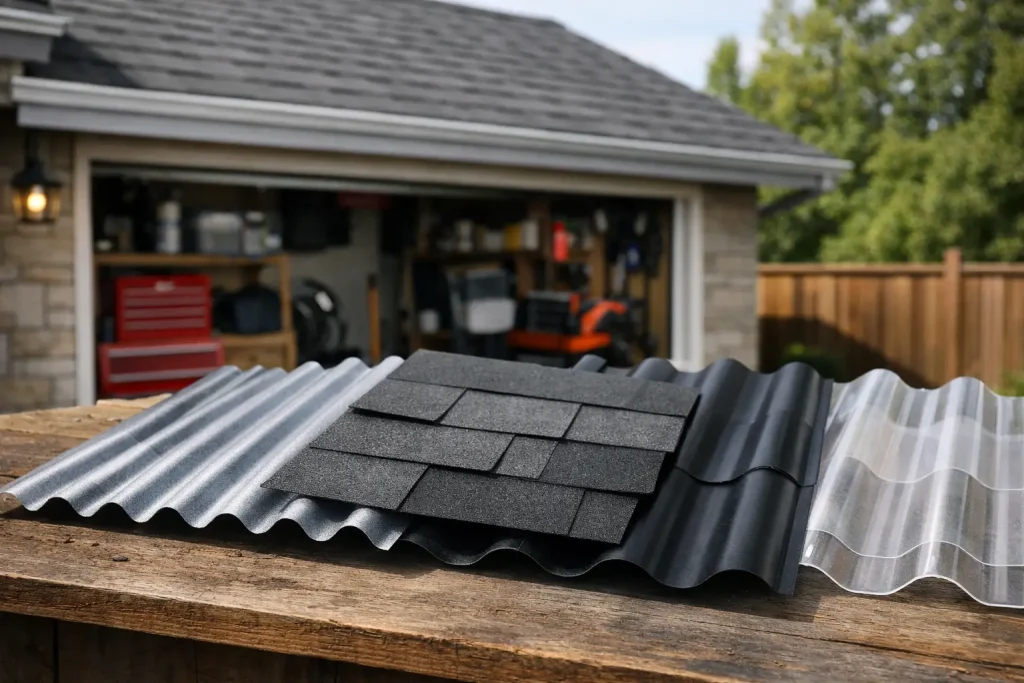
A leaking garage roof rarely stays a small job for long. Water can damage tools, vehicles, stored belongings and the structure beneath the covering. Choosing the best garage roof sheets means matching the material to the building, the roof pitch, the level of insulation required and the weather it needs to withstand – not simply buying the cheapest sheet available.
For most UK garages, metal roofing sheets are the practical starting point. They are strong, quick to fit, available in useful cut-to-length sizes and designed to cope with regular rain, wind and frost. However, an uninsulated single-skin roof is not always the right answer. If the garage is used as a workshop, home gym or working space, condensation and heat loss deserve just as much attention as weatherproofing.
The right sheet should cover the roof efficiently, shed water cleanly and suit the structure underneath. It also needs to be installed with the correct fixings, flashings and closures. A good sheet can still fail at the eaves, ridge or side laps if those details are ignored.
Start with the roof itself. A simple apex garage roof with a reasonable pitch can take box profile or corrugated steel sheets very effectively. A low-pitch roof needs careful product selection, correct side laps and well-fitted flashings to prevent water tracking back under the sheets. For a flat or near-flat garage roof, conventional profiled sheets may not be suitable at all; flat roofing materials are usually the better route.
The internal use of the garage matters too. A detached garage used solely for parking and storage can often be covered with single-skin steel sheets, provided condensation is managed. A garage connected to the house, or one used regularly as a workspace, will usually benefit from an insulated roof system.
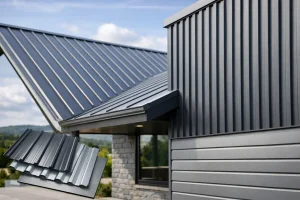
Box profile sheets are among the most popular choices for garage roofs. Their angular profile gives a clean, modern finish, while the formed ribs add strength across the roof span. They work particularly well on timber or steel purlins and are available in a choice of coatings and colours.
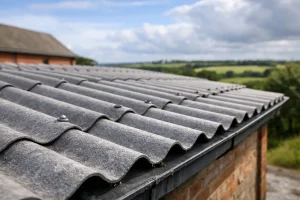
For a standard domestic garage, box profile steel offers a sensible balance of price, durability and appearance. It is lighter than many traditional roofing materials, so it can be an excellent option when replacing an ageing asbestos cement or felt roof – although any asbestos removal must be handled safely by a suitably qualified professional.
Coating choice affects both lifespan and appearance. Polyester-coated sheets provide a cost-effective finish for many domestic projects. Plastisol-coated steel has a tougher, thicker surface and is a strong choice where the roof faces harsher conditions, frequent moisture or greater risk of wear. Galvanised steel is functional and hard-wearing, but it has a more industrial appearance and is less suited to garages where kerb appeal matters.
Box profile roofing is not a cure for condensation on its own. Warm, moist air inside the garage can meet the cold underside of the sheet and form droplets. Anti-condensation fleece can help absorb and release small amounts of moisture, but it is not a substitute for proper insulation and ventilation where the building is heated or regularly occupied.
Corrugated roofing sheets suit garages where a more traditional agricultural or workshop-style finish is preferred. The rounded wave profile is familiar, dependable and particularly effective at channelling water down the roof slope.
Steel corrugated sheets provide good durability and a classic appearance, especially on older garages, garden buildings and rural properties. They are also straightforward to handle and fit when the roof structure is sound and purlin spacing is correctly planned. The main consideration is making sure the profile, overlap and fixings are all compatible. Mixing sheet profiles or using the wrong screws can create weak points that allow water in.
Corrugated fibre cement sheets are another option, particularly for buildings where reducing rain noise is useful. They do not suffer from the same condensation behaviour as bare metal, and they offer a muted, traditional finish. They are heavier than steel sheets, though, so the supporting structure must be suitable. Fibre cement is often a sensible choice for larger detached garages, workshops and agricultural-style buildings rather than a lightweight timber garage.
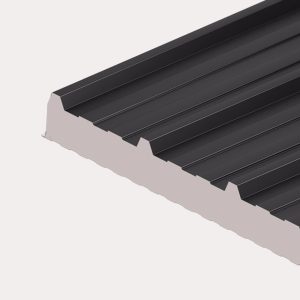
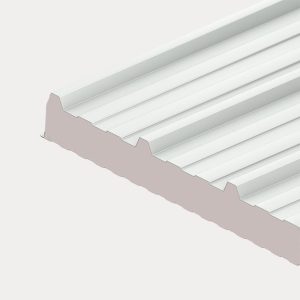
If the garage is more than a place to park the car, insulated panels are worth serious consideration. Insulated roof sheets combine an external steel facing, an insulating core and an internal liner in one precision-made panel. This creates a far more comfortable and controlled internal environment than a single-skin roof.
Insulated panels can reduce heat loss, limit condensation and help soften rain noise. They are well suited to workshops, converted garages, commercial units and buildings where tools, equipment or stock need protection from damp conditions. Higher-performance systems, including Kingspan QuadCore insulated panels, are designed for projects where thermal performance and long-term reliability are key purchasing factors.
The trade-off is cost. Insulated panels cost more upfront than basic single-skin sheets, and they need accurate detailing around ridges, verges, rooflights and junctions. Yet for a garage that is heated, used every day or likely to be upgraded in future, fitting insulation at roof stage is often better value than trying to add it later beneath a cold metal covering.
The best material cannot compensate for an unsuitable roof design. Before ordering, measure the slope length from eaves to ridge, the roof width, purlin centres and the pitch. Ordering sheets at the right length can avoid unnecessary end laps, which reduces potential leak points and produces a cleaner finish.
Longer sheets are not always easier to install. They need careful handling, enough people on site and safe access equipment. On a typical garage, it is often possible to use one full-length sheet from ridge to eaves, but this depends on practical delivery and handling requirements.
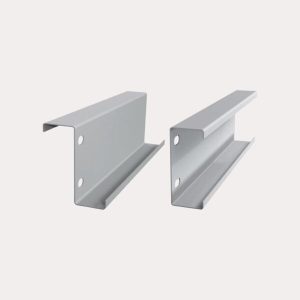
Purlins must be properly spaced for the chosen profile and sheet thickness. Thin sheets spanning too far can flex under snow, wind load or foot traffic during maintenance. Never assume a roof can be walked on simply because it is steel-clad. Load should be transferred through the purlins, and safe working practices remain essential throughout installation.
A garage roof is a system, not just a row of sheets. Leaving out the supporting components is one of the quickest ways to turn a sound material choice into a call-back job.
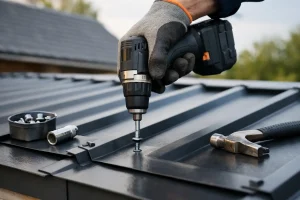
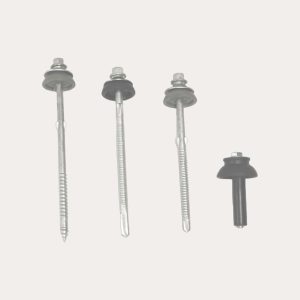
Use purpose-made stitching screws for side laps and suitable self-drilling fixings with sealing washers to secure sheets to timber or steel supports. Fixings should be positioned according to the profile and manufacturer guidance, tightened enough to seal but not over-tightened to the point of distorting the washer or sheet.
Ridge flashings protect the top of an apex roof, while barge flashings finish and seal the gable edges. Eaves fillers and foam closures help close gaps created by the sheet profile, reducing the chance of driven rain, birds and insects entering the roof space. Butyl tape and sealing strips may be needed at overlaps and around details where water could track beneath the cladding.
Rooflights can be useful if the garage needs natural daylight, especially in a workshop. They should match the sheet profile and be installed with the same care as the main roof sheets. A poorly fitted rooflight is a common source of leaks, so it is worth getting the specification right before ordering.
A dark grey or anthracite box profile roof can give a modern garage a sharp, tidy appearance. Juniper green, olive green and brown often sit more naturally alongside rural properties, timber buildings and garden settings. The best colour is usually one that complements the existing doors, fascia boards, windows and surrounding roofscape.
Appearance should not override performance. Coastal locations, exposed sites and roofs beneath overhanging trees place greater demands on a coating. In these cases, investing in a higher-grade finish and maintaining clear gutters can extend the working life of the roof. Regularly remove leaves and debris, check fixings after severe weather and deal with small scratches before corrosion takes hold.
For a straightforward unheated garage, coated box profile or corrugated steel is usually the best-value route. For a quieter roof with a traditional character, fibre cement may suit the structure and budget. For a garage used as a proper workspace, insulated roof panels are the stronger long-term investment.
The key is to order the complete system together: sheets, flashings, fixings, fillers, tapes and any rooflights or purlins required. Roof Sheets Online can help confirm the practical details before you place an order, so the materials arriving on the lorry are the materials your garage roof actually needs.
Roof Sheets Online Ltd
UNIT C4
MACROME ROAD
Wolverhampton
WV6 9HD
Company No 15150940
Vat No. 4880 70856