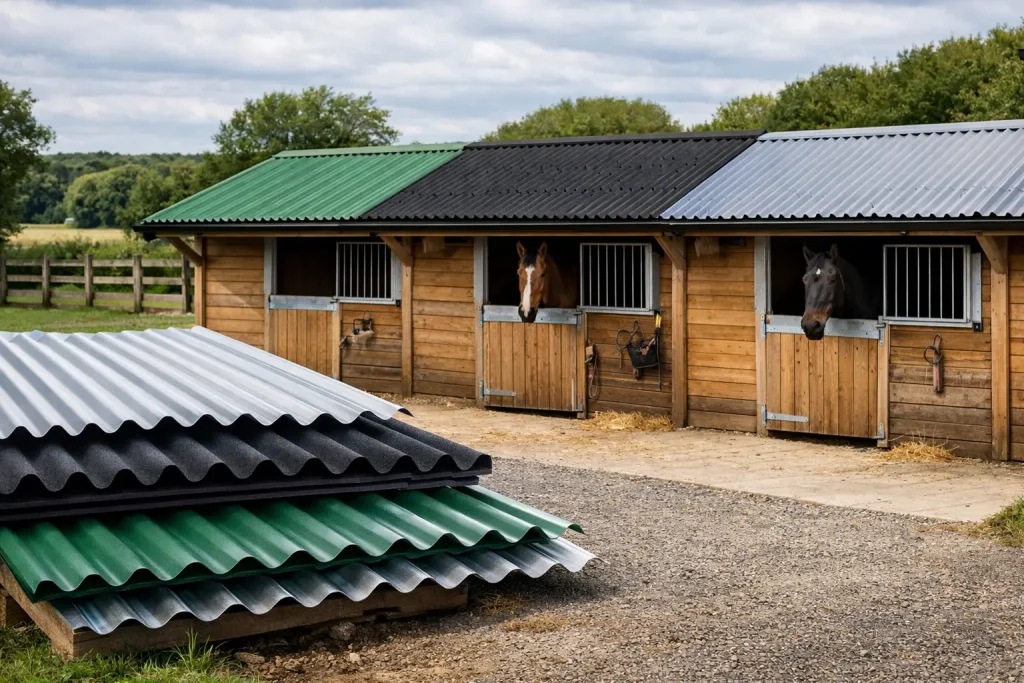
A stable roof has a harder job than most outbuildings. It needs to keep horses dry, limit condensation, stand up to wind and rain, and avoid turning every shower into a drum solo overhead. That is why choosing the best roof sheets for stables is less about finding the cheapest sheet and more about getting the right balance of strength, insulation, noise control and long-term value.
If you are roofing a new stable block or replacing tired sheets on an existing building, the starting point is simple. Think about how the building is used, how exposed the site is, and whether the stable needs to stay warmer, quieter or drier than a basic field shelter. Once those points are clear, the right sheet type usually becomes obvious.
Stable roofs sit in a demanding environment. Warm air from animals rises, moisture builds up quickly, and ventilation is essential. Add in driving rain, frosty mornings and the occasional flying debris in bad weather, and you need a roof covering that is genuinely fit for purpose.
For most buyers, the main concerns are condensation, noise, durability and maintenance. Cost matters too, but cheap sheets can become expensive if they sweat badly, corrode early or need replacing well before they should. A stable is not a garden store. The roof has to perform day after day.
Pitch also matters. Some sheets work better on steeper roofs, while others are more forgiving on lower pitches. The structure underneath matters as well. A lightweight timber frame might suit one roofing option better than another, while a more substantial steel or timber setup can handle heavier materials.
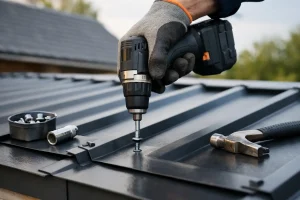
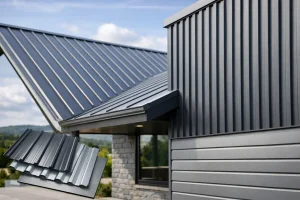
Box profile sheets are one of the most popular choices for stables, and for good reason. They are strong, weather-resistant and quick to install over timber or steel purlins. Their ribbed shape gives them good spanning capability, which helps on larger stable blocks where strength and speed of fitting both matter.
In practical terms, box profile sheets often suit customers who want a clean, modern finish and a dependable roofing system without overcomplicating the build. They are available in different coatings, with Plastisol generally being the stronger long-term option for agricultural and equestrian settings. Polyester can work where budgets are tighter, but if the building is expected to take years of weather exposure with minimal fuss, the heavier coating is usually the better buy.
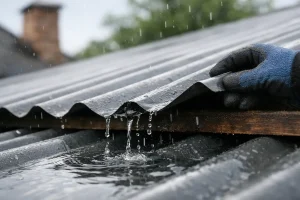
The trade-off is noise and condensation. Standard single-skin steel sheets can be loud in heavy rain, and without anti-condensation backing or insulation they can suffer from moisture build-up underneath. For open-fronted shelters that may be acceptable. For enclosed stables, it often is not.
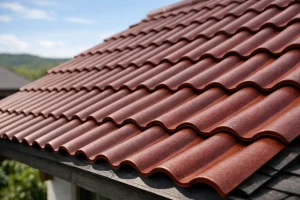
Corrugated sheets remain a reliable option for traditional-looking agricultural buildings and smaller stable projects. They are straightforward, proven and often visually better suited to rural settings than sharper-profile modern sheets.
They handle runoff well and can be a sensible choice where appearance matters alongside function. Depending on the material and finish, corrugated sheets can also offer a slightly softer look than box profile roofing, which some stable owners prefer.
That said, the same caution applies with basic metal corrugated sheets as with basic box profile. If you install an uninsulated single-skin roof over a stable and expect it to stay quiet and condensation-free, you will probably be disappointed. The sheet shape is only part of the equation. Build-up and ventilation matter just as much.
Fibre cement sheets are often one of the best answers for stable roofing when noise reduction is high on the list. They are quieter than steel in rain, do not suffer from the same underside condensation issues as metal sheets, and they suit agricultural and equestrian buildings very well.
For horses, that quieter internal environment can be a real advantage. Some animals are unsettled by sudden roof noise, especially in exposed areas during heavy weather. Fibre cement helps soften that problem. It also gives a more traditional agricultural appearance and offers solid durability when installed correctly.
The compromise is weight and handling. Fibre cement sheets are heavier than steel sheets and generally need more care during transport, lifting and installation. They are not difficult to work with for experienced installers, but they are less forgiving than lightweight metal sheets when speed is the main priority.
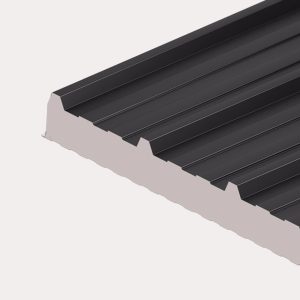
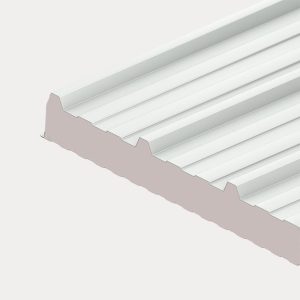
If you want the best all-round performance, insulated roof panels are hard to beat. These panels combine outer and inner steel facings with an insulating core, giving you a roof that is strong, weatherproof and far better at controlling condensation and temperature swings than single-skin sheeting.
For enclosed stable blocks, tack rooms and wash-down areas, insulated panels often make the most sense. They help create a more stable internal environment, reduce drumming noise compared with basic metal sheets, and cut down the risk of cold surfaces causing moisture problems inside.
The obvious trade-off is upfront cost. Insulated systems cost more than standard roof sheets, and you need to specify the right flashings, fixings and trims to get the full performance benefit. But on buildings that are used every day, the extra spend can be justified very quickly. Better comfort, less condensation and a neater internal finish all count.
The best sheet depends on the building, not just the price list. A simple field shelter in a sheltered paddock may be perfectly well served by steel box profile sheets with the right coating and correct ventilation. A fully enclosed stable yard with horses stabled overnight has different demands.
If condensation is the main concern, anti-condensation backed steel sheets can help, but they are not a substitute for proper ventilation. They manage moisture droplets forming on the underside, but the building still needs airflow at high and low level. In many stable projects, buyers focus heavily on the sheet and forget the wider roof design.
If noise is the issue, fibre cement or insulated panels are usually the stronger options. If budget is tight but you still need metal sheets, think carefully about the stable layout. Open eaves, ridge ventilation and breathable building design can make a noticeable difference.
If the stable includes feed storage, tack areas or rooms that need to stay drier and more temperature-stable, insulated sheets become more attractive. Not every stable block needs them, but some absolutely benefit from them.
Not all steel roof sheets are equal. The protective coating has a direct effect on service life, appearance and resistance to the wear that comes with agricultural settings.
Plastisol-coated sheets are a strong choice for stables because they are tougher and generally better suited to harsher environments than thinner painted finishes. They cope well with weather exposure and offer a durable surface that stands up well over time. Polyester sheets can still be suitable, particularly on lower-budget projects, but the expected lifespan and resistance level are not usually as strong.
Galvanised options can work in some cases, though many buyers now prefer coated sheets for the added protection and better finish. Whatever you choose, maintenance matters. Keep gutters clear, check fixings periodically, and deal with any damage early before moisture gets into areas it should not.
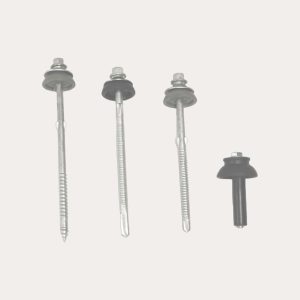
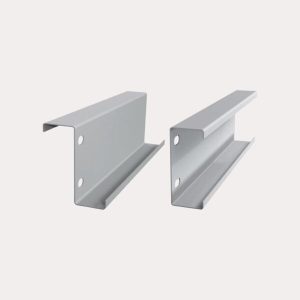
A good stable roof is not just about the sheet. Ridge pieces, eaves trims, bargeboards, fixings, rooflights where appropriate, foam fillers and the right purlins all affect how the finished roof performs.
Poor detailing is where leaks, draughts and premature wear often begin. This is one reason many trade buyers and property owners prefer a one-supplier approach. Getting the sheets, fixings and flashings specified together makes life easier and reduces the risk of mismatched components turning up on site.
For stable roofs in particular, correct fixings and closure details matter because wind uplift and weather exposure can be severe in open rural locations. The sheet can be top quality, but if the detailing is wrong, the roof will still underperform.
If you want the shortest answer, insulated roof panels are usually the best premium option for enclosed stables, fibre cement is often the best choice for quieter traditional stable buildings, and box profile steel sheets are the best value option where budget, strength and installation speed are the priorities.
There is no single right answer for every stable. A low-cost shelter, a private two-box stable and a larger commercial yard should not all be roofed in exactly the same way. The right choice depends on exposure, internal use, budget and how much importance you place on condensation control and noise reduction.
At Roof Sheets Online, that is usually where practical advice matters most. It is not just about buying sheets. It is about getting the right profile, the right finish and the right accessories so the whole roof works properly once it is on.
If you are weighing up options for a stable project, start with the animals, the building and the site conditions rather than the headline price. A roof that stays dry, secure and quieter through British weather is usually the better investment from day one.
Roof Sheets Online Ltd
UNIT C4
MACROME ROAD
Wolverhampton
WV6 9HD
Company No 15150940
Vat No. 4880 70856