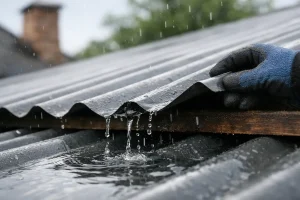
A Big 6 fibre cement roof is one of those jobs where everything looks straightforward until you try to introduce daylight. The sheets are heavy, the profile is deep, and the roof has usually been up there taking weather for years. Get the rooflight wrong and you do not just lose time – you invite drips, cracked sheets, and a patch that never quite sits right.
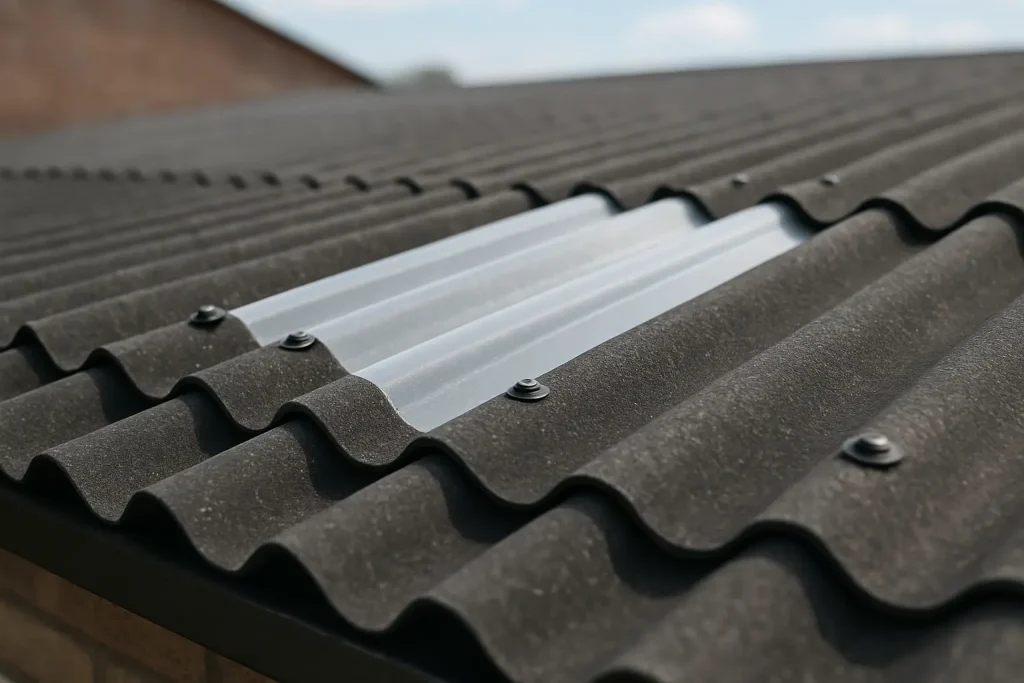
This is where fibre cement rooflights Big 6 come in. They are made to suit the Big 6 profile so you can swap in a translucent sheet and keep the run, laps and fixings working as they should. The key is treating the rooflight as part of the full roof system, not an add-on.
What “Big 6” really means for rooflights
Big 6 is a common fibre cement profile used across agricultural and light industrial buildings. It is a larger corrugation than standard corrugated sheets, with a deeper wave that gives strength over longer spans.
That deeper profile is exactly why rooflights need to be matched properly. A generic corrugated rooflight might look close on the ground, but if the pitch, corrugation depth or crown spacing is off, you end up forcing it to fit. That usually shows up later as stress cracking around fixings or water tracking at the side laps.
When you specify a Big 6 rooflight, you are buying the correct moulded profile so the sheet nests cleanly with the surrounding fibre cement. That fit is what keeps the laps tight, lets the sealing system do its job, and avoids point loads that fibre cement does not forgive.
Where Big 6 rooflights work best
Most Big 6 roofs we see are doing a practical job – keeping animals, tools or stock dry. A rooflight is rarely about aesthetics. It is about useful light where you need it: along feed passages, over workshop benches, at stable aisles, or in a general-purpose shed that is used all year.
There is also a safety angle. Dark interiors lead to more artificial lighting, more trailing leads, and more missed hazards. A well-placed run of rooflights gives consistent daylight without you having to keep flicking switches.
The trade-off is heat and glare. Rooflights can increase solar gain in summer and create bright patches if you place them directly over work areas. That is not a reason to avoid them, just a reason to plan the layout rather than scattering sheets at random.
Choosing the right rooflight type for fibre cement
Most Big 6 rooflights are translucent GRP (glass reinforced polyester) or similar composite rooflight sheets formed to the Big 6 profile. They are designed to sit in the same way as the fibre cement sheets around them.
Thickness and reinforcement matter because Big 6 roofs are often on buildings that see wind load, vibration, and occasional maintenance foot traffic nearby. A rooflight is not the place to cut corners. If you are replacing older rooflights, do not assume the new ones will be the same thickness or fixing pattern – always check the current specification.
Also be realistic about what you are trying to achieve. If you want a bright, evenly lit interior, you are usually better with several rooflights spaced through the roof area rather than one cluster. If you only need daylight at one end, keep it local and avoid overheating the whole building.
Getting the sheet length and lap details right
Big 6 roofs typically use generous end laps because they are exposed and often low pitch. That end lap is not optional – it is the main defence against driven rain.
Before you order rooflights, confirm three things on the existing roof:
- Sheet length being used (and whether it is a single length or two sheets lapped)
- End lap dimension currently in place
- Side lap arrangement (which corrugation is being lapped and how it is fixed)
If you are extending a roof or mixing old and new, expect some variation. Older fibre cement sheets can have slightly different dimensions due to manufacturer changes over time. This is where “it depends” comes in: sometimes the cleanest approach is to replace a full bay of sheets so everything matches, rather than trying to feather one rooflight into a roof that has moved and settled.
Fixings: where most rooflight problems start
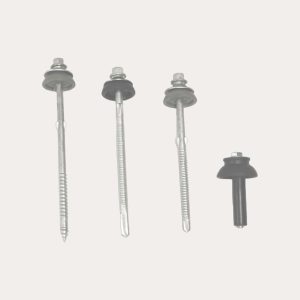
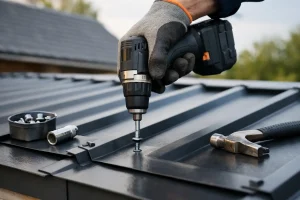
Fibre cement roofs generally use hook bolts or drive screws depending on the purlin type and the existing build. Rooflights need compatible fixings, correct hole sizes, and washers that seal without crushing.
Two common causes of leaks and cracking are overtightening and poor drilling. Tightening down hard feels reassuring, but with rooflights it can create stress around the hole and start a crack line that grows with temperature changes. Holes also need to be drilled cleanly, to the right diameter, and typically oversized slightly to allow for thermal movement. If the rooflight cannot move a touch, it will move by cracking instead.
You should also check the washer type. A proper sealing washer spreads the load and keeps water out at the fixing point. If you are refurbishing, do not reuse perished washers and expect a good result.
Spacing and layout: daylight without the downsides
A practical layout usually means rooflights are installed in a consistent run, often one or two sheets per bay, repeated every few bays depending on how much light you need.
Put rooflights where they will light the space, not where they are easiest to fit. Over a feed passage or central aisle often works well. Directly above a tack room or an office area might create glare and heat build-up.
If condensation is a known issue in the building, rooflights can highlight it because water droplets show up more on translucent sheets. That is not a rooflight fault – it is usually a ventilation and humidity balance problem. You can reduce it with better airflow (ridge ventilation, eaves ventilation, or controlled openings) and by avoiding placing rooflights right over high-moisture zones.
Installation realities on older Big 6 roofs
A lot of Big 6 work is refurbishment. Sheets may be weathered, fixings may be corroded, and purlins might not be perfectly straight anymore.
If you are cutting in rooflights, work methodically. Support sheets properly, keep walk boards on purlin lines, and avoid loading the sheet crowns. Fibre cement can be brittle, particularly on older roofs. Any sheet you disturb can crack if it is flexed.
Also check what else is on the roof. Many older agricultural buildings have had patch repairs over the years. Mixed materials, non-standard laps, or irregular fixings can turn a simple rooflight swap into a bigger tidy-up. Sometimes the best value is to replace a larger section so you get consistent weathering performance and fewer call-backs.
Ordering the rooflight as part of the full system
Rooflights do not live alone. To fit them properly you may need matching fixings, sealing washers, filler pieces, mastic or sealing tape (depending on the detail), and sometimes replacement ridge or flashings if you are altering sheet runs.
This is where a one-stop approach saves time. If you are already ordering Big 6 sheets or accessories, it makes sense to pull the rooflights and all supporting components together so you are not paused mid-job waiting on one bag of washers. Roof Sheets Online Ltd can supply Big 6 rooflights alongside the sheets, fixings and accessories needed for a complete roof build or refurbishment – with UK-wide delivery and phone support if you want to sense-check your spec before you place the order at https://www.roofsheetsonline.co.uk.
Common mistakes we see (and how to avoid them)
The biggest mistake is ordering “corrugated rooflights” without confirming the profile is Big 6. The second is assuming the old rooflight dimensions match modern production. The third is trying to save time by forcing a fit at the laps.
Avoid all three by measuring the existing profile, checking the sheet length and lap arrangement, and matching fixings to the existing purlin and sheet detail. If you are unsure, take clear photos of the corrugation, side lap and fixing points and get advice before ordering. It is far quicker than returning sheets or trying to make something work on the roof.
When rooflights are not the best answer
There are cases where rooflights are not the right solution. If the roof is at the end of its life, adding new rooflights can be a short-term win but a long-term nuisance, because you will be back up there soon replacing more sheets. If the building struggles with overheating, rooflights might worsen it unless you control ventilation. And if you need consistent working light at all times, rooflights should be paired with sensible artificial lighting rather than treated as a replacement.
The right approach depends on the building use, orientation and condition of the existing roof. That is normal. Roofing is rarely one-size-fits-all, especially with older fibre cement.
A final thought that helps on every Big 6 job: measure twice, order once, and treat rooflights as a system choice – if the profile, laps and fixings all agree with each other, the roof will stay bright and dry for the long haul.