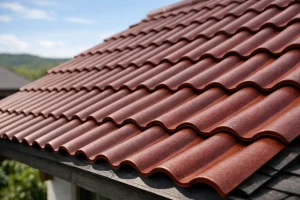
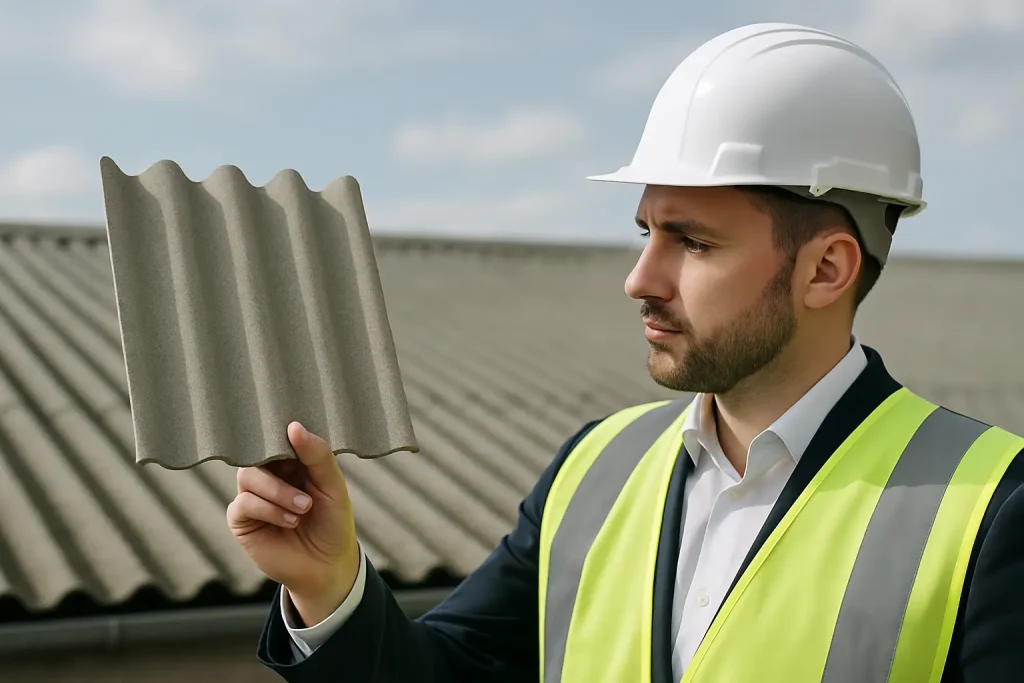
You can usually tell a Big 6 roof from the ground – deeper corrugations, a heavier-looking sheet, and that familiar agricultural and light industrial feel. If you are pricing a stable roof replacement, refurbing an older barn, or re-roofing a workshop that has been watertight for decades, chances are you have already been told to “just match the Big 6”. That is sensible advice – but only if you understand what you are matching.
This guide is built for people who want a straightforward spec that works first time: what fibre cement Big 6 is, why it is still used, what to check before you order, and the common mistakes that create leaks.
“Big 6” refers to a traditional corrugated profile with large corrugations – historically common on UK farm buildings, depots, garages and older industrial units. It is not just a casual nickname. The profile shape affects everything: the width you cover per sheet, how you lap, what fixings you use, and whether your new sheets will sit properly alongside existing ones.
That is why fibre cement roofing sheets Big 6 are typically bought for overcladding or replacement on buildings that already have Big 6, rather than being a random alternative to modern corrugated metal or smaller fibre cement profiles. When the profile matches, detailing is simpler, the roof looks right, and you avoid awkward gaps at laps and ridges.
Fibre cement earns its keep when you want a sheet that behaves calmly in UK weather and keeps its performance over time without fuss. It does not corrode, it is stable in UV, and it deals well with the wet-dry cycles we get year-round. It is also a good choice if you are trying to keep the roof quieter than metal – rain noise is generally less sharp.
There are trade-offs. Fibre cement is heavier than steel sheets, so handling, lifting and safe working matter more. It is also more brittle than metal if you mistreat it – you cannot drag it across purlins or throw it down and expect it to forgive you. If you need a roof you can cut and flash around lots of penetrations quickly, profiled metal may be faster on site.
Where Big 6 fibre cement shines is the typical “get it right and forget it” agricultural and maintenance job: stables, stores, plant rooms, yard buildings and older units where you want a dependable roof finish with a familiar profile.
Most ordering problems come from assumptions about sheet size. People remember the roof as “six foot sheets” or “eight footers”, but Big 6 roofs are often a mix of lengths – and the laps reduce your effective cover.
Before you price anything, measure the roof run (ridge to eaves) and the slope length you actually need to cover, then work backwards with the lap allowances. On a pitched roof, you also want to check that your purlin layout suits the sheet you are choosing. If you are re-sheeting on existing purlins, your fixing lines are already set in timber or steel – you do not want your end laps landing in mid-air.
Also confirm whether you are replacing like-for-like in profile. “Corrugated fibre cement” is not always Big 6. Smaller corrugated profiles exist, and mixing them creates endless grief: laps do not nest properly, filler pieces do not line up, and you end up chasing wind-driven rain.
Big 6 roofs rely on two things: correct side laps and correct end laps. Too little lap and the roof will leak under wind pressure. Too much lap and you waste sheets, add weight, and can create uneven fixing lines.
Side laps are typically done by overlapping a set number of corrugations (the exact requirement depends on the product and roof pitch). End laps depend heavily on pitch – the shallower the roof, the more you should lap to keep water moving over the joint rather than back into it.
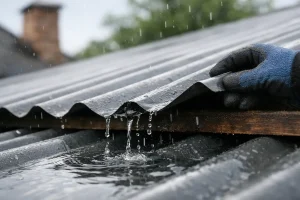
If your building is exposed – coastal, hilltop, or simply a wide open yard with prevailing wind – be conservative. A Big 6 roof that is fine in a sheltered village can behave very differently in open country.
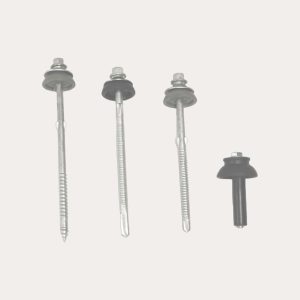
Most “new roof leaks” are fixing issues, not sheet issues. Fibre cement needs the right fixing type, the right hole prep, and the right pressure.
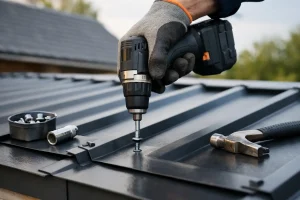
You normally pre-drill fibre cement sheets. That does two important things: it reduces the risk of cracking, and it gives you control over hole size. A fixing hole is not meant to clamp the sheet rigidly like a metal sheet. Fibre cement needs a little tolerance for movement and bedding, typically achieved by a correctly sized hole, a proper sealing washer and controlled tightening.
Over-tightening is a classic mistake. If you crush the washer hard and dish the sheet at the crest, you create a tiny sump where water can sit and work its way into the fixing. Tight is not the goal – sealed is the goal.
Fixing position matters too. For corrugated sheets, fixings are generally placed on the crown (crest) of the corrugation, not in the trough, so water does not sit around the fixing point.
If you are fixing into timber purlins, check the timber condition as you go. Old purlins can be soft around historical fixing lines. If the fixing cannot bite cleanly, you will not keep a seal in wind.
A Big 6 roof is not just sheets. The roof fails at edges and junctions first – ridge lines, verges, eaves, and penetrations.
At the ridge, you want a ridge piece that suits the profile and gives you enough lap each side. A ridge that is too tight can sit on the crowns and rock; too open and it leaves a gap that wind-driven rain will exploit.
Verges and eaves need tidy finishing as well. On agricultural buildings this is often where birds, draughts and drifting rain become an ongoing nuisance. Profile fillers (where appropriate for the system) can make a big difference to how the building feels inside, not just how it looks from outside.
If you have rooflights, do not treat them as an afterthought. Matching rooflights should suit the Big 6 profile so the laps and fixings behave the same way as the sheets around them.
Fibre cement can feel more forgiving than metal, but condensation is still a building physics problem, not a sheet-material problem. If warm, moist air meets a cold roof surface, you can still get drips – especially in stables, workshops, and stores where there is moisture from animals, heaters, or drying kit.
If you are refurbing an older building that has always been “a bit damp”, take the chance to improve airflow. Eaves ventilation, ridge ventilation, or controlled wall vents can reduce condensation massively.
It also depends on use. A simple hay store with good airflow behaves very differently from a tack room that is heated occasionally and shut up tightly. If the building is changing use, do not automatically copy the old roof spec without thinking about internal moisture.
Big 6 fibre cement sheets are not light, and their length makes them awkward in wind. Plan handling before the delivery arrives. You want enough people, safe access to the roof, and somewhere flat to store sheets off the ground.
Cutting is another point where care pays off. Use the cutting method recommended for fibre cement products, keep dust under control, and take time on penetrations so flashings and weathering details sit properly.
If you are stripping an older roof, be cautious about what the existing sheets are. Many older sheets were asbestos cement. If you suspect that is the case, stop and get the right testing and removal approach. Do not cut, drill or break old sheets on a guess.
If you are matching an existing Big 6 roof, overcladding, or keeping the look consistent across a yard, Big 6 fibre cement is usually the cleanest solution. It is also a strong option when you want a traditional agricultural finish that is low-maintenance and stable over time.
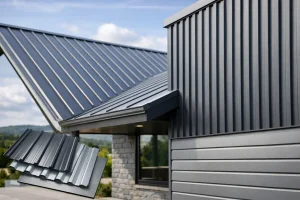
If you are building new and you have freedom to choose, it depends. Modern box profile steel or insulated panels can give you faster installation, longer spans between supports, and better thermal performance if you are heating the space. If the building is a warm workshop or you need compliance on insulation levels, you may be looking beyond single-skin fibre cement.
On the other hand, for unheated outbuildings where durability and straightforward refurbishment matter most, Big 6 remains a practical, proven choice.
The smoothest projects are the ones where sheets, fixings, flashings and rooflights arrive together and are designed to work together. Mixing “whatever is cheapest” fixings with a specific sheet system is false economy – you feel it on install day.
If you want a single supplier approach where you can order sheets plus the supporting components in one go and get delivery dates confirmed, Roof Sheets Online Ltd can supply fibre cement, rooflights, flashings and fixings as part of a one-stop order, with phone support if you want a quick sense-check before you commit.
Choosing Big 6 is often about keeping a building dependable, not making it fancy – so the best next step is simple: measure carefully, match the profile, and treat the edges and fixings like they matter, because that is where good roofs quietly earn their reputation.
Roof Sheets Online Ltd
UNIT C4
MACROME ROAD
Wolverhampton
WV6 9HD
Company No 15150940
Vat No. 4880 70856