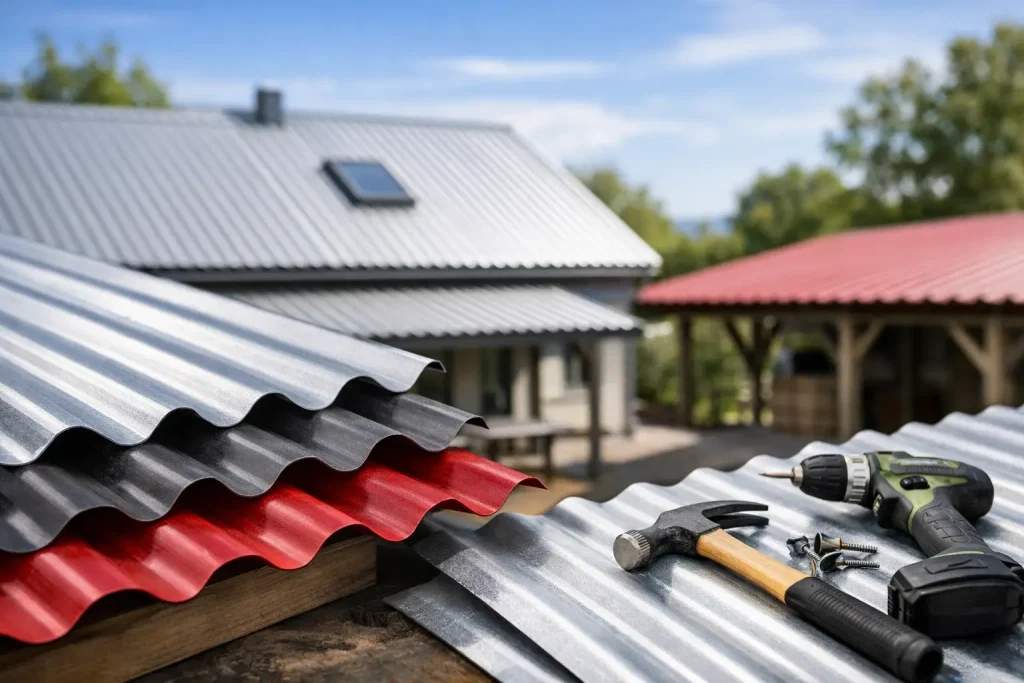
If you are pricing up a shed, garage, stable or workshop, corrugated roof sheets usually make the shortlist very quickly. They are strong, straightforward to fit, and well suited to British weather when specified properly. For many projects, they strike the right balance between cost, durability and clean, practical performance.
That said, not every corrugated sheet is right for every roof. The pitch, the building use, the exposure of the site and whether condensation is likely all matter. Buying on price alone can leave you short on lifespan, appearance or the accessories needed to finish the roof properly.
The basic appeal is simple. A corrugated profile adds strength to the sheet without excessive weight, which makes handling and installation more manageable than many heavier roofing materials. On outbuildings, agricultural structures and refurbishment work, that matters. You want a roof covering that performs well, goes on efficiently and does not create unnecessary load on the structure below.
Corrugated sheets also suit a wide range of building types. On a small garden building, they give dependable weather protection with a familiar, traditional look. On agricultural or industrial-style structures, they offer practical coverage that is easy to maintain and easy to match with standard flashings, fixings and rooflights.
There is also a value argument. Corrugated roofing is rarely about paying for extras you do not need. It is about getting a proven sheet profile that sheds water effectively, stands up to day-to-day weather exposure and can be ordered with the supporting components required to complete the job properly.
Corrugated roofing is particularly well suited to sheds, garages, car ports, workshops, barns, stores, stables and light commercial units. It is often a strong option where the roof needs to cover a practical space rather than make an architectural statement.
For refurbishment jobs, corrugated sheets are useful because they can offer a clean replacement for tired, leaking or corroded roofing. If the supporting structure is sound, replacing the roof covering with new sheets, matching flashings and fresh fixings can be a cost-effective way to extend the life of the building.
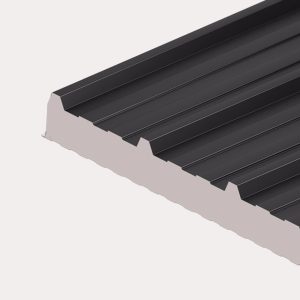
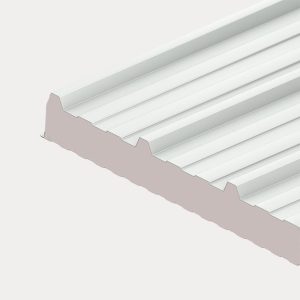
That does not mean corrugated is automatically the answer everywhere. If thermal performance is critical, for example on heated workspaces or buildings where internal temperature control matters, an insulated panel system may be the better route. If appearance is the top priority on a domestic extension, another profile or finish may suit the building better. The right choice depends on what the roof needs to do, not just what it needs to cost.
The first decision is material and finish. Steel corrugated sheets are a common choice because they combine strength with good span capability and reliable weather resistance. The protective coating matters here. A polyester finish can be a sensible, cost-conscious option for many standard applications, while plastisol is often chosen where you want a tougher, longer-lasting surface and better resistance in more demanding environments.
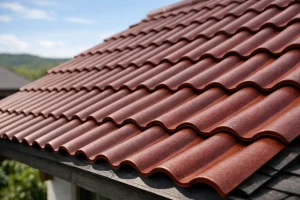
Galvanised options can also suit certain agricultural or utility buildings where appearance is less important than straightforward durability. Fibre cement corrugated sheets are another route altogether, often selected where a traditional cement sheet look is preferred or where condensation and acoustic characteristics influence the decision.
Sheet length is just as important as finish. Ordering the right cut length can reduce end laps, speed up fitting and leave you with a cleaner result. It can also cut waste on site. On simple mono-pitch or duo-pitch roofs, made-to-length sheets are often the most efficient way to build.
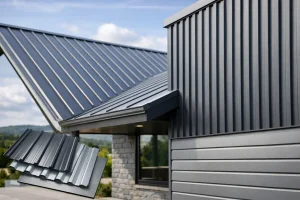
Colour should not be treated as an afterthought either. On visible buildings such as garages, workshops or garden structures, the roof can change the overall look of the project. Popular colours tend to be practical, muted shades that sit well in both rural and domestic settings, but matching existing cladding, doors or trims often gives the best result.
Pitch is one of the first specification checks worth making. Corrugated sheets need enough fall to clear water effectively, especially in prolonged rain. A shallow pitch might still be possible depending on the product and installation method, but minimum pitch guidance should always be checked before ordering.
This is where cheaper guesswork can become expensive. If the pitch is too low for the sheet profile, water drainage can suffer and the risk of leaks increases around laps and fixings. On steeper pitches, corrugated roofing generally performs very well, but sheet restraint and correct fixing positions still matter, particularly in exposed parts of the UK.
If you are replacing an existing roof, measure the pitch rather than assuming the old covering was suitable. Plenty of older buildings have roofs that were made to work with compromise rather than correct specification.
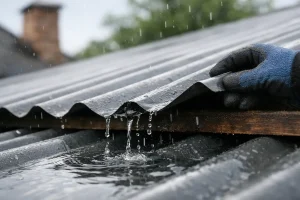
One of the most common buying mistakes is focusing on rainwater from above and forgetting moisture from below. If the building is unheated and well ventilated, condensation may be limited. If it is used for storage, livestock, machinery, hobby work or anything that creates moisture and temperature changes, the risk rises.
On a garage or workshop, condensation can drip onto tools, vehicles and stored goods. In agricultural settings, it can affect the building environment more than many buyers expect. The answer depends on the use of the building. Sometimes improved ventilation is enough. In other cases, an anti-condensation backing, insulated roof system or a different build-up is the better long-term solution.
This is a classic case of it depends. A simple field shelter has different requirements from a busy workshop. A stable has different moisture conditions from a garden shed. Getting the sheet right means thinking about the space under the roof, not just the weather above it.
A roof is never just sheets. The performance of corrugated roof sheets depends heavily on using the right fixings, flashings, fillers and supporting components. This is where many installations go wrong, especially when materials are bought from different places and pieced together on site.
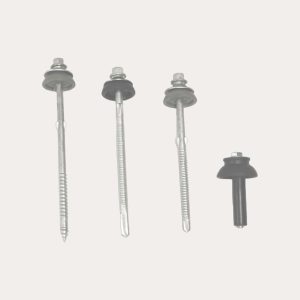
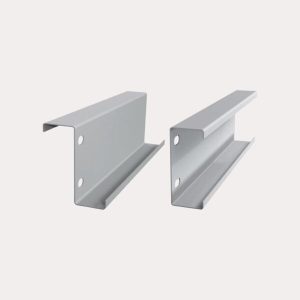
Correct fixings need to suit both the sheet type and the structure beneath, whether that is timber or steel. Flashings finish edges, ridges and abutments properly and help stop wind-driven rain getting where it should not. Rooflights can be matched into many roofing layouts if natural light is needed inside. Purlins, trims and closure pieces all help create a complete roof rather than a basic cover.
Sourcing everything together makes life easier for both trade buyers and competent DIY customers. It reduces compatibility issues, cuts delays and makes it simpler to get a delivery that matches the job schedule.
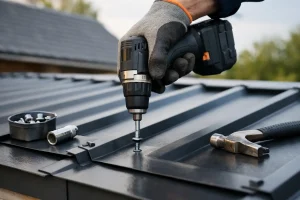
Even a premium sheet can underperform if it is poorly fitted. Sheets should be aligned carefully, lapped correctly and fixed in the right locations with the right spacing. Over-tightened fixings can damage washers and compromise weatherproofing. Under-fixing can leave the roof vulnerable in high winds.
Handling matters too. Sheets should be lifted and stored properly before installation to avoid coating damage or distortion. On cut edges, any site work should be carried out cleanly and in line with product guidance. A rushed roof often looks fine on day one and causes problems later.
For experienced installers, these points are standard practice. For less technical buyers, they are exactly why good supplier support matters. A knowledgeable supplier can help confirm what is needed before the order is placed, which is far easier than trying to correct specification errors once the materials are on site.
A good corrugated roofing order starts with clear measurements, the roof pitch, the building use and the preferred finish. From there, it is easier to confirm sheet lengths, required overlaps, suitable fixings and the flashings needed to finish the edges and ridge properly.
It also helps to think beyond the sheet price. Faster fitting, reduced waste, coating lifespan, delivery timing and the ability to get all components in one order all affect the real cost of the project. Trade buyers usually know this already. Homeowners and first-time buyers sometimes only realise it after chasing missing parts from three different suppliers.
At Roof Sheets Online, that is exactly why the one-stop-shop approach matters. Getting sheets, fixings, flashings, rooflights and supporting components from one specialist supplier saves time and removes a lot of avoidable friction.
Corrugated roof sheets remain one of the most dependable choices for practical roofing because they do not try to be complicated. Pick the right material, match it to the pitch and building use, and make sure the accessories are right. If you are unsure, ask before you order – a short technical conversation now is usually the cheapest part of the whole roof.
Roof Sheets Online Ltd
UNIT C4
MACROME ROAD
Wolverhampton
WV6 9HD
Company No 15150940
Vat No. 4880 70856