Get the screw length wrong and the whole roof can feel awkward from the first sheet. Too short, and you risk weak pull-out, poor weather sealing and sheets that never quite sit right. Too long, and you can end up with untidy penetrations, wasted fixing cost or clashes with the structure below. That is why a proper roof sheet screw length guide matters – it helps you order the right fixings first time and fit a roof that is secure, weather-resistant and built to last.
For most projects, screw length is not picked in isolation. It depends on the sheet profile, what you are fixing into, whether there is insulation involved, and where on the roof the fixing is going. A corrugated sheet into timber purlins is a different job from an insulated panel into steel, and both need a different approach from stitching two overlapping sheets together.
The simplest way to think about screw length is this: the fixing needs to pass through the sheet and any spacer or insulation layer, then achieve enough embedment into the support beneath. That sounds straightforward, but the profile height of the sheet changes everything.
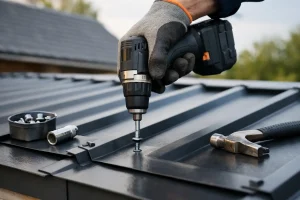
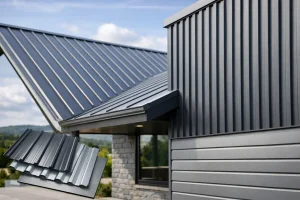
With through-fix roofing sheets such as box profile or corrugated steel, the screw is usually installed through the crown of the sheet into timber or steel purlins below. That means the screw must cover the height of the profile as well as the sheet thickness and the required bite into the substrate. If you only measure the steel sheet itself, you will almost certainly choose a fixing that is too short.
For lower profiles, the required screw length is naturally shorter. For deeper profiles, or for sheets installed over insulation or spacer systems, it increases quickly. This is where buyers can get caught out, especially when trying to compare one roof type with another using a single “standard” fixing length.
The first factor is the sheet profile. A shallow corrugation and a deep box profile do not sit the same distance above the purlin. Even when both are steel sheets, their fixing lengths can differ.
The second is the substrate. Timber fixings and steel fixings are not interchangeable. The point type, thread design and useful embedment differ, so the total screw length that works well in timber may not be ideal for steel. If you are fixing into light gauge steel, the fixing often needs to be chosen as much for drilling capacity as for length.
The third is insulation. Built-up systems and insulated panels need longer primary fixings because the screw has to pass through more material before it reaches the structural support. On these jobs, guessing is expensive. A fixing that is only slightly short may fail to seat correctly, compress washers badly or leave the panel insufficiently secured.
The fourth is fixing location. Main roof fixings, side lap stitching screws and flashing fixings all do different jobs. They are not usually the same length, and they should not be ordered as if they are.
There is no single length that suits every roof, but there are common ranges used across sheeted roofing.
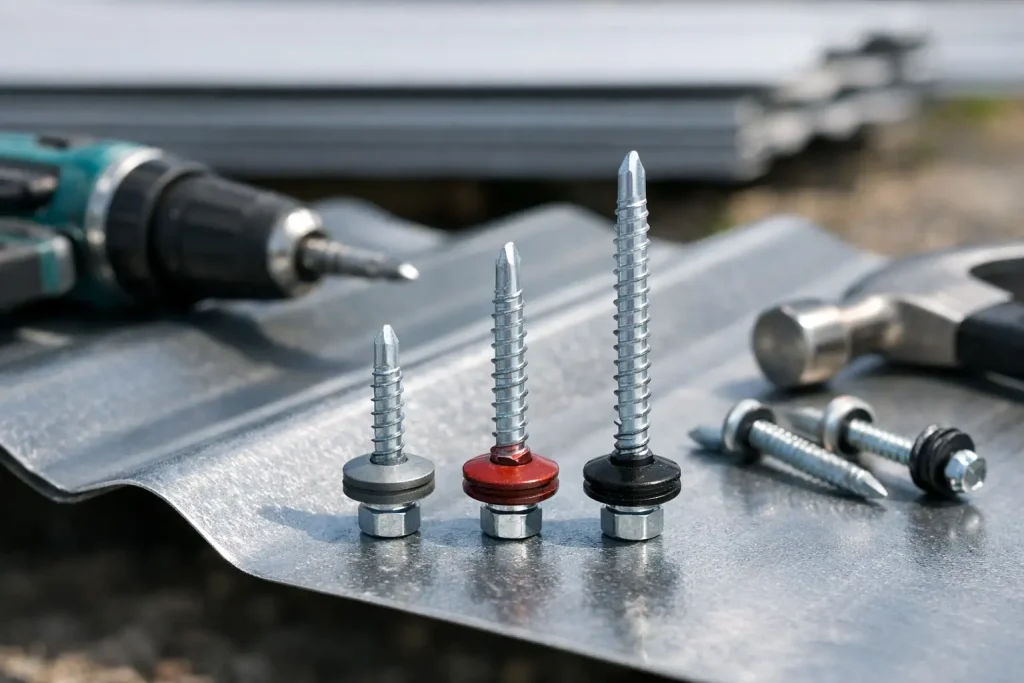
For standard single-skin steel sheets fixed directly to timber purlins, installers often use lengths sized to clear the profile and still achieve a firm bite into timber. On many agricultural, domestic and light industrial roofs, that typically means fixings in the region of around 65mm to 100mm, depending on sheet profile and build-up.
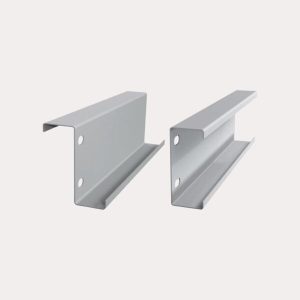
For single-skin sheets fixed into steel purlins, the length may be similar in overall terms, but the fixing specification matters more. The drill point must be suitable for the steel thickness, and the screw should not be chosen on length alone.
For fibre cement sheets, fixings are different again. The sheet thickness, washer arrangement and support detail all affect what is required. These roofs often use purpose-made fixings rather than simply applying the same screws used for steel sheeting.
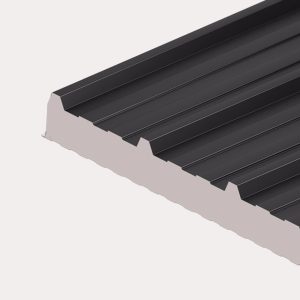
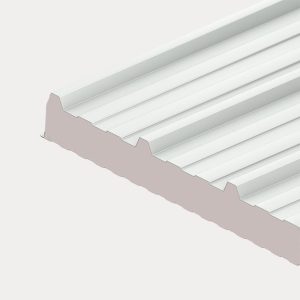
For insulated panels, lengths can increase substantially. Once panel thickness rises, the fixing must span the external sheet, insulation core and internal liner arrangement where relevant before anchoring correctly into the support. This is one area where manufacturer guidance should always override rule-of-thumb sizing.
If you are fixing through the top of a profiled sheet, the screw does not travel straight from the sheet thickness into the purlin. It starts at the crown, which can sit well above the support line. A 0.7mm steel sheet may be thin, but the profile beneath it might be 30mm or more deep. That height must be accounted for before you even consider the substrate.
This is why shallow assumptions lead to problems. Installers sometimes think in terms of material thickness alone, but roofing fixings are really about total build-up depth. The more pronounced the profile, the more important this becomes.
It also affects washer seating. If the screw is marginal on length, it may pull awkwardly at the crown, making it harder to compress the washer evenly. That can lead to leaks over time, particularly on exposed roofs taking regular wind-driven rain.
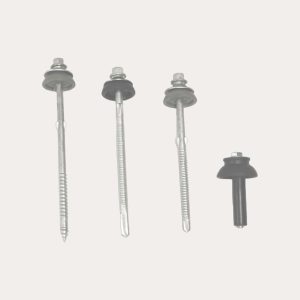
A screw length guide only works if it is tied to the correct fixing type. Timber support screws are designed to grip timber securely, while steel support fixings rely on drilling performance and thread engagement suited to metal purlins.
On timber, you generally want enough penetration to create a dependable hold without overdriving or splitting the support. On steel, you need the point and thread to suit the gauge of the purlin, and the screw must be long enough to pass through the sheet profile cleanly without being excessive.
This is where trade buyers usually look beyond the headline length. Diameter, point type, washer size and coating all play a part in long-term performance. On coastal, agricultural or high-condensation sites, corrosion resistance matters just as much as basic fit.
One of the most common ordering mistakes is treating all roof screws as if they do the same job. They do not.
Main fixings secure the sheet to the purlin or rail beneath, so they need the length to bridge the profile and anchor into the structure. Stitching screws are much shorter because they are only used to fasten sheet laps or flashings together. If you use stitching screws where main fixings are needed, the sheet will not be properly secured. If you use long primary fixings for stitching, the result is messy and unnecessary.
The same applies to ridge flashings, barge flashings and apron details. These often require shorter fixings suited to light-gauge metal-to-metal attachment rather than full structural anchoring.
The biggest mistake is measuring only the flat material thickness and ignoring profile depth. The second is ordering one fixing length for the whole roof without separating out main fixings, stitching screws and flashing fixings.
Another issue is not checking what the sheet is being fixed into. Timber, light steel and heavier steel sections all need the right specification. A screw that physically reaches the support is not automatically the right fixing.
It is also easy to overlook washer quality. A correct length screw with a poor washer is still a weak point in the roof. Good fixings should be precision-crafted and weatherproof, with sealing washers that bed down properly without splitting or deforming.
Finally, there is the temptation to simply go longer “to be safe”. That can work against you. Overlong fixings can protrude excessively, look untidy internally and add unnecessary cost across a full roof area. Better to size them correctly from the start.
Some projects do not fit neatly into a generic guide. Refurbishment roofs are a good example. Existing timbers may vary, older steelwork might not match the original drawings, and over-sheeting can introduce extra layers that alter the fixing requirement.
Mixed-material jobs can be awkward too. A roof with standard sheets, rooflights, flashings and insulated sections may need several different fixing types and lengths. On these builds, trying to simplify everything into one box of screws usually creates delays on site.
That is where speaking to a specialist supplier helps. A proper one-stop shop is not just about having sheets in stock. It is about matching those sheets with the right fixings, flashings, sealants and support components so the full roof system works together.
Before ordering, check the sheet profile, support type, support thickness, insulation build-up and the accessories being fixed. If you know those details, you are much more likely to land on the correct screw length and quantity without costly amendments later.
If you are unsure, ask before the sheets arrive. That is especially worthwhile on larger builds, insulated panel projects or any roof where speed on site matters. At Roof Sheets Online, we help customers across Great Britain match roofing sheets with the right supporting components so the job goes together cleanly, quickly and with fewer surprises.
A roof is only as reliable as the details holding it in place. Choose the right screw length, and the rest of the installation tends to follow with far less friction.
Roof Sheets Online Ltd
UNIT C4
MACROME ROAD
Wolverhampton
WV6 9HD
Company No 15150940
Vat No. 4880 70856