If you have ever opened up a shed, stable or workshop on a cold morning and found the underside of the metal roof dripping, you already know the real problem is not the water – it is what that water does next. Tools rust, timber swells, feed goes musty, and anything stored up against a wall starts to smell damp.
Condensation on metal roofing is common in the UK because we swing between cool nights, mild days and high humidity. The good news is you can control it. The trick is to stop warm, moisture-laden air reaching a cold sheet in the first place, and to give any moisture that does get in a safe way out.
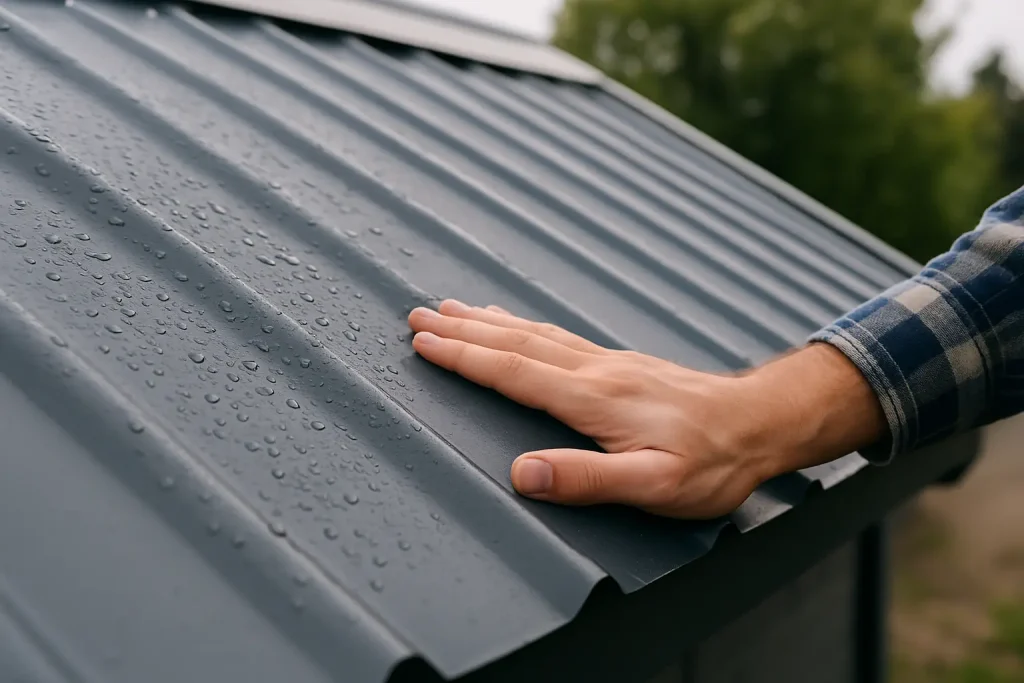
Condensation forms when warm, moist air touches a surface that is below the dew point temperature. Metal sheet is thin and highly conductive, so it tracks outside temperature quickly. On a clear night a roof can get very cold, even when the air temperature does not feel extreme.
Inside the building, moisture is coming from somewhere: people breathing, animals, wet vehicles, drying timber, concrete curing, stored hay, even a kettle in a workshop. When that moist air rises and meets a cold sheet, it turns back into water.
A key point for spec and installation is that you do not need a “leak” for this to happen. A roof can be perfectly watertight and still drip from condensation.
Before you buy anything, be honest about what the building does.
A lightly used garden store with a couple of bikes is a different environment to a stable block with warm animals and wet bedding. A small garage that gets a hot engine parked in it every evening is a different environment to a farm store that sits empty.
If the moisture load is high, you will need a belt-and-braces approach: ventilation plus insulation plus vapour control. If the moisture load is low, you can often solve it with better airflow and one dedicated condensation control layer.
Ventilation is simply controlled air change. You are trying to prevent humid air building up under the roof and you want to remove water vapour before it reaches dew point.
For many outbuildings, the most effective setup is high level exhaust plus low level intake. That might mean eaves ventilation paired with a ridge vent, or high level louvre vents plus door undercuts. The exact choice depends on the roof design and what you can realistically fit.
If you only add vents at one level, you can still help, but you often end up with dead zones where air sits. On mono-pitch roofs, aim for airflow that moves from the low end to the high end. On duo-pitch roofs, think eaves in, ridge out.
There is a trade-off. Ventilation helps remove moisture, but it can also increase heat loss and create cold draughts. That matters if the space is heated or if you are trying to keep livestock comfortable. In those cases, you typically lean harder on insulation and vapour control rather than relying on lots of open vent area.
Insulation works by raising the internal surface temperature so you are less likely to hit dew point. It also makes the space more comfortable and reduces temperature swings.
For metal roofs, you generally have two routes.
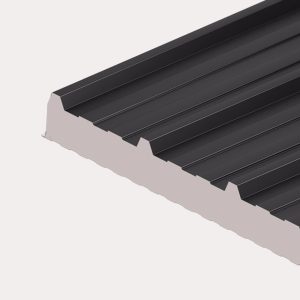
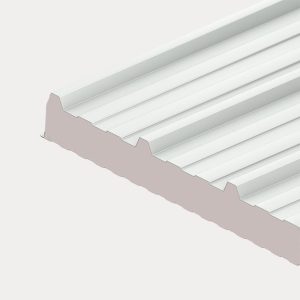
Composite insulated panels are designed to do several jobs at once: weatherproof outer skin, insulation core, and internal liner. When installed correctly with the right laps, sealants and fixings, they drastically reduce condensation risk because the internal liner is not close to outside temperature.
If you are building a workshop, light industrial unit, stable corridor or any space you expect to use year-round, insulated systems are often the most reliable long-term answer. They also speed up installation because you are not layering multiple products on site.
If you are using single skin box profile or corrugated sheets, you can add insulation below. The key is to avoid leaving the metal sheet as the cold face exposed to internal moisture.
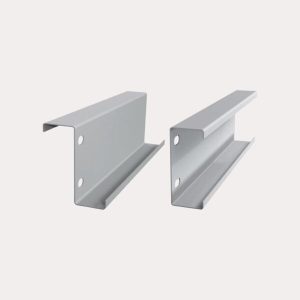
A common method is insulation between purlins with a correctly specified vapour control layer on the warm side. Another approach is insulated plasterboard or rigid insulation below rafters in more “room-like” spaces.
The trade-off here is that the details matter. Small gaps, poorly taped joints, or crushed insulation can create cold bridges where condensation still forms.
Even good insulation can underperform if moist air is allowed to travel through it and touch a colder surface.
A vapour control layer (VCL) is fitted on the warm side of the insulation to slow down moisture movement from the occupied space into the roof build-up. In practical terms, this means careful taping of laps, sealing around penetrations, and not peppering it with holes during installation.
This is where a lot of condensation problems start. A roof might have “some insulation” but no continuous vapour control, so warm air still finds a route to the cold underside of the sheet.
It depends on use. For an unheated garden store, a VCL may be less critical than airflow. For a heated workshop, office or utility space, a VCL is usually non-negotiable if you want reliable results.
If you are staying with single skin metal sheets, anti-condensation fleece (often called “drip stop”) is one of the most straightforward ways to reduce nuisance dripping.
It works by absorbing and holding small amounts of moisture that would otherwise form droplets and fall. When conditions change and ventilation improves, that moisture can evaporate back out.
A few realities to keep in mind:
For many sheds, field shelters, stables and stores, fleece-backed sheets are a strong middle ground: a cleaner underside than loose membranes, less hassle on site, and immediate improvement on cold mornings.
Condensation problems often show up first at the details.
Rooflights can be colder than surrounding sheets and can “rain” even when the metal does not. If you need rooflights, make sure they are properly sealed, correctly sized for the profile, and installed with the right fillers and fixings. In high moisture buildings, consider whether you need fewer rooflights or a different daylighting strategy.
Flashings and ridge pieces can also create cold edges and gaps that pull moist air into the roof zone. Using the correct foam fillers, sealing tapes and closures makes a noticeable difference, not just for weathering but for airflow control.
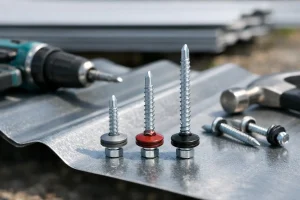
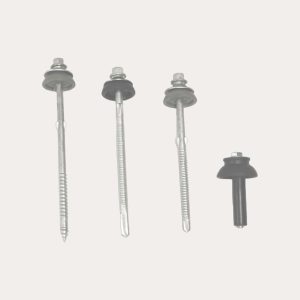
Fixings matter too. Over-tightening can deform sheets and open up micro-gaps. Under-tightening can allow air leakage and water ingress. Either way, you create the conditions for moisture to move where you do not want it.
If you are dealing with an existing roof, it is worth working out what is actually happening before you spend money.
If you see droplets evenly across the underside on cold mornings, that points to general condensation from humid air and a cold sheet.
If you see wet patches concentrated near the ridge, laps, around rooflights or at eaves, you may have airflow patterns, missing fillers, or local cold bridges.
If the dripping is worst after you park a wet vehicle inside, bed down animals, or hose out floors, your moisture source is driving the issue. In that case, improving ventilation and isolating moisture (for example by letting vehicles dry outside or improving drainage) can be as effective as changing products.
For a typical unheated shed or basic store, the best value is usually improved high and low level ventilation plus anti-condensation fleece-backed sheets.
For a garage or workshop you use often, especially if you heat it, you are usually better looking at insulation with a proper vapour control layer, or stepping up to insulated roof panels for a cleaner, more predictable result.
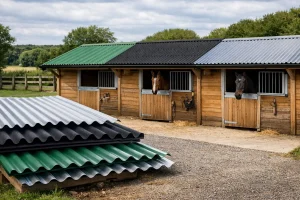
For stables and agricultural buildings, plan for high moisture and temperature differences. Ventilation is essential, but so is choosing a roof build-up that tolerates humidity. If you are storing hay or feed, controlling condensation is not just comfort – it protects stock and reduces spoilage.
If you want a single supplier who can help you match sheets, flashings, fillers, fixings, rooflights and insulated systems in one order, Roof Sheets Online Ltd is set up for exactly that, with UK-wide delivery and technical guidance if you need a second pair of eyes on the spec.
Most condensation “mysteries” come down to uncontrolled air movement.
You can buy the right sheet, add insulation, even fit a fleece backing – but if warm air is freely leaking up into the roof space and cannot escape in a controlled way, it will find the coldest surface and dump water there.
So when you are on site, treat airflow as seriously as weatherproofing. Close the obvious gaps with the correct closures and tapes, keep the build-up continuous, and make ventilation intentional rather than accidental.
A dry roof is rarely about one magic product. It is about giving moisture fewer chances to reach a cold sheet, and giving the building a sensible way to breathe once it is inside.
Roof Sheets Online Ltd
UNIT C4
MACROME ROAD
Wolverhampton
WV6 9HD
Company No 15150940
Vat No. 4880 70856