If your metal roof sheets look right on day one but start drumming, rippling, or loosening fixings after the first rough winter, the culprit is often underneath – purlins that are the wrong size, spaced too far apart, or simply not suited to the span.
Getting purlins right is what makes a roof feel solid. It affects how your sheets sit, how well the fixings hold, and whether the roof keeps its line when wind uplift and snow load try to flex everything out of shape.
There is no one-size answer because purlins are a structural choice, not a sheet choice. The same box profile sheet can behave perfectly on a tight purlin grid and feel flimsy on an over-spanned frame.
In practice, your purlin size is driven by span (the distance the purlin must bridge between rafters or frames), loading (wind exposure, snow load, maintenance foot traffic), and purlin spacing (the centres your sheets will be fixed to). Change any of those and the purlin requirement changes with it.
The other dependency is material. Timber purlins and steel Z/C purlins behave very differently. Timber depth does a lot of the work; cold-formed steel relies on profile shape, thickness, and correct laps/cleats to achieve its capacity.
Most buyers think purlins start with the frame. In reality, your sheet profile and gauge push you towards sensible purlin centres.
For common UK single-skin steel roof sheets (box profile and corrugated), you will typically see purlin centres in the region of 1.0 m to 1.5 m for many outbuildings and light agricultural roofs. That range tightens up if you are in an exposed location, using thinner sheet, or want a stiffer roof with less chance of oil-canning and vibration.
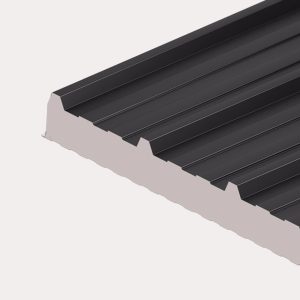
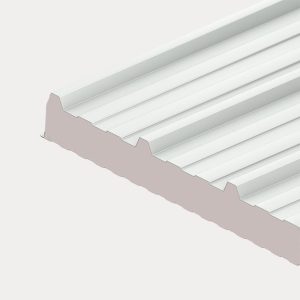
Insulated panel systems often have their own support spacing rules, because the panel is acting as a structural element. The allowable purlin centres can be larger than a single-skin sheet – but only when the panel specification says so, and only when the fixings and end laps are built exactly to that system.
If you have not settled on the sheet type yet, decide whether you want to build the structure around widely spaced purlins (fewer purlins, heavier section) or closer purlins (more purlins, lighter section). Neither is “better” in isolation; it is a trade-off between material cost, labour time, and how solid you want the finished roof to feel.
The wording “what size purlins” usually means timber size, because it is familiar and easy to visualise. For small buildings, timber is common, but steel is also popular for larger spans and faster erection.
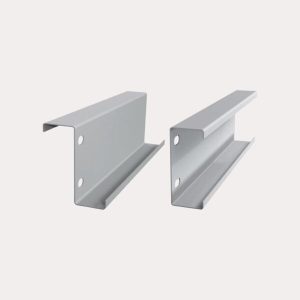
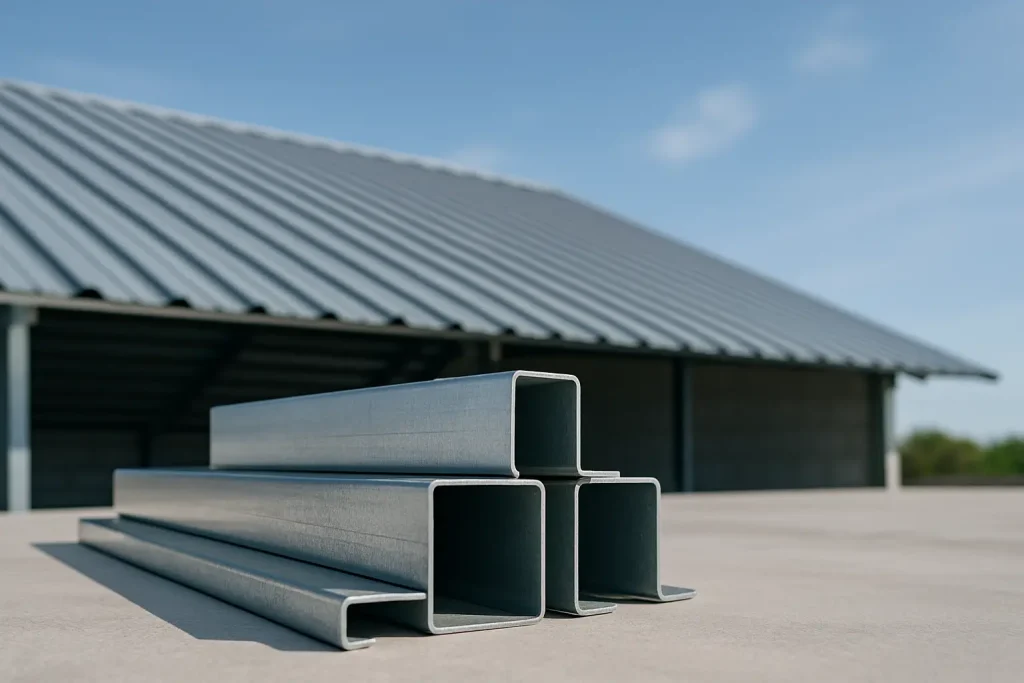
As a rule of thumb, the deeper the purlin, the further it can span. For many small to medium outbuildings, timber purlins you will hear discussed include 100 x 50 mm, 125 x 50 mm, 150 x 50 mm and 175 x 50 mm. In steel, common cold-formed Z purlins might be 140 mm, 170 mm, 200 mm (depths vary by manufacturer), with thicknesses such as 1.6 mm, 2.0 mm, 2.5 mm and up.
Those numbers are not a sizing chart you can blindly follow. They are simply the usual starting points people end up around once the span and spacing are known.
If your purlins are only spanning short distances between closely spaced rafters, a modest section can be plenty. If your purlins need to bridge further, or your frame has fewer rafters, you quickly move into deeper timber or formed steel.
Oversizing purlins can introduce its own problems. Timber that is too large for the job can be harder to keep straight and true if it is not stored well, and it adds dead load you do not need. In steel, oversizing can be wasted cost and can complicate connections if cleats and bolt lines are not designed around the section.
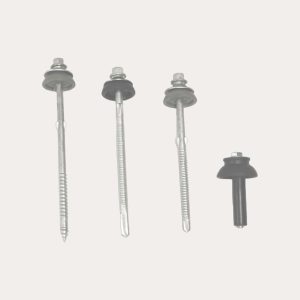
There is also the fixing side. Your sheet fixings need the right embedment into timber or the right drill-through into steel, and too much variation in purlin thickness or build-up can catch people out when ordering fixings.
Span is the distance between the structural supports holding the purlin up (often rafters, portal frames, or trusses). The longer the span, the more the purlin wants to deflect under load.
Deflection is not just a cosmetic issue. If the purlin deflects, the sheet can lose consistent support, fixings can work, and end laps can open slightly under movement – especially in windy areas where uplift cycles are repeated.
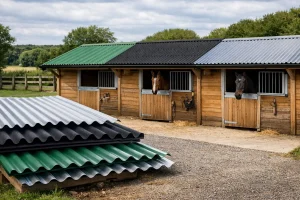
For a typical garage, workshop, stable or field shelter, spans are often modest and timber can be perfectly sensible. On larger agricultural or light industrial buildings, steel Z purlins are common because they can span efficiently and are designed to lap over supports to increase strength.
If you are unsure of your true span, measure it on the frame, not on a drawing that might not match what is on site. Take the clear distance between supports, then check how the purlin will sit on the support – bearing length matters.
Most roofs fail in bad weather because the roof system is asked to resist uplift and racking, not just hold its own weight.
Wind uplift can be significant on open sites, coastal locations, and higher ground. It is also higher at roof edges and corners. That matters because purlin sizing and purlin fixings are part of the load path that keeps the roof on the building.
Snow load varies across Great Britain and increases with altitude and exposure. Even if you are rarely snowed in, a single heavy fall can be the design case.
If your building will be accessed for maintenance (gutters, rooflights, plant), factor that in too. You should not rely on the sheet alone to take foot traffic – the support grid needs to be designed so the roof is safe to work on.
Timber purlins suit many small buildings because they are easy to cut, easy to fix to, and straightforward for competent DIY and general builders. They can also help reduce cold bridging compared with steel-only structures, which some customers care about when managing condensation.
Steel Z and C purlins suit faster build programmes and larger spans, and they are consistent and straight when handled correctly. They are also a natural fit with portal frames and cladding rail systems.
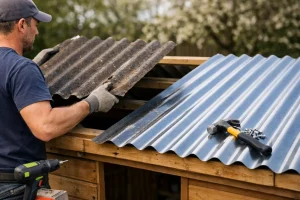
The key trade-off is connections. Timber is forgiving: coach screws, structural screws, and fixings into solid timber are familiar. Steel purlins need correct cleats, bolts, laps and bracing, and they perform best when installed as the system intends rather than as improvised members.
Even when your main field spacing is right, detail areas often need tighter support.
At the eaves and ridge you have flashings, closures and sometimes gutters. These areas see high wind action and are where any movement becomes visible. Adding a purlin closer to the eaves and ridge can give you a better fixing line and a cleaner finish.
If you are adding rooflights, flues, or other penetrations, plan additional framing so cut edges are supported and flashings have something solid to fix to. Relying on the sheet alone around openings is where leaks and flutter tend to start.
If you want to land on the right size purlins for a metal roof, the cleanest route is to work from a few knowns and then confirm against structural capacity.
First, lock in your roof type: single-skin sheets with anti-condensation options, fibre cement sheets, or an insulated panel system. Next, set your roof pitch and span, then decide the purlin centres you want to build to.
Once you have span and spacing, you can select a purlin material and size that meets deflection and load requirements for your location. For steel purlins, that means checking manufacturer load tables for the exact section, thickness, grade, and lap condition. For timber, it means checking structural spans and grades rather than assuming any 150 x 50 will behave the same – timber strength class and quality matter.
If you are working on anything beyond a very small shed, it is sensible to have the structure checked to the relevant UK standards and local conditions. The cost of getting it right on paper is minor compared with re-sheeting a roof or dealing with repeated fixing failures.
The most frequent issue is purlins spaced for convenience rather than for the sheet. People build at 2 m centres because it “looks enough”, then wonder why the roof sounds like a drum and fixings start to loosen.
Another is mixing systems: using a steel purlin arrangement without proper laps or bracing, or fixing sheets into timber that is not actually providing full bearing because it has twisted.
Finally, purlin alignment matters more than many expect. If your purlin line is not straight, the sheets will telegraph it. You can pull a sheet into place with fixings, but you will pay for it in stress, waviness and long-term movement.
If you want a quick, accurate steer, have your building width, length, roof pitch, rafter/frame spacing, intended purlin centres, sheet type and thickness, and your postcode or a description of exposure (open field, coastal, sheltered yard). With that, a competent supplier can usually point you towards a sensible build-up and flag where you may need a structural check.
If you are sourcing sheets, purlins, fixings and flashings together, you also reduce the risk of mismatched components – for example, ordering fixings that are the wrong length for your purlin thickness and sheet build-up. Roof Sheets Online Ltd can supply complete roofing and cladding component sets and provide technical guidance once you have your basics nailed down at https://www.roofsheetsonline.co.uk.
A metal roof is only as strong as its support grid. Choose purlins that suit your span and your site, and the rest of the build tends to go smoothly – straight sheets, tight fixings, and a roof that feels like it was built to last.
Roof Sheets Online Ltd
UNIT C4
MACROME ROAD
Wolverhampton
WV6 9HD
Company No 15150940
Vat No. 4880 70856