
When you are pricing up a shed, garage, stable or workshop, the box profile vs corrugated question usually comes up early – and for good reason. The sheet profile affects appearance, strength, rainwater run-off, installation feel and overall cost, so it is not just a case of picking the one that looks best on a sample swatch.
For most buyers, the right answer comes down to the building itself. Span, pitch, exposure to bad weather, the look you want and the level of support underneath all matter. If you get those basics right, the roof will perform properly and the rest of the job becomes much easier.
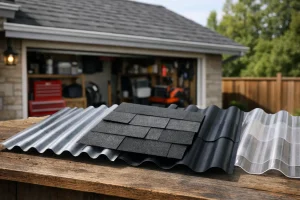
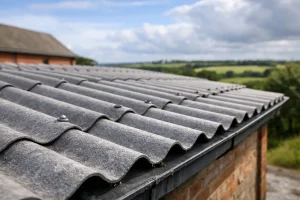
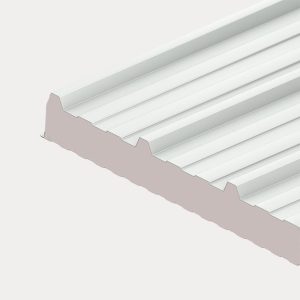
The simplest way to look at it is shape. Box profile sheets have a more angular, ribbed form with wide flat pans between the raised sections. Corrugated sheets have a rolling wave pattern that has been used on agricultural and industrial buildings for decades.
That shape changes how each sheet behaves. Box profile tends to look more modern and more structured. Corrugated has a traditional, familiar appearance and often suits older outbuildings, rural settings and replacement projects where matching an existing roof matters.
In practical terms, box profile sheets are often chosen for garages, workshops, units and contemporary domestic outbuildings. Corrugated is still a strong choice for barns, stables, lean-tos, garden buildings and refurbishments where a classic profile is the better fit.
This is where people often assume box profile is automatically better. In many situations, it does offer excellent strength and load performance, especially when installed correctly with suitable support spacings. The profile is designed to give rigidity, which is one reason it is widely used on both roofs and walls.
That said, corrugated should not be written off. The curved profile has inherent strength and has proved itself over many years in exposed environments. On smaller buildings with sensible support centres, corrugated performs very well.
The real answer is that strength depends on more than the visible shape. Gauge, material, coating, sheet length, support spacing and fixing pattern all play a part. A well-specified corrugated sheet will outperform a poorly specified box profile sheet every time. If you are covering a larger span or want a profile that feels especially rigid underfoot during installation, box profile often gets the nod. If the building is more modest and the support structure is sound, corrugated can be a very dependable option.
Roofing is functional, but it is also highly visible. On a detached garage next to the house or a smart workshop in the garden, the profile can change the whole finish of the job.
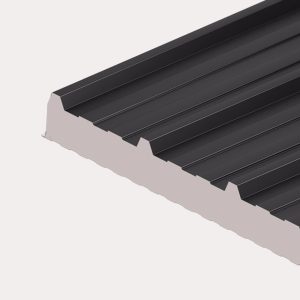
Box profile has a cleaner, sharper look. It suits modern agricultural units, commercial buildings and domestic projects where you want something neat and straightforward. In darker finishes especially, it can look very tidy and purposeful.
Corrugated is softer in appearance and more traditional. For stables, field shelters, older sheds and rural buildings, that can be a big advantage. It looks established rather than overly industrial, and on replacement work it often sits better with the surrounding structures.
If you are undecided, it helps to think about the building from a distance rather than standing underneath it. The roofline, nearby walls and setting usually make the right profile choice clearer.
Both profiles are designed to shed water effectively, but roof pitch and lap details still matter. Box profile is commonly used on low-pitch roofs, subject to the exact specification and installation guidance. Its channels can direct water efficiently when the roof is laid out correctly.
Corrugated also drains well, but because of the profile shape and side lap arrangement, the minimum pitch requirement may differ. That is why you should never treat one sheet as a direct swap for the other without checking suitability.
On simple garden buildings with a decent fall, either profile can work well. On lower-pitch applications, specification becomes more critical, and it is worth checking that the sheet, overlap and fixing arrangement are all appropriate. The roof covering is only one part of keeping water out. Flashings, fillers, sealants where required and correct fixing placement matter just as much.
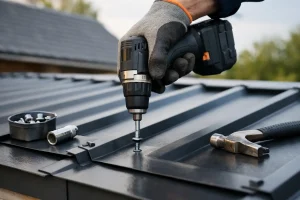
Both types are straightforward for experienced installers, but they do feel different on the job. Box profile sheets tend to give a more linear layout, which some trades prefer because the profile lines make alignment easier across a run. They also pair well with modern trims and flashings, creating a clean finished edge.
Corrugated sheets can be very manageable too, particularly on smaller roofs and straightforward refurbishments. They are often chosen when replacing like-for-like because the existing layout, flashings and visual style already suit the wave profile.
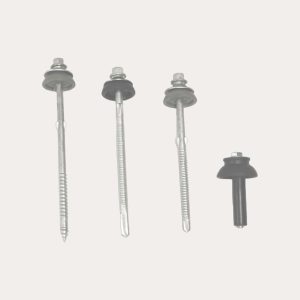
The main point is not that one is easy and the other is difficult. It is that installation should match the building and the specification. Fixings need to suit the profile, accessories need to match the sheet, and the whole roof build needs to be considered together. This is where buying from a specialist supplier makes life easier because you are not left chasing the right fixings, flashings and closures from three different places.
Price always matters, especially on larger jobs or multi-building sites. In many cases, corrugated can be a cost-effective option, particularly for traditional agricultural or domestic outbuildings. Box profile is also competitively priced and often represents very good value given its clean finish and strong performance.
The better question is not just what the sheet costs per metre. It is what the finished roof costs once you include matching flashings, fixings, rooflights if needed, and any anti-condensation requirements. A cheaper sheet can become poor value if it complicates the install or does not suit the building properly.
Long-term value also matters. Choosing the right coating and finish for the site conditions can make a bigger difference than shaving a small amount off the sheet price. A weather-resistant finish that stands up well over time is usually money well spent.
Neither profile magically removes condensation risk. That comes down to how the building is used and how the roof is specified. If you are roofing a garage, stable, workshop or farm building where moisture build-up is likely, anti-condensation backing or a more insulated build-up may be worth considering.
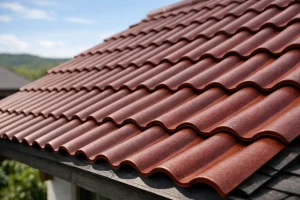
Rain noise is another question buyers often ask. In light sheeted roofing, both box profile and corrugated will transmit sound more than a heavily insulated tiled roof. The difference between the two profiles is usually less important than the overall roof build-up. If noise control is a major concern, insulated panels or additional lining may be the better route.
If you want a modern-looking roof with a crisp finish, box profile is often the stronger option. It suits garages, workshops, commercial units, industrial buildings and many domestic outbuildings where a sleek, strong, weather-resistant appearance is part of the brief.
It is also a sensible choice where you want a profile commonly used across roof and wall cladding systems for a consistent look. For many buyers, that versatility is a real benefit.
Corrugated comes into its own when you want a more traditional style or need to match an existing roof. It works particularly well on agricultural buildings, stables, shelters, sheds and refurbishment projects where a wave profile looks right and performs well.
It can also be a very practical choice for smaller, straightforward jobs where dependable coverage and classic appearance are more important than a modern finish.
If the job is a new garage, workshop, unit or contemporary outbuilding, box profile is often the first place to look. If the project is rural, traditional or a like-for-like replacement, corrugated may well be the better fit.
But the best choice still depends on the full build. Roof pitch, support centres, sheet thickness, finish, condensation risk and required accessories all need to line up. That is why experienced buyers do not choose on profile shape alone. They choose the system that gives them the right performance and a clean installation first time.
At Roof Sheets Online, we see both profiles used successfully across Great Britain on everything from garden buildings to agricultural and light industrial roofs. If you are unsure, it is worth getting advice before you order so the sheets, fixings, flashings and any supporting components all work together. It saves time, avoids costly mistakes and gives you a roof you can rely on when the weather turns.
If you are weighing up box profile against corrugated, think beyond the sample piece – the right sheet is the one that suits your structure, your setting and the way the building will be used for years to come.
Roof Sheets Online Ltd
UNIT C4
MACROME ROAD
Wolverhampton
WV6 9HD
Company No 15150940
Vat No. 4880 70856