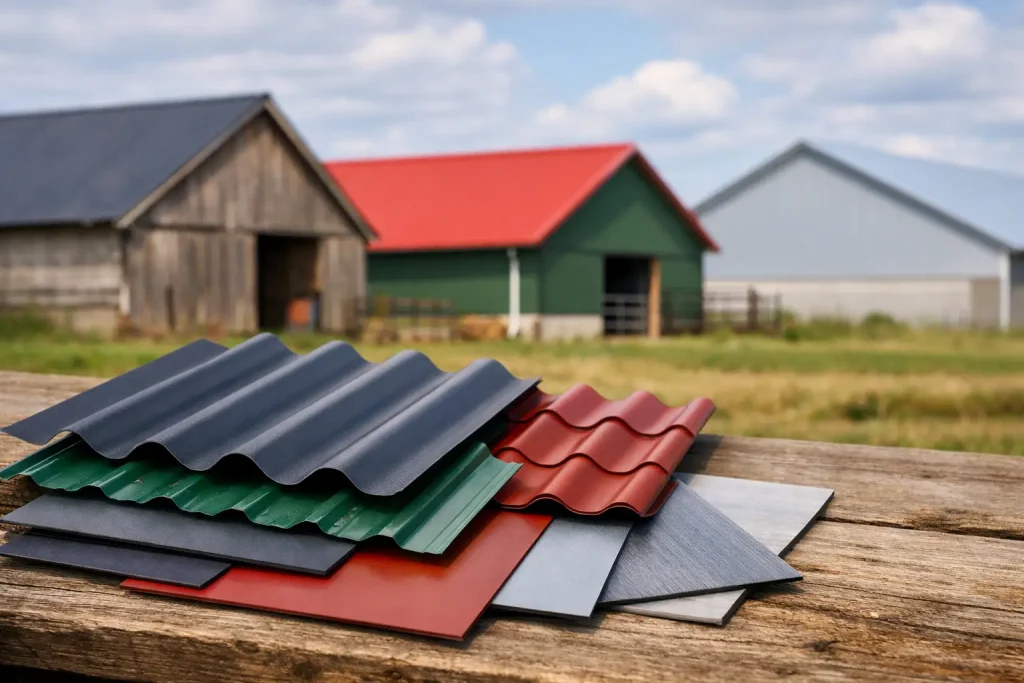
A farm roof has a hard job to do. It must keep livestock, feed, machinery or produce protected through driving rain, frost, wind and summer heat, often across a large span with little room for maintenance downtime. Choosing the right roof cladding for farm buildings is therefore about more than the sheet price. The profile, coating, insulation, fixings and ventilation details all affect how the building performs over the years ahead.
A practical specification starts with the building’s use. An open machinery store does not need the same roof build-up as a livestock shed, while a workshop or grain store may justify a warmer, more controlled internal environment. Get that decision right first and the material choice becomes much clearer.
Before selecting a sheet profile or finish, consider what happens beneath the roof. A hay barn needs dependable weather protection and useful clear spans. A stable needs good airflow but must avoid persistent drips from condensation. A dairy or poultry building has high internal moisture levels and may also contain corrosive gases, so the cladding and its protective coating need more careful thought.
For machinery storage, a single-skin steel roof can be a cost-effective, strong solution when the building is naturally ventilated. For livestock accommodation, condensation control becomes a much bigger part of the specification. For a farm workshop, insulated roof panels can reduce heat loss, improve comfort and make the space more usable all year round.
The location matters too. An exposed hilltop site, a coastal area or a building surrounded by open fields can experience considerably greater wind loads than a sheltered yard. Roof pitch, purlin spacing and fixing specification should all be checked against the building design rather than guessed on site.
There is no single best roof sheet for every agricultural project. Each material has strengths, limitations and a place in the right build.
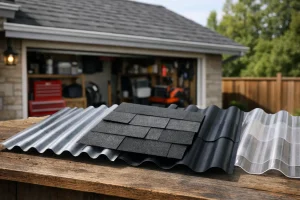
Box profile steel sheets are a popular choice for agricultural roofs because they are sleek, strong and quick to fit. Their shaped ribs provide stiffness, allowing them to span between purlins when correctly specified. They are commonly used on barns, workshops, stores, stables and machinery sheds.
A coated steel sheet gives a clean, modern finish and can be ordered in a range of colours to suit the yard. Polyester finishes are often suitable for general-purpose agricultural buildings, while Plastisol-coated sheets offer a thicker, more durable surface for demanding environments. Galvanised steel remains a practical option where appearance is less important and budget is the main driver.
The trade-off is condensation. Bare single-skin steel can form moisture on its underside when warm, humid air meets a cold roof. On an open-sided store, this may not be a major concern. In enclosed buildings, it can lead to dripping, damp equipment, spoiled feed and an uncomfortable internal environment unless it is addressed properly.
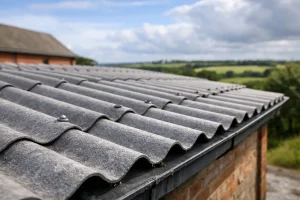
Corrugated sheets offer the traditional agricultural look many rural properties suit well. The profile is simple, familiar and effective at directing rainwater into the gutter line. Steel corrugated roofing is lightweight and durable, while fibre cement corrugated sheets provide a different set of benefits for certain farm applications.
Corrugated steel is often chosen for straightforward re-roofing work, field shelters and smaller farm buildings. It is important to use the correct side-lap and end-lap arrangement for the roof pitch, then secure the sheets with suitable weather-sealing fixings. A poorly fixed corrugated roof can rattle in high winds or allow water in around laps and penetrations, regardless of how good the sheet itself is.
Fibre cement is well suited to agricultural environments where moisture management and sound reduction are priorities. It does not suffer from the same underside condensation issue as uninsulated metal sheets, and it can help soften the noise of rain. This makes it a strong option for livestock housing, stables and older agricultural buildings where a traditional roof material is preferred.
Fibre cement sheets are heavier than steel, so the supporting structure must be capable of carrying the load. They also require care during handling and installation to avoid damage. However, for the right project, their long-term performance and calmer internal conditions can make them a very sensible investment.
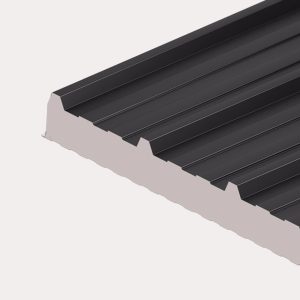
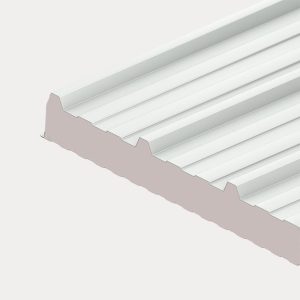
Insulated panels combine an external steel sheet, an insulating core and an internal liner in one precision-made system. For heated workshops, farm offices, packing areas and buildings where temperatures need managing, they provide a tidy, high-performing roof solution.
A quality insulated panel, including Kingspan QuadCore systems where appropriate, can deliver excellent thermal performance while creating a smart internal finish. It also reduces the risk of condensation when specified and installed as part of a complete envelope. The initial cost is higher than a basic single-skin sheet, but the saving on heating, the improved usability of the building and the reduced need for additional lining can change the overall value calculation.
Many problems blamed on a leaking roof are actually caused by condensation. Moist air rises inside the building and meets the cold underside of the roof covering. If the moisture cannot escape or is not controlled, it condenses into droplets.
For a simple agricultural store, an anti-condensation fleece bonded to the underside of steel sheets can absorb and release moisture as conditions change. It is a useful option, but it is not a substitute for sensible ventilation. Ridge ventilation, eaves ventilation and suitable openings in the building all help humid air move out before it becomes a problem.
For enclosed or heavily used spaces, a built-up insulated roof or composite panel system may be the better route. This is particularly true where animals, washdown processes or stored crops create a damp atmosphere. The right approach depends on the building, but treating condensation as an afterthought is usually where costly remedial work begins.
The sheet profile must suit the roof’s span, pitch and drainage requirements. A shallow-pitched roof needs particular attention because water drains more slowly and laps are more vulnerable. Always follow the sheet manufacturer’s minimum pitch guidance and allow for the effect of rooflights, valleys, abutments and long sheet runs.
Ordering sheets at the correct length is another practical advantage. Reducing end laps can improve weather resistance and speed up fitting, although very long sheets need safe handling arrangements on site. Consider delivery access too. A narrow farm lane, low branches or limited unloading space can affect the most practical sheet length and delivery method.
Gutters, ridge pieces, verge trims and flashings are not finishing touches. They are essential weatherproofing components. A roof is only as reliable as its weakest junction, so budget for the complete system from the start.
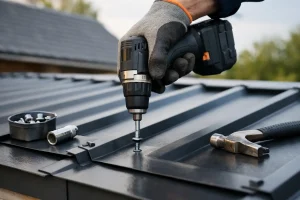
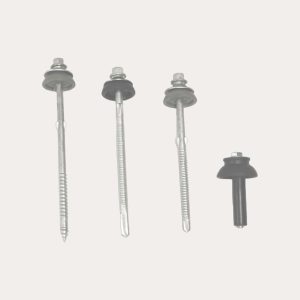
A strong sheet fitted with the wrong fixings is not a strong roof. Agricultural roof cladding needs fixings matched to the purlin material, sheet profile and exposure of the site. Self-drilling screws with correctly fitted sealing washers are commonly used for steel cladding, while fibre cement requires its own suitable fixing approach.
Fixings must be positioned in line with the profile manufacturer’s guidance and tightened correctly. Over-tightening can crush a washer or distort the sheet. Under-tightening can leave a poor seal. Both can create leaks over time.
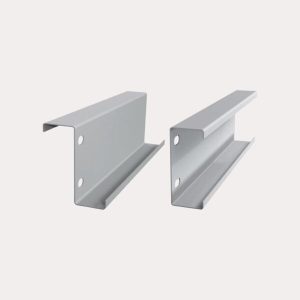
Plan the full order before work begins. In most cases that means sheets, ridge and barge flashings, eaves closures, fillers, stitching screws for side laps, primary fixings, guttering, rooflights where needed and purlins if the structure is being built from scratch. Buying the complete package together avoids delays caused by one missing trim or incompatible fixing.
Farm buildings can be tough on cladding. Animal housing, fertilisers, salt in coastal air, standing moisture and airborne debris can all shorten the life of an unsuitable finish. A higher-grade coating may cost more upfront, but it can be the better value choice where the roof is difficult to access or where corrosion would disrupt the building’s use.
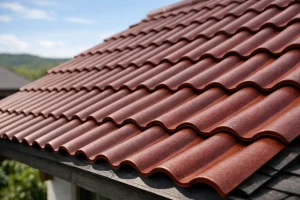
Colour still matters. Darker sheets can look sharp and suit modern agricultural buildings, while lighter colours may reduce solar heat gain in a workshop or storage building. More importantly, choose a finish with the durability needed for the site and maintain gutters and drainage so water does not sit against the cladding.
A farm roof is a sizeable purchase, and small specification errors can become expensive once sheets are cut, delivered and fitted. Confirm the roof dimensions, pitch, purlin centres, required sheet lengths, building use and any need for insulation or anti-condensation treatment before placing the order.
For re-roofing work, inspect the existing structure as well. Replacing old sheets is an ideal time to check timber or steel purlins, improve ventilation, renew gutters and deal with any weak areas around rooflights or wall junctions. Do not assume a new lightweight sheet automatically makes an old structure suitable.
Roof Sheets Online can help customers put together the sheets, flashings, fixings and supporting components needed for a complete build, with practical technical guidance available when the specification needs checking. A well-planned roof does not just look the part on delivery day – it keeps the farm building dry, workable and protected when the weather turns.
Roof Sheets Online Ltd
UNIT C4
MACROME ROAD
Wolverhampton
WV6 9HD
Company No 15150940
Vat No. 4880 70856