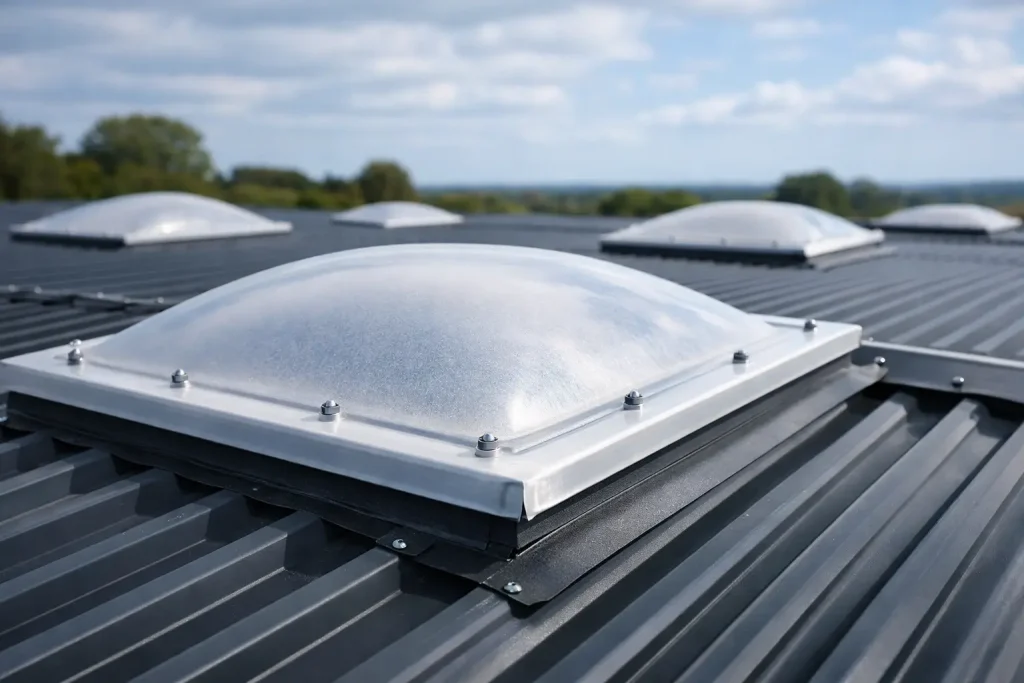
If you have ever stepped into a workshop, stable or farm building lit only by a few tired wall lamps, you will know how much difference daylight makes. The right GRP rooflights for metal roof projects can change the feel of a building completely, making it brighter, more usable and often cheaper to run without complicating the roof build.
For trade installers and practical property owners alike, the main question is not whether rooflights are worth having. It is which type will match the sheet profile, perform properly in British weather and hold up over time without creating leaks, cold spots or awkward fitting issues. That is where a bit of product knowledge saves a lot of hassle.
Why use GRP rooflights for metal roof projects?
GRP rooflights are a straightforward choice for profiled sheeted roofs because they are designed to sit in line with the roofing sheets themselves. In most cases, they are manufactured to match common metal sheet profiles, which means they can be installed as a direct replacement for a standard sheet within the roof area.
That matters on practical jobs. A rooflight system that fights the profile, needs excessive adapting or interrupts the run of sheets can slow the installation and increase the risk of poor weathering. GRP keeps things simple when you are working with profiled metal roofing on garages, industrial units, canopies, stores, workshops, barns and other outbuildings.
There is also the cost side. GRP rooflights are usually a more budget-friendly way to bring natural light into a building than more complex glazed systems. They offer a good balance of performance, durability and value, especially where the goal is functional daylight rather than a high-spec architectural finish.
What GRP rooflights actually do well
The biggest advantage is light transmission. A well-placed run of rooflights can brighten the centre of a building far better than relying only on doors, windows or gable openings. That is especially useful in deeper structures where wall light does not reach far enough.
They are also lightweight and familiar to installers used to metal sheeting. When the profile match is correct, fitting is generally straightforward. On agricultural and commercial refurbishments, that can make a real difference to labour time.
Durability is another reason they remain popular. Quality GRP rooflights are made for external exposure and are suited to demanding roof environments. They are not indestructible, and lower-grade products can weather faster, but a decent specification should give solid long-term service when fitted correctly.
The trade-off is that GRP rooflights are usually chosen for practicality rather than premium thermal performance. If you are working on a basic uninsulated shed, storage unit or farm building, that is often perfectly acceptable. If you are roofing a heated space where insulation values matter more, you may need to think more carefully about the wider roof build.
Matching GRP rooflights to your metal roof profile
This is the part that catches people out. Not all metal roofing sheets are the same, and not all rooflights fit all profiles. You need the rooflight to match the exact profile of the surrounding sheet, whether that is box profile, corrugated or another pattern.
Even small differences in rib spacing or shape can affect fit. A sheet that looks close enough at first glance may not sit properly once fixed, and that is where problems begin. Poor alignment can lead to stress points, gaps, poor drainage and a finish that simply does not inspire confidence.
Sheet thickness, support spacing and roof pitch also come into play. A rooflight is part of the roof covering, not an afterthought. It needs to work with the structure beneath it and the sheet system around it.
If you are replacing old rooflights on an existing building, do not assume the original profile is still standard or easy to match from memory. Measure properly and check before ordering. On refurbishment jobs, a quick phone call for technical guidance is often quicker than ordering the wrong sheets and starting again.
New build versus refurbishment
On a new roof, choosing rooflights is simpler because the full sheet system can be specified together. You can plan the rooflight positions, quantities and accessories from the outset.
On a refurbishment, the questions are usually more practical. Are you replacing brittle or discoloured rooflights like for like, or upgrading the whole roof covering? Is the existing profile still available? Are the fixings and side laps still sound? It depends on the condition of the roof and whether patching or full replacement makes better long-term sense.
How many rooflights do you need?
There is no single answer, because it depends on the building use, the internal layout and how much daylight you actually want. A machinery store, for example, may need enough light for safe access and routine tasks, while a workshop may need brighter, more even lighting across the working area.
Too few rooflights and the space can still feel gloomy. Too many and you may introduce more solar gain than you want, particularly in summer. On some agricultural or storage buildings, a modest percentage of rooflights spread evenly across the slope gives a better result than clustering them all in one section.
Placement matters just as much as quantity. Think about where the darkest areas of the building are, how the structure is used, and whether internal partitions will block the light. Good daylighting is about distribution, not just adding translucent sheets at random.
Installation points that should not be overlooked
Good materials still need good fitting. The most common problems with rooflights usually come from installation shortcuts rather than the GRP sheet itself.
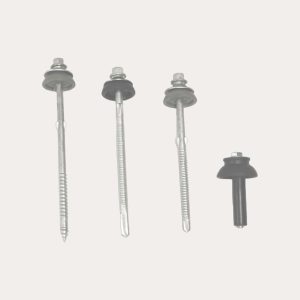
Correct fixings are essential. You need fixings suited to the sheet profile and the supporting structure, along with the right washers and sealing components. Overtightening can damage the sheet or create stress around fixing points, while undertightening can compromise weather resistance.
Side laps and end laps need proper attention too. Water management on profiled roofing depends on consistent overlap details, and rooflights are no exception. If the laps are poorly formed or unsupported, leaks can follow.
Condensation is another area where the wider roof design matters. A rooflight does not cause condensation on its own, but if the building has poor ventilation or an unsuitable anti-condensation strategy, moisture issues may show up across the roof build. On insulated or condensation-sensitive projects, make sure the rooflight choice makes sense alongside the rest of the system.
Safety on site
Rooflights let light through, but they should never be treated as safe walking areas. This is a critical site safety issue on installation and maintenance jobs. Anyone working on the roof should use proper access equipment and follow safe working practices at all times.
Common mistakes when buying GRP rooflights for metal roof builds
The first mistake is buying on size alone without confirming the exact profile. The second is forgetting the accessories and installation details that make the roof weatherproof as a whole. The third is focusing purely on upfront cost while ignoring lifespan, fit and support.
Cheaper products can look similar in a listing, but consistency, profile accuracy and material quality matter once they are on the roof. A slightly lower purchase price is poor value if sheets arrive that do not match properly or need replacing sooner than expected.
This is also why buying from a specialist supplier makes practical sense. When roof sheets, fixings, flashings and rooflights are being sourced together, it is far easier to keep the specification aligned and the job moving.
When GRP is the right choice – and when to think twice
GRP rooflights are a strong option for many metal roof applications, especially on agricultural, commercial and domestic outbuildings where practical daylight, profile compatibility and sensible cost are the priorities.
If you are roofing a heated building with tighter thermal requirements, or a project where appearance and interior finish are more critical, you may want to compare GRP with insulated rooflight alternatives. That does not make GRP the wrong product. It simply means the right choice depends on the building and what you need the roof to do.
For many customers, the answer is straightforward: a profiled metal roof with matching GRP rooflights gives a reliable, weather-resistant and cost-effective result. At Roof Sheets Online, that is exactly the sort of practical specification we help customers get right every day.
If you are planning a new roof or replacing tired translucent sheets, take the time to match the profile properly, think through the light levels and order the full system together. It is the easiest way to end up with a roof that looks right, fits right and works hard for years.