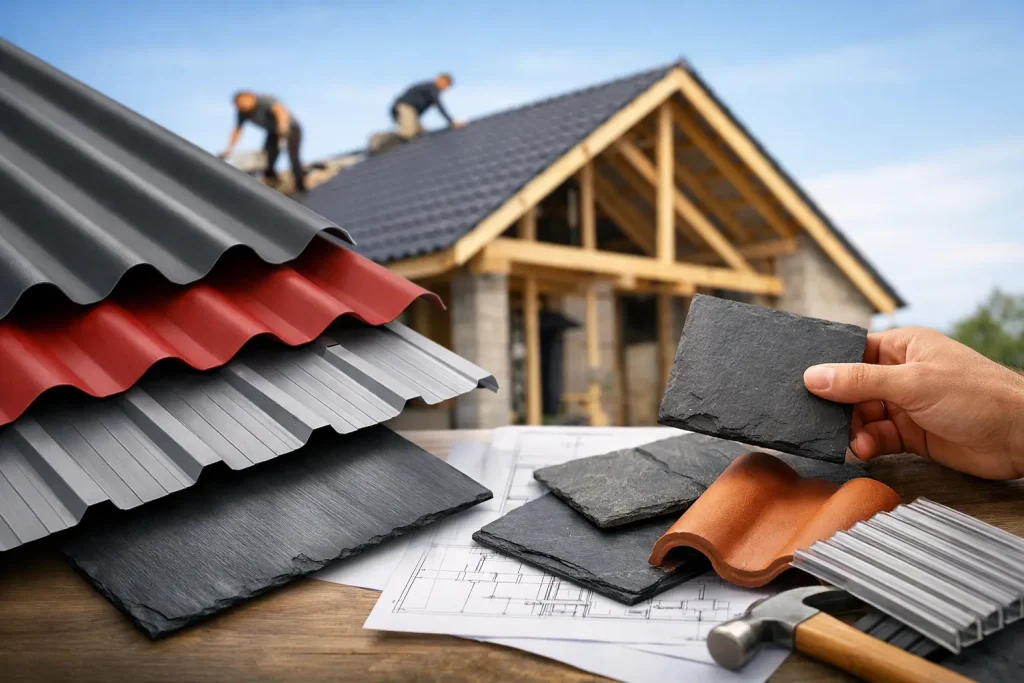
A roof sheet that looks right on a small garden shed may be completely wrong for a stable, workshop or agricultural building. The key to how to choose roof sheets is not simply finding the lowest price per sheet. You need to match the material, profile, coating and supporting components to the building, its structure and the conditions it will face year after year.
Get that specification right at the start and you will have a sleek, strong, weather-resistant roof that is easier to fit and maintain. Get it wrong and problems such as condensation, leaks, excessive noise or premature corrosion can soon follow.
How to choose roof sheets for your building
Start by looking at what sits beneath the roof and what the space will be used for. A simple open-sided log store has very different requirements from a heated garage, a livestock building or a commercial unit storing stock and machinery.
For unheated sheds, lean-tos and shelters, a single-skin metal sheet is often a practical, cost-effective choice. For buildings where people work, animals are housed or temperatures need to be controlled, insulated roof panels or a carefully designed anti-condensation system may be the better investment.
Also consider the roof pitch and span. Most profiled sheets are suitable for low-pitch roofs, but each profile has its own minimum pitch guidance. A shallow roof needs dependable side laps, end laps and sealing to move water away effectively. Longer sheet lengths also need enough support from purlins to prevent movement and deflection.
Measure the roof from eaves to ridge before ordering. Where possible, ordering sheets at the full roof slope length reduces horizontal overlaps, speeds up installation and creates fewer potential points for water ingress.
Choose the right sheet profile
The profile is the shape pressed into the sheet. It affects appearance, strength, water run-off and suitability for different building types.
Corrugated sheets
Corrugated roofing sheets have the traditional wave shape familiar on agricultural buildings, garden structures and rural projects. They are straightforward, versatile and work particularly well on sheds, stables, field shelters and workshops where a classic look is wanted.
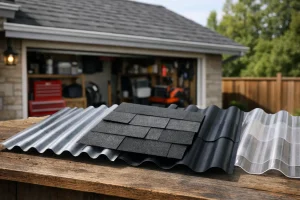
They are available in steel, fibre cement and lightweight plastic options. The best choice depends on the building. Steel gives a crisp, durable finish; fibre cement offers a more muted appearance and can help reduce rain noise; translucent corrugated sheets can introduce natural daylight.
Box profile sheets
Box profile sheets have clean, square ribs and a modern, commercial appearance. They are a popular option for garages, workshops, industrial units, agricultural buildings and wall cladding. The deeper profile gives good spanning capability when correctly supported, while the straight lines suit contemporary builds.
Box profile sheets are often supplied in polyester, plastisol or galvanised finishes. For an exposed roof or a project where long-term appearance matters, the coating deserves as much attention as the profile itself.
Tile-effect sheets
If you want the look of traditional roof tiles without the weight and labour involved, wave tile sheets are worth considering. They are commonly used on garages, outbuildings, garden rooms and domestic-style structures.
Their main advantage is visual. They can give a lightweight roof a more residential finish, but they still require the correct battens, flashings and fixing pattern to perform properly.
Select a material and finish that suits the exposure
Steel roof sheets are widely used because they are strong, lightweight and quick to install. A coated steel sheet is a dependable all-round choice for many projects, but not all coatings provide the same level of protection.
Polyester-coated steel is a sensible option for standard applications where budget is a priority and the site is not especially harsh. Plastisol-coated steel has a thicker, tougher finish and is better suited to demanding environments where added durability and resistance to scratching are useful.
Galvanised steel has the familiar metallic finish and can be a cost-effective choice for agricultural or utility buildings. It should be specified with realistic expectations: it is practical and hard-working, but a coated finish may be better where appearance and extra corrosion resistance are important.
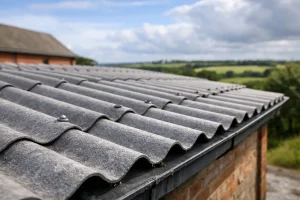
Fibre cement sheets suit many agricultural and equestrian roofs. They do not suffer from condensation in the same way as bare metal, offer good acoustic performance during heavy rain and provide a traditional finish. They are heavier than steel sheets, however, so the structure must be designed to carry them safely.
Plastic and polycarbonate sheets are useful where daylight is needed. They are commonly fitted as rooflights alongside metal sheets, or used across smaller lean-tos and canopies. Check that rooflights match the sheet profile and allow for thermal movement when fixing.
Coastal sites, exposed hillsides, industrial areas and buildings close to livestock all require extra care. Salt, wind-driven rain, ammonia and airborne pollutants can shorten the life of an unsuitable coating. If the location is challenging, it pays to discuss the specification before placing the order.
Decide whether insulation and condensation control are needed
Condensation is one of the most common roofing issues, particularly in garages, workshops, stables and buildings with poor ventilation. Warm, moisture-laden air rises, meets the colder underside of the roof sheet and turns into droplets. That moisture can drip onto tools, vehicles, feed or stored goods.
For a basic unheated building, anti-condensation fleece on the underside of steel sheets can absorb moisture and release it gradually as conditions improve. It is a useful solution, but it is not a substitute for ventilation. Air needs a route in and out of the building for moisture to escape.
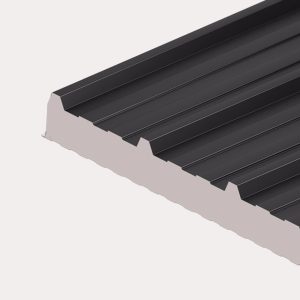
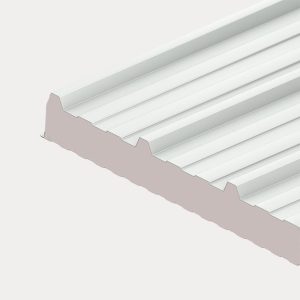
For heated buildings, offices, commercial units or spaces used regularly by people, insulated composite panels are often the stronger long-term choice. Systems such as Kingspan QuadCore panels combine an external weather sheet, insulated core and internal liner in one precision-made panel. They create a cleaner internal finish, improve thermal performance and reduce the risk of internal condensation when installed correctly.
Insulation adds upfront cost, but it can reduce heating demand and make the building more comfortable to use. For a cold storage shed, it may be unnecessary. For a workshop used throughout winter, it can make a significant difference.
Do not treat fixings and flashings as an afterthought
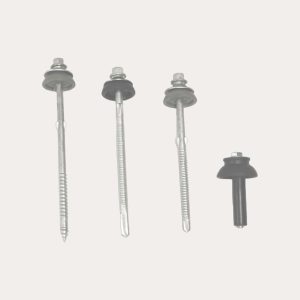
A roof is a system, not just a run of sheets. The correct fixings, stitching screws, fillers, sealants and flashings are what turn good sheets into a weatherproof installation.
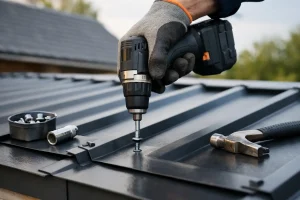
Use fixings designed for the material and structure below. Timber purlins and steel purlins require different fixing types, lengths and drilling points. Over-tightening can damage the washer and distort the sheet; under-tightening can leave a route for water. Fix through the correct part of the profile according to the sheet manufacturer’s guidance.
Flashings finish vulnerable edges and junctions, including ridges, verges, eaves and wall abutments. A ridge cap without suitable fillers, for example, may look complete while still allowing driven rain, insects or birds into the roof void.
When planning an order, account for:
- roof sheets in the correct length and cover width;
- matching ridge, barge and eaves flashings;
- appropriate fixings for the roof structure;
- fillers, sealing tape and stitchers for overlaps;
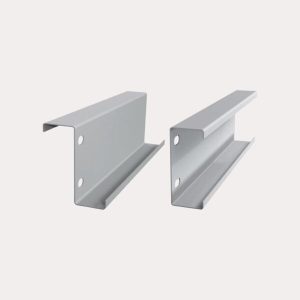
- rooflights, gutters and purlins where required.
Buying the complete package at the outset avoids the familiar delay of having a roof half-fitted while a missing trim or box of fixings is sourced.
Check practical details before ordering
Sheet length, delivery access and safe handling all matter. Longer sheets reduce laps but can be awkward to manoeuvre, especially on domestic sites with narrow access or limited lifting equipment. Plan where the sheets will be unloaded and keep them dry, supported and off the ground before fitting.
Confirm the colour, coating, profile orientation and quantities before the order is processed. It is also sensible to allow for cuts around rooflights, valleys or chimney details, although excessive waste usually indicates that the sheet layout needs revisiting.
For refurbishment work, check the existing structure rather than assuming it is sound. Rotten timber, corroded steelwork or widely spaced purlins can undermine even the best new roof covering. A replacement roof is the right time to correct those issues, not hide them.
A well-specified roof should suit the building, the weather and the way the space will be used. If you are unsure whether box profile, corrugated, fibre cement or insulated panels are right for the job, speak to a roofing specialist before ordering. Roof Sheets Online can help you match the sheets, flashings, fixings and accessories so your project arrives ready to build, rather than leaving you to solve gaps on site.