A roof usually goes wrong long before it fails. It starts with the wrong profile for the span, the wrong coating for the site, or a cheap fixing package that looks fine on paper and causes trouble two winters later. That is why buying metal roofing sheets is not just about sheet length and price per metre. It is about getting a roof system that suits the building, the exposure, and the job as a whole.
For trade buyers, that means fewer call-backs and a cleaner install. For homeowners and smallholders, it means a roof that stays watertight, looks smart, and does not create condensation headaches the moment the weather turns.
Why metal roofing sheets stay popular
Metal roofing sheets earn their place because they solve practical problems well. They are strong for their weight, quick to install, and suited to everything from garages and workshops to agricultural buildings, commercial units and refurbishments. When specified properly, they give you long service life with relatively low maintenance.
They also offer more choice than many buyers expect. A basic single-skin sheet may be exactly right for an open-sided shelter or storage building. A coated profile can improve appearance and durability on a domestic garage or garden room. An insulated panel can transform thermal performance on a workshop, extension or unit where temperature control matters.
That range is a strength, but it also means there is no single best sheet for every project. It depends on the building use, the pitch, the environment, and how much performance you need from the roof.
Choosing the right metal roofing sheets
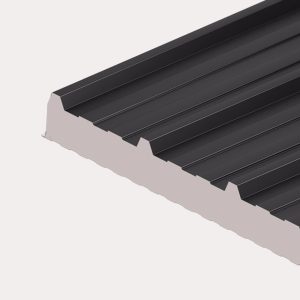
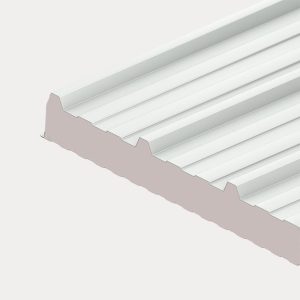
The first decision is usually profile. Box profile sheets are a common choice where buyers want a modern, clean look with good strength. They suit many agricultural, industrial and domestic applications and are often the go-to option for straightforward roofing jobs.
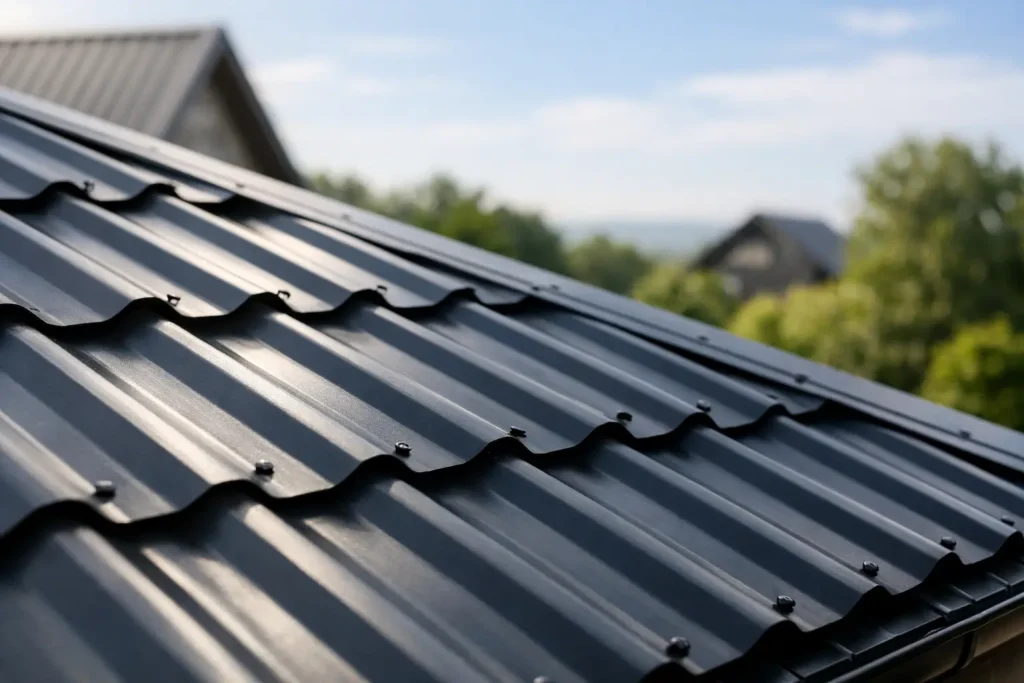
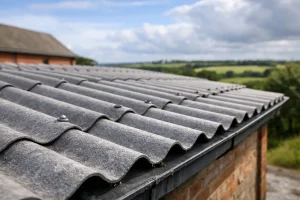
Corrugated sheets have a more traditional appearance and remain popular on rural buildings, sheds, stables and refurbishment work. They can be a better visual match for older structures, and some customers simply prefer the look. In practical terms, the right choice often comes down to appearance, loading requirements and what is already on the building.
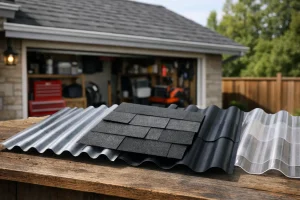
Then there is the material and finish. Galvanised steel sheets offer a hard-working, cost-effective option where appearance is less of a priority. Polyester-coated sheets can suit lower-demand applications and tighter budgets. Plastisol-coated sheets are often preferred where buyers want a tougher, longer-lasting finish with better resistance to weathering and a more premium look.
If the building is exposed, near the coast, or expected to take years of hard use, the coating choice matters. Saving money upfront can cost more later if the finish starts to degrade early. On the other hand, not every shed or lean-to needs the most heavy-duty specification on the market. Matching the sheet to the job is what keeps a project sensible.
Metal roofing sheets for different buildings
A small domestic garage has different demands from a farm outbuilding. So does a stable, a workshop or a commercial refurbishment. That sounds obvious, but plenty of roofing issues come from treating every roof as if it were the same.
For sheds, garages and simple outbuildings, single-skin steel sheets are often enough, provided ventilation and condensation risk have been considered. For stables and agricultural buildings, durability and airflow tend to be key, with profile and accessories chosen to suit the structure and environment.
For heated spaces, insulated systems are usually worth serious consideration. If the building is being used as a workshop, office, garden room or active commercial space, insulated roof panels can make a major difference to comfort, running costs and condensation control. They cost more than basic single-skin sheets, but they are often the right long-term answer rather than an upgrade for later.
Refurbishment work can be more complicated. Existing purlin spacing, roof pitch, side laps, flashings and connection details all need checking before ordering. This is where buyers benefit from working with a specialist supplier rather than trying to patch together a roof package from multiple places.
Condensation is where many roofs get caught out
A roof can be fully waterproof from above and still perform badly from below. Condensation is one of the most common issues with metal roofs, especially on garages, workshops, farm buildings and any structure where warm moist air meets a cold sheet.
If you are storing tools, machinery, feed, timber or anything else sensitive to damp, this matters. Drips forming on the underside of the roof are not a sheet failure. They are a design issue.
In some cases, anti-condensation backing on the sheets can help manage the problem. In others, better ventilation is needed. Where the building is enclosed or heated, insulated panels may be the proper solution. The right answer depends on how the space is used. A cold storage shed and a frequently occupied workshop should not be treated the same way.
This is also why accessories are not an afterthought. Flashings, fillers, fixings, rooflights, sealing tapes and ventilation details all play a part in how the roof performs in real conditions, not just how it looks on delivery day.
Do not overlook the supporting components
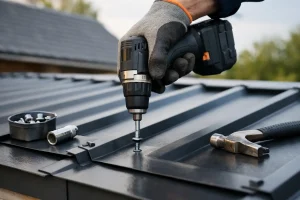
A lot of roofing problems come from incomplete buying. The sheets arrive, but the trims are missing, the fixings are wrong for the structure, or the closure pieces were never ordered. That slows the install, creates weak points and often leads to site-made compromises.
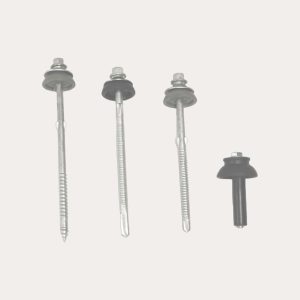
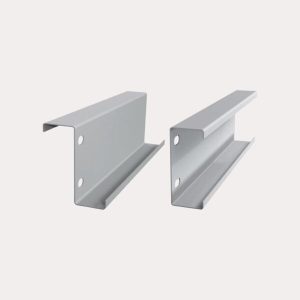
A proper roof build needs more than sheets. Depending on the project, you may also need purlins, flashings, bargeboards, ridge pieces, foam fillers, stitchers, primary fixings, rooflights and sealing products. If the roof is insulated, the specification becomes even more important because detailing has to work with the panel system.
For trade customers, getting the full package right first time saves labour and protects margins. For DIY buyers, it removes a lot of guesswork. One of the advantages of using a specialist supplier such as Roof Sheets Online is being able to source the complete roof system in one place and get technical guidance if you need a second opinion before ordering.
Price matters, but value matters more
Everyone has a budget. The question is whether you are comparing like for like. A cheaper quote may exclude trims, use a lighter coating, omit anti-condensation options, or rely on lower-spec fixings. On paper, that can look attractive. On site, it is often a false economy.
Good metal roofing sheets offer long-term value because they are quick to fit, durable in service and available in finishes that suit both function and appearance. When the specification is right, you get a roof that stands up to wind, rain and daily use without constant attention.
That does not mean the most expensive option is always best. Plenty of projects call for a straightforward, cost-effective sheet that simply needs to do its job well. The key is to spend where performance matters and avoid paying for features the building does not need.
What to check before you order
Before placing an order, be clear on the roof pitch, sheet lengths, cover width, number of sheets, overlap details and the structure beneath. Check whether you are fixing into timber or steel, because the fixings will differ. Think about rooflights if natural light matters, and make sure flashings and edge details are included from the start.
It is also worth checking delivery access. Long sheets need sensible planning, especially on tighter sites. A reliable supplier should confirm delivery timing clearly and help avoid surprises.
If you are unsure between profiles, coatings or insulated versus single-skin options, ask the question early. A five-minute conversation before ordering is better than trying to solve a specification issue once the sheets are on site.
The right roof is the one that suits the job
Metal roofing sheets are a practical, proven choice for a wide range of buildings across the UK. They are sleek, strong and weather-resistant, but those benefits only hold up when the details are right. The profile, coating, insulation level and accessories all need to match the building and the way it will be used.
If you approach the purchase as a full roof system rather than a stack of sheets, you give yourself a much better chance of a quick install and a roof that performs properly for years. If you are weighing up options and want a straight answer on what suits your project, it is always worth speaking to people who handle these systems every day.