
A missing roof sheet can hold up far more than a day’s work. It can leave a timber frame exposed, delay the next trade, or turn a straightforward garage, stable or workshop job into an expensive stop-start build. Fast delivery roof sheets help keep the programme moving, but speed only works when the sheets, lengths, profile and supporting components are right first time.
For trade buyers and capable DIY customers alike, the best approach is to plan delivery around the roof build, not simply choose the earliest available date. A correctly specified order delivered when the site is ready is worth far more than materials arriving quickly but without the flashings, fixings or access arrangements needed to install them.
Fast delivery is not just about getting a pallet on the road. Roofing sheets are long, often made to order, and need careful handling. The right service starts with stock visibility and clear lead times, then follows through with delivery date confirmation so that labour, lifting arrangements and weather cover can be organised with confidence.
For a small shed roof, that may mean a manageable bundle of corrugated sheets arriving before a weekend installation. For an agricultural building, workshop or commercial cladding project, it may mean coordinating longer box profile or insulated sheets with site access, plant and a fitting team. The product changes, but the requirement stays the same: materials must arrive in a condition and sequence that lets work continue.
There is a trade-off to understand. A standard stock length may be available sooner, while a bespoke sheet length can reduce overlaps, cuts and waste on site. If time is critical, it is worth comparing those options before ordering. Saving a day on delivery is not always a saving if it creates extra fitting time or compromises the finish.
The quickest route to a delayed roof is ordering the wrong material. Roof sheets need to suit the pitch, span, building use and expected exposure to weather. The appearance matters too, particularly on domestic garages, garden rooms and extensions, but it should not overrule performance.
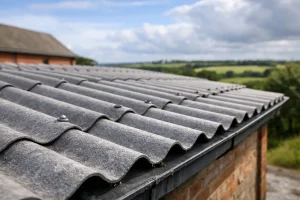
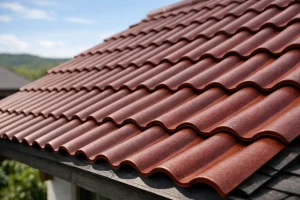
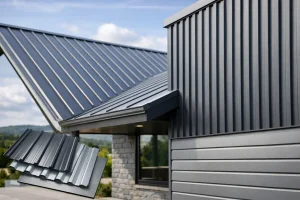
Box profile sheets give a clean, modern finish and are a popular choice for garages, workshops, agricultural buildings and commercial roofs. They are sleek, strong and available in a choice of coatings and colours. Corrugated sheets offer a more traditional profile and work well on sheds, stables, stores and lean-tos. Fibre cement provides a durable, non-combustible option with useful acoustic and condensation properties for suitable agricultural and industrial applications.
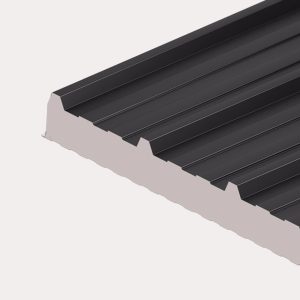
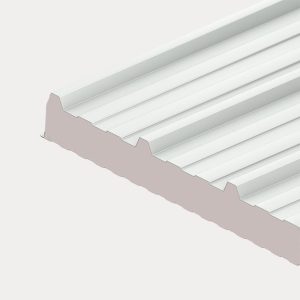
Where thermal performance is central to the project, insulated panels are often the more efficient route. Kingspan QuadCore roof panels, for example, combine an external weathering layer, insulation core and internal liner in one precision-crafted system. They can speed up the build because insulation and roofing are installed together, although the specification, panel length and handling plan need particular care.
Flat sheets, rooflights and wall cladding should also be considered as part of the same order. A roof that requires daylight panels, matching side cladding or a particular ridge detail should be planned as one system, rather than treated as separate purchases made halfway through the job.
Measure the roof slope from eaves to ridge, not simply the building width. Confirm the sheet direction, purlin centres, overhang at the eaves and whether the ridge, verge or abutment needs special treatment. On a pitched roof, a sheet that is a little too short can leave an inadequate overhang. One that is too long may be difficult to unload, store and fit safely.
It is also sensible to check the manufacturer’s recommended minimum roof pitch for the chosen profile. Low-pitch roofs may require different lap arrangements, sealants or a more suitable sheet system. This is not an area for guesswork, especially where wind-driven rain is likely.
If you are replacing an existing roof, do not assume the old sheets provide a reliable template. Previous installations may have been cut around obstructions, fitted with excessive overlaps or installed to an older specification. Measure the structure and identify every penetration, rooflight and flashing detail before finalising the order.
Roofing sheets are only one part of a weatherproof build. When a project is under time pressure, ordering the main sheets without the supporting components is a common and avoidable problem. The delivery may be fast, but the fitting crew still cannot finish the job.
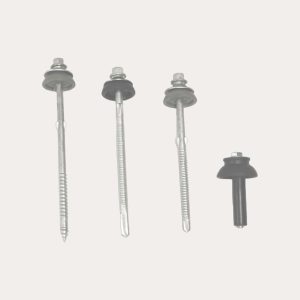
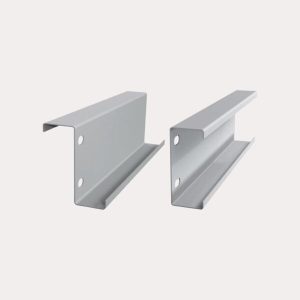
A complete order usually includes the correct fixings for the sheet profile and supporting structure, plus ridge, barge and eaves flashings. Depending on the roof, it may also need fillers, foam closures, stitching screws, sealant tape, gutters, purlins and rooflights. Wall cladding projects may require matching corners, drip details and other trims.
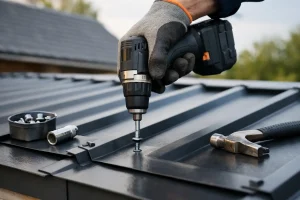
There is no benefit in using a generic fixing if it is not designed for the substrate. Timber and steel purlins require different fixing choices, while insulated panels have their own fixing requirements based on panel thickness and support arrangement. Correctly specified fixings protect the sheet coating, maintain weather resistance and help prevent movement in high winds.
Roof Sheets Online is set up as a one-stop supplier for sheets, flashings, purlins, rooflights and fixings, which helps remove the usual scramble between multiple merchants. It also makes it easier to match profiles, colours and compatible accessories across the whole build.
Delivery speed is only useful if the driver can safely reach the unloading point. Before the scheduled date, check the approach road, gates, turning space and ground conditions. Long sheets need more room than a standard builders’ merchant delivery, and soft ground or narrow access can create problems for larger vehicles.
Make sure someone is available to receive the order and inspect it on arrival. If mechanical offload is required, arrange it in advance. Smaller orders may be handled by hand with enough capable people, but long sheets can flex and catch the wind, so they should always be carried and supported properly. Never drag sheets across one another, as this can mark the coating and damage edges.
Create a clean, level storage area before delivery. Keep the bundle raised clear of the ground on evenly spaced bearers, with enough support to prevent sagging. Store sheets away from standing water and do not leave them wrapped for extended periods where moisture could become trapped between surfaces. If the roof cannot be fitted straight away, keep the materials dry, secure and protected from accidental impact.
A quick phone call before ordering can prevent a costly delivery issue. Have the postcode, desired sheet lengths, building type, roof pitch and support spacing ready. It is also helpful to mention any restricted access, rural lanes, timed site entry, forklift availability or requirement for a particular delivery day.
For projects with a firm installation date, order with enough allowance for specification checks and delivery scheduling. This is particularly important during busy construction periods and for made-to-measure products. Fast does not mean cutting corners on confirmation, and a realistic delivery plan is better than a promise that leaves no room for site conditions.
Before lifting the first sheet, check that purlins are level, square and spaced correctly. If the supporting structure is out of line, the roof sheets will show it. Taking time to correct the frame before installation is faster than removing and refitting completed sections later.
Start square at the eaves and follow the recommended side-lap direction for the prevailing wind. Use the required number and position of fixings, but avoid overtightening them. A compressed washer can fail early, while a loose fixing can allow water ingress and sheet movement. Rooflights need the same disciplined fixing pattern as the surrounding sheets, with compatible closures and seals where specified.
Condensation control should also be addressed before the roof is closed in. A cold building such as a stable, store or unheated workshop may benefit from anti-condensation treatment, ventilation and the right under-roof arrangement. A heated space may require insulation and vapour control as part of the complete build-up. The correct solution depends on how the building will be used, not simply on the sheet profile.
A fast roofing order should leave you with a clear plan, not more questions. If you are unsure about profile choice, coating, fixings, flashing details or delivery access, ask before the order is processed. Technical guidance at the start can prevent wasted sheets, repeat deliveries and lost fitting time.
The best fast delivery roof sheets are the ones that arrive ready for the job: correctly measured, properly protected and supported by every component needed to make the roof weatherproof. Get those details right, and the build can move from delivery to a finished roof without the usual hold-ups.
Roof Sheets Online Ltd
UNIT C4
MACROME ROAD
Wolverhampton
WV6 9HD
Company No 15150940
Vat No. 4880 70856